

TL;DR:
- Most business organizations face frequent fraud attempts, making robust card security essential and a board-level concern. Effective protection involves organizational discipline, layered controls, and compliance with PCI DSS 4.0, rather than solely relying on technology. Proper practices like issuing virtual cards, managing access controls, employee training, and regular audits are critical to safeguarding corporate card programs.
Most business professionals treat their corporate cards as simple payment tools. That assumption is expensive. Business card security explained properly goes far beyond PIN protection or fraud alerts. It encompasses physical misuse, digital interception risks, identity theft vectors, and compliance obligations that many decision-makers don’t discover until after an incident. With 76% of organizations experiencing fraud attempts in 2025, the idea that your business card is a low-risk asset deserves serious scrutiny.
Table of Contents
- Key takeaways
- The real security risks behind business cards
- Understanding PCI DSS compliance for business cards
- Best practices for securing business cards
- NFC and digital business cards: myths vs. realities
- My honest take on where business card security actually breaks down
- How Demivolt helps you build secure card programs
- FAQ
Key takeaways
| Point | Details |
|---|---|
| Fraud is pervasive | Most businesses face payment fraud attempts, making business card data protection a board-level concern, not just an IT task. |
| PCI DSS 4.0 raises the bar | Updated compliance requirements now mandate 12-character passwords and MFA for all cardholder data environments. |
| Virtual cards cut physical risk | Issuing unique card numbers per vendor limits exposure and makes fraud containment faster. |
| NFC risk is often overstated | NFC cards store only a URL on the chip; platform security and privacy policies carry most of the actual risk. |
| Layered controls win | Combining technology, written policies, and employee training delivers better protection than any single measure alone. |
The real security risks behind business cards
Protecting business cards starts with understanding what you are actually protecting against. The threats fall into two broad categories: physical misuse and digital exploitation.
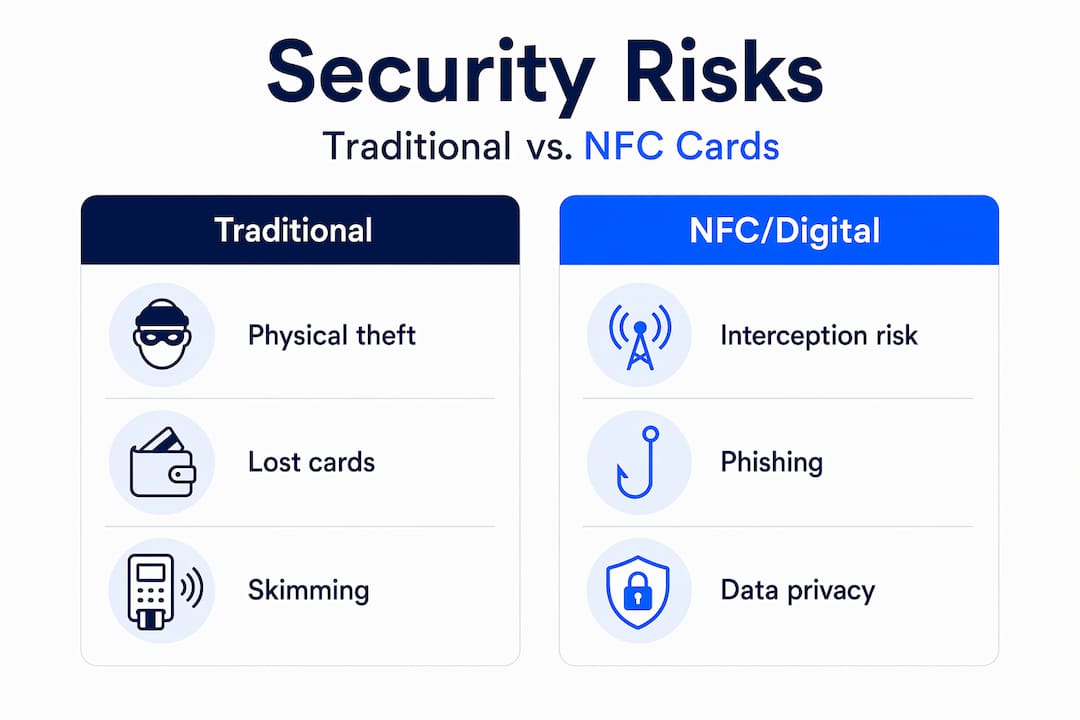
On the physical side, the most common schemes involve lost or stolen cards being used for unauthorized purchases, card details being copied at point-of-sale terminals through skimming devices, and account takeover through phishing emails that harvest login credentials for your card management portal. None of these are new, but the scale is growing. AI-driven fraud now allows bad actors to generate convincing fake authorization requests at a speed that manual review cannot match.
The digital threat picture is more layered:
- Skimming and shimming: Devices embedded in card readers capture magnetic stripe or chip data during legitimate transactions.
- Account compromise: Weak passwords on card management platforms give attackers access to spending controls, card numbers, and employee data.
- Authorized push payment fraud: Employees are manipulated into approving payments to fraudulent accounts, often via spoofed emails mimicking executives.
- NFC interception: Widely feared but frequently misunderstood. More on this in a dedicated section below.
| Threat Type | Traditional Cards | Digital or NFC Cards |
|---|---|---|
| Physical theft | High risk | Moderate (device-locked) |
| Skimming | Moderate risk | Low (tokenized transactions) |
| Account takeover | Moderate risk | Higher if platform security is weak |
| Data interception | Low without proximity | Very low with proximity requirement |
| Policy abuse | High if limits absent | Controllable via platform settings |
CFOs are now treating commercial cards as identity infrastructure, which reflects how central these tools have become to corporate authentication. If your card program gets compromised, it is not just a financial loss. It is a breach of your operational identity.
Understanding PCI DSS compliance for business cards
If your business issues, processes, or touches payment card data in any form, PCI DSS applies to you. The Payment Card Industry Data Security Standard is the framework governing how card data must be handled, stored, and transmitted. PCI DSS 4.0 is now the active standard, and it brought changes that directly affect how you manage business card security.
The three updates with the most practical impact for decision-makers are:
- Password length requirements: PCI DSS 4.0 mandates passwords of at least 12 characters for all accounts touching cardholder data environments.
- Multi-factor authentication (MFA): MFA is now required for all access types, including local network access, not just remote logins.
- Quarterly payment page scans: If you run any web-based payment interface, you need a documented process for scanning and reviewing it every 90 days.
These requirements raise the bar for smaller businesses that previously relied on minimal controls. The good news is that you do not have to manage all of this internally.
Outsourcing card data handling to PCI-compliant processors dramatically reduces your compliance scope. When a provider like a regulated fintech platform handles card data within their own certified infrastructure, your systems never touch raw card numbers. That significantly limits what you are responsible for under PCI DSS. You still need to manage access controls, vendor vetting, and internal policies, but the technical burden shrinks considerably.
Pro Tip: When evaluating any payment processor or card issuer, ask for their current PCI DSS attestation of compliance (AOC). A legitimate provider will share it without hesitation. If they stall or deflect, that tells you what you need to know.
| PCI DSS Requirement | Pre-4.0 | PCI DSS 4.0 |
|---|---|---|
| Password minimum length | 7 characters | 12 characters |
| MFA scope | Remote access only | All access types including local |
| Website payment page review | Annual | Quarterly |
| Customized implementation option | Not available | Available for mature security programs |
Getting compliant is not a one-time project. It is an ongoing operational discipline. Build it into your quarterly security reviews, not just your annual audit.
Best practices for securing business cards
Knowing the risks and understanding the compliance framework gets you oriented. The following practices get you protected. They work together as a system, not as standalone fixes.
-
Set granular spending controls from day one. Most modern card platforms allow you to set per-transaction limits, merchant category restrictions, and daily caps at the individual card level. Use them. A card issued to a junior employee for office supplies should not be able to transact at a hotel or wire transfer service.
-
Issue virtual cards for recurring vendor payments. Virtual cards reduce fraud risk by generating a unique card number for each vendor or project, with preset limits and expiration dates. If a vendor’s payment system is compromised, the damage is contained to that single-use number.
-
Train employees on fraud recognition. Most fraud involving business cards does not bypass your technology. It exploits your people. Run quarterly training sessions covering phishing patterns, social engineering tactics, and the correct escalation path when something feels wrong. Document attendance.
-
Implement real-time transaction monitoring. AI-powered monitoring now allows near-instant detection of unusual spending patterns, with the ability to freeze cards automatically before a fraud chain develops. This matters especially for distributed teams where managers cannot physically oversee spending.
-
Document a card usage policy and an incident response protocol. If you cannot hand a new employee a written document that explains what the card is for, what it is not for, and exactly what to do if they lose it, your policy does not exist. The incident response piece is equally critical. Time lost in ambiguity during an active fraud event costs money.
Pro Tip: Build a tiered approval workflow for purchases above a defined threshold. Transactions under $500 can clear automatically; anything above requires manager confirmation via the card platform. This single control catches a disproportionate share of policy violations.
For businesses exploring virtual card options as part of a broader expense management approach, the security benefits extend well beyond fraud prevention. They also simplify reconciliation and audit trails.
NFC and digital business cards: myths vs. realities
The conversation around digital business card security tends to generate more heat than light. Let’s separate what is real from what is exaggerated.
An NFC-enabled business card works by embedding a small chip that transmits data when tapped against a compatible device. Here is the critical detail most people miss: the chip stores only a URL, not your personal data. When someone taps your card, their phone is directed to a web page. The actual sensitive information lives on that page, hosted on a server controlled by the NFC platform provider.
This changes where the real risk sits:
- Chip-level interception is extremely low risk. Physical proximity of just a few centimeters is required for an NFC read, making covert scanning in practice very difficult.
- Platform security is where exposure lives. If your NFC provider uses weak encryption, unclear data retention policies, or unverified third-party sharing, your professional data is exposed regardless of how secure the chip itself is.
- User choices amplify or reduce risk. The amount of data you publish on the linked profile is your decision. A name and LinkedIn URL carries far less risk than publishing your direct mobile number, personal email, and home office address.
| Factor | Physical Business Card | NFC Digital Card |
|---|---|---|
| Data interception risk | Low (static, no transmission) | Very low (proximity-dependent) |
| Data exposure if lost | High (all printed info visible) | Low (card alone shows nothing) |
| Platform security dependency | None | High |
| Privacy policy risk | None | Moderate to high |
On the RFID blocking side, the marketing around protective wallets and shields is louder than the actual threat warrants. That said, if you do choose a blocking solution, know that passive RFID blocking materials degrade within a year due to environmental wear, while active E-field blocking cards provide more durable protection.
For a detailed technical analysis of specific RFID blocking claims and what actually works, the Guardality card evaluation at Demivolt cuts through the marketing noise with tested findings.
Pro Tip: Before committing to any NFC card platform, request a copy of their privacy policy and ask explicitly whether your data is shared with advertising networks or third-party analytics platforms. The answer matters more than the chip technology.
My honest take on where business card security actually breaks down
I’ve spent years watching companies invest in technology controls and still get hit with fraud. The pattern is almost always the same. The technology worked fine. The process around it failed.

What I’ve learned is that most business card breaches don’t start with a sophisticated technical attack. They start with a card that should have been canceled six months ago still sitting active in the system. Or an employee who left the company and whose card access was never revoked. Or a policy that existed as a PDF somewhere but was never actually enforced.
The uncomfortable truth is that effective business card security is 40% technology and 60% organizational discipline. You can have real-time monitoring, virtual cards, and MFA on every account. If your offboarding checklist doesn’t include card revocation, or if nobody reviews the monthly spend report, those tools are protecting a building with an unlocked back door.
My view on NFC and digital cards is that the fear is mostly misdirected. Businesses spend energy worrying about chip interception while ignoring that their card management portal password hasn’t been changed in two years. Fix the fundamentals first.
The CFO framing I find most useful, that corporate cards are identity infrastructure, is the right mental model. Treat your card program the way you treat your access control system. Audit it, maintain it, and take it seriously before something goes wrong.
— dd
How Demivolt helps you build secure card programs
Demivolt is built for businesses that take payment security seriously. As a regulated European fintech platform, Demivolt issues both virtual and physical business cards with role-based spending controls, real-time transaction monitoring, and tiered approval workflows baked into the platform.
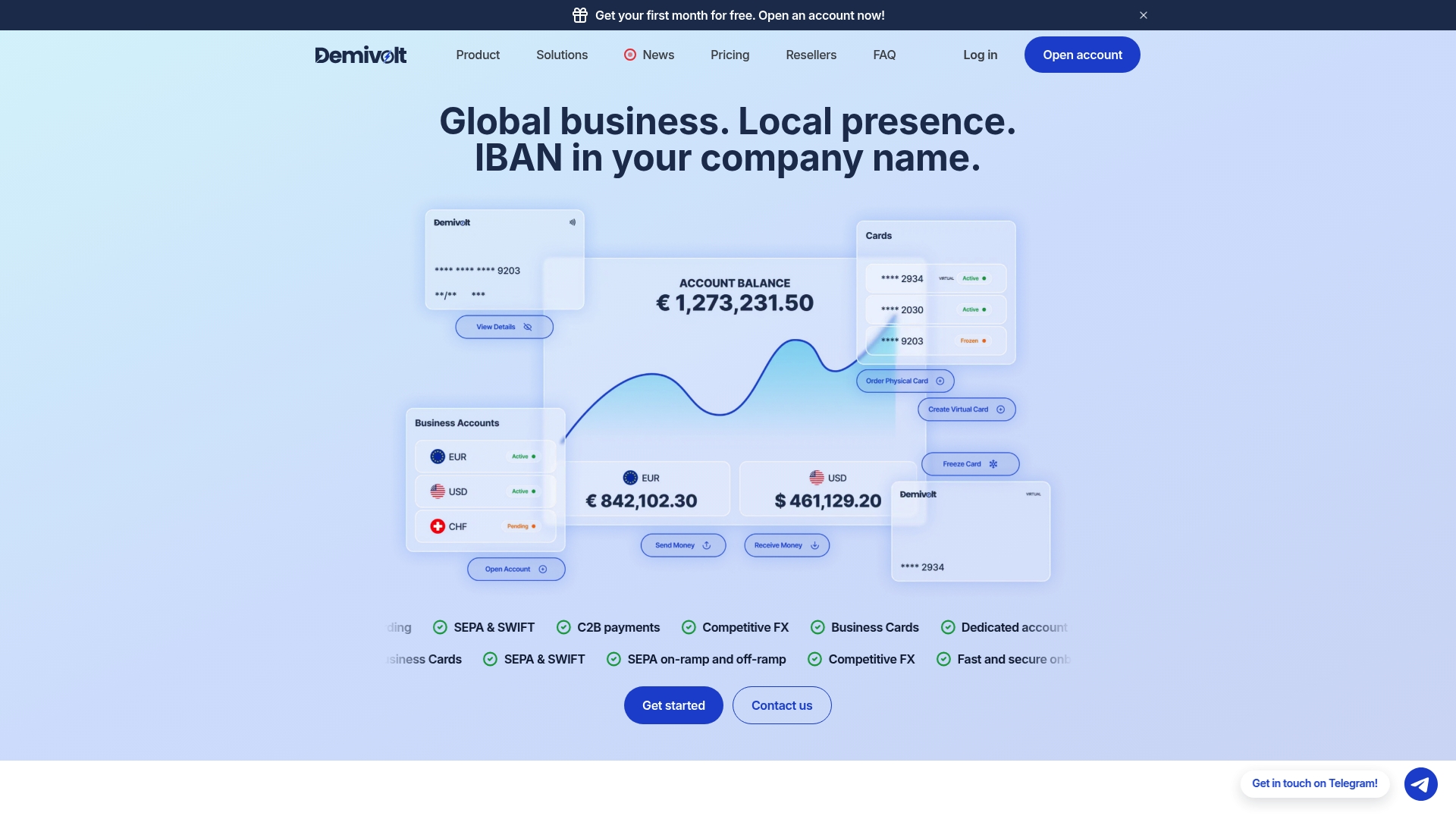
If you are assessing how to build a secure payment workflow that meets EU regulatory standards, Demivolt’s infrastructure handles PCI DSS compliance at the platform level. That means your team gets the controls without carrying the full compliance burden internally. Segregated accounts, SEPA and SWIFT payment support, and multi-account structures give you both financial control and fraud containment by design. Visit Demivolt to see how the platform fits your security and banking needs.
FAQ
What is business card security and why does it matter?
Business card security covers the practices, technologies, and policies that protect corporate payment cards from fraud, unauthorized use, and data theft. It matters because most organizations face active fraud attempts, and unsecured cards are a direct financial and operational liability.
How do virtual cards improve business card safety?
Virtual cards issue a unique card number per vendor or transaction with preset spending limits and expiration dates, so a compromised number cannot be reused. This makes fraud containment faster and limits financial exposure significantly.
Are NFC business cards a security risk?
NFC business cards carry very low interception risk because the chip stores only a URL and requires close physical proximity to read. The main security variable is the privacy and data practices of the NFC platform provider, not the card itself.
What does PCI DSS 4.0 require for business card security?
PCI DSS 4.0 requires passwords of at least 12 characters, MFA for all account access in cardholder data environments, and quarterly reviews of web-based payment interfaces. Businesses that outsource card data handling to compliant providers can reduce their compliance scope substantially.
What is the fastest way to reduce business card fraud risk?
Combining virtual cards for vendor payments, real-time transaction monitoring, and a documented incident response protocol delivers the fastest risk reduction. Employee training on fraud recognition closes the gap that technology alone cannot cover.
Recommended
- Demivolt | Blog – How to issue business cards for SMEs: a step-by-step guide
- Demivolt | Blog – Virtual business cards for smarter networking and finance
- Demivolt | Blog – Virtual business card setup guide: easy steps for SMEs
- Demivolt | News – Guardality RFID Blocking Card Claims Evaluated: Avoid Identity Data Stealing Scams Safely with CyberShield Wallet Protection