

TL;DR:
- 2026 is a critical year for EU B2B e-invoicing mandates across multiple countries.
- SMEs should regularly audit invoicing processes and adopt compliant digital payment technologies.
- Implementing fraud prevention measures like real-time payment controls is essential for compliance and security.
Managing EU payment compliance in 2026 is not a minor administrative task. Multiple overlapping mandates, from mandatory B2B e-invoicing rollouts to new fraud controls, are landing simultaneously across Europe, and the penalties for missing a deadline are real. In 2026, multiple EU countries mandate structured B2B e-invoicing, making this the single most consequential year for SME payment infrastructure in recent memory. This checklist breaks down every critical step, from regulatory deadlines to cash flow optimization, so your finance team can act with confidence rather than scramble to catch up.
Table of Contents
- Understand 2026 EU payment regulations and deadlines
- Optimize payment terms and invoice management
- Integrate e-invoicing and real-time payment technology
- Stay ahead with risk and fraud prevention
- Why compliance is just the start: Real growth comes from mastering the checklist
- Take the next step with Demivolt
- Frequently asked questions
Key Takeaways
| Point | Details |
|---|---|
| Meet 2026 compliance deadlines | Mark key national deadlines and adopt required e-invoicing systems early. |
| Strengthen payment discipline | Use clear terms and automated reminders to minimize late payments and bad debts. |
| Leverage e-invoicing tech | Modern solutions can cut costs, boost cash flow, and ensure full EU compliance. |
| Prioritize payment security | Update internal controls and staff training to defend against payment fraud in real time. |
| Turn insight into advantage | View your payments checklist as a platform for continuous financial improvement, not just legal compliance. |
Understand 2026 EU payment regulations and deadlines
The regulatory calendar for 2026 is staggered by country, which is both an opportunity and a trap. If you operate across borders, you face multiple simultaneous deadlines. If you operate locally, complacency is still a risk because every mandate eventually expands. Getting SME payments compliance right means knowing exactly where your business sits on the timeline.
Belgium, Poland, France, and Croatia each have new B2B e-invoicing deadlines in 2026. Here is a breakdown of what your team needs to track:
| Country | Deadline | Scope | Format |
|---|---|---|---|
| Belgium | January 1, 2026 | All B2B domestic transactions | Peppol BIS |
| Poland | Feb 1 (large) / Apr 1 (SME) | Phased B2B rollout | KSeF XML |
| Croatia | July 1, 2026 | Domestic B2B transactions | UBL/CII |
| France | September 1, 2026 | Phased by company size | Factur-X, UBL |
Beyond country-specific mandates, the EU’s ViDA (VAT in the Digital Age) initiative is reshaping cross-border B2B invoicing with a target completion by 2030. SMEs engaged in cross-border trade need to treat ViDA compliance as a medium-term planning issue, not a distant concern. Reviewing the business bank account steps required for cross-border operations is a smart early move.
Here is what your team should prioritize by quarter:
- Q1 2026: Confirm Belgium and Poland compliance status; audit invoice formats in use
- Q2 2026: Begin Croatia implementation testing; assess ViDA exposure for cross-border flows
- Q3 2026: Complete France onboarding for applicable company tiers; run compliance audit across all markets
- Ongoing: Monitor format updates (UBL, CII, Peppol BIS) and align ERP or accounting software
For businesses also operating in the UK, the UK accounting checklist for SMEs is a useful parallel reference. The core lesson is simple: the more markets you serve, the earlier you need to start. Waiting for Q3 to act on a Q1 mandate is a path to fines and operational disruption.
Optimize payment terms and invoice management
Regulatory compliance sets the floor. Cash flow performance sets the ceiling. With those regulatory dates in mind, your next priority is maintaining strong cash flow and limiting late payments, which remain a persistent drain on European SMEs.

The numbers tell a clear story. 47% of B2B invoices are overdue in Western Europe, and that figure rises to 53% in Central and Eastern Europe. Late payments are not just a nuisance. They represent a structural threat to working capital, particularly for businesses with thin margins or seasonal revenue patterns.
Standard payment terms across Europe still cluster around 31 to 60 days, but the businesses seeing the best results in 2026 are actively shortening those terms and pairing them with automated follow-up systems. Practical cash flow management tips consistently point to the same core actions:
- Set default net-30 terms and negotiate shorter where the relationship allows
- Send invoices immediately upon delivery, not at the end of the billing cycle
- Include a clear due date, bank details, and payment link directly on the invoice
- Automate reminder sequences at 7 days before due, on the due date, and 3 days after
- Flag accounts with repeated late payment for proactive credit review
- Use fintech payment solutions that provide real-time payment status visibility
Pro Tip: Schedule automated reminders to fire before the due date, not just after. Clients who receive a friendly pre-due nudge pay on average faster than those who only hear from you after the deadline passes.
The invoicing process itself is a lever most SMEs underuse. Errors on invoices, missing VAT numbers, wrong bank details, are among the top reasons for delayed payment. Standardizing your invoice template and running a monthly audit catches these issues before they cost you cash.
Integrate e-invoicing and real-time payment technology
Optimizing invoice management naturally leads to choosing the right technology for compliant and fast payments. The technology decision is often where SMEs lose time, either by choosing a tool that only covers local formats or by underestimating the integration work required.
E-invoicing reduces costs by 60 to 80% over the long term, but it does require upfront IT investment. Real-time payments improve liquidity significantly, but only when paired with robust fraud controls. Both technologies are worth implementing, but in sequence and with clear priorities.
Here is a side-by-side comparison to frame the decision:
| Feature | E-invoicing | Real-time payments |
|---|---|---|
| Cost reduction | 60 to 80% long-term | Reduces DSO (days sales outstanding) |
| Compliance fit | Mandatory in EU from 2026 | Supports SEPA Instant, UK FPS |
| Implementation time | 4 to 12 weeks depending on ERP | 2 to 8 weeks for API integration |
| Fraud risk | Low (structured data) | Higher without VoP controls |
| Cross-border readiness | ViDA-aligned by 2030 | Immediate for SEPA zone |
For SMEs monitoring banking trends efficiency, the pattern is clear. Platforms that combine e-invoicing with real-time payment rails give finance teams visibility they simply cannot get from legacy banking relationships. When evaluating cross-border payment solutions, prioritize those that support both local formats and ViDA-compatible cross-border invoicing.
- Confirm your accounting software exports UBL, CII, or Peppol BIS as required by market
- Test invoice submission through your chosen e-invoicing network before the mandate deadline
- Evaluate currency risk strategies if you operate in non-euro markets
- Enable SEPA Instant where your bank or fintech partner supports it
Pro Tip: Choose a payment solution that is certified for both local and cross-border mandates before you go live. Retrofitting compliance features after launch is significantly more expensive and disruptive.
Stay ahead with risk and fraud prevention
No checklist is complete without covering the rising risks and required controls for payment fraud. Real-time payments have changed the threat landscape. Transactions that once took days to settle now complete in seconds, which means fraud prevention must operate at the same speed.
Real-time payments require enhanced controls like Verification of Payee (VoP) to limit fraud. VoP, which checks that the account name matches the sort code and account number before a payment is authorized, became a regulatory expectation across much of Europe in 2026. Without it, your business carries liability for misdirected payments.
“Fraud controls aren’t optional. They’re a compliance must-have for 2026.”
Here are the numbered steps every SME should work through:
- Audit payment workflows for manual steps that could be exploited by social engineering or business email compromise
- Implement VoP on all outbound payment flows, especially for new payees
- Train finance staff on recognizing invoice fraud and CEO impersonation attempts at least once per quarter
- Set payment limits for automated approvals and require dual authorization above defined thresholds
- Monitor transaction patterns using your platform’s anomaly detection or export data to a third-party tool if needed
- Review payroll solutions and risk controls as a parallel compliance requirement
Affordable risk technology is available for SMEs. Most modern fintech platforms include rule-based transaction monitoring at no additional cost. The key is configuring those rules to match your actual payment patterns rather than leaving default settings in place. Visit the Demivolt blog for updated guidance on fraud prevention in digital finance.
Scalability matters here too. A control framework that works at 50 monthly transactions must also hold up at 500. Build your controls for where you are going, not just where you are today.
Why compliance is just the start: Real growth comes from mastering the checklist
Here is a perspective most compliance guides won’t offer: treating this checklist as a box-ticking exercise is the surest way to fall behind the businesses that will actually grow in 2026.
The SMEs that use regulatory change as a trigger for genuine operational improvement, streamlining invoice processes, consolidating banking relationships, automating payment flows, are the ones that emerge with better margins and stronger client trust. Compliance is the minimum. The real prize is what you build on top of it.
The digital payments market is evolving fast, and businesses that proactively refine their processes are seeing measurable results. Fewer fines, yes, but also faster access to funding because lenders and investors can see clean, well-structured financial data. Treating this checklist as a transformation roadmap rather than a legal obligation changes the outcome entirely. The finance leaders who see it that way will not just survive 2026. They will use it as a launching pad.
Take the next step with Demivolt
If you’re ready to move from checklist theory to confident action, Demivolt gives you the infrastructure to act on every item covered here. From dedicated IBAN accounts and SEPA payments to role-based controls and multi-account management, the platform is built for exactly the compliance and cash flow challenges European SMEs face in 2026.
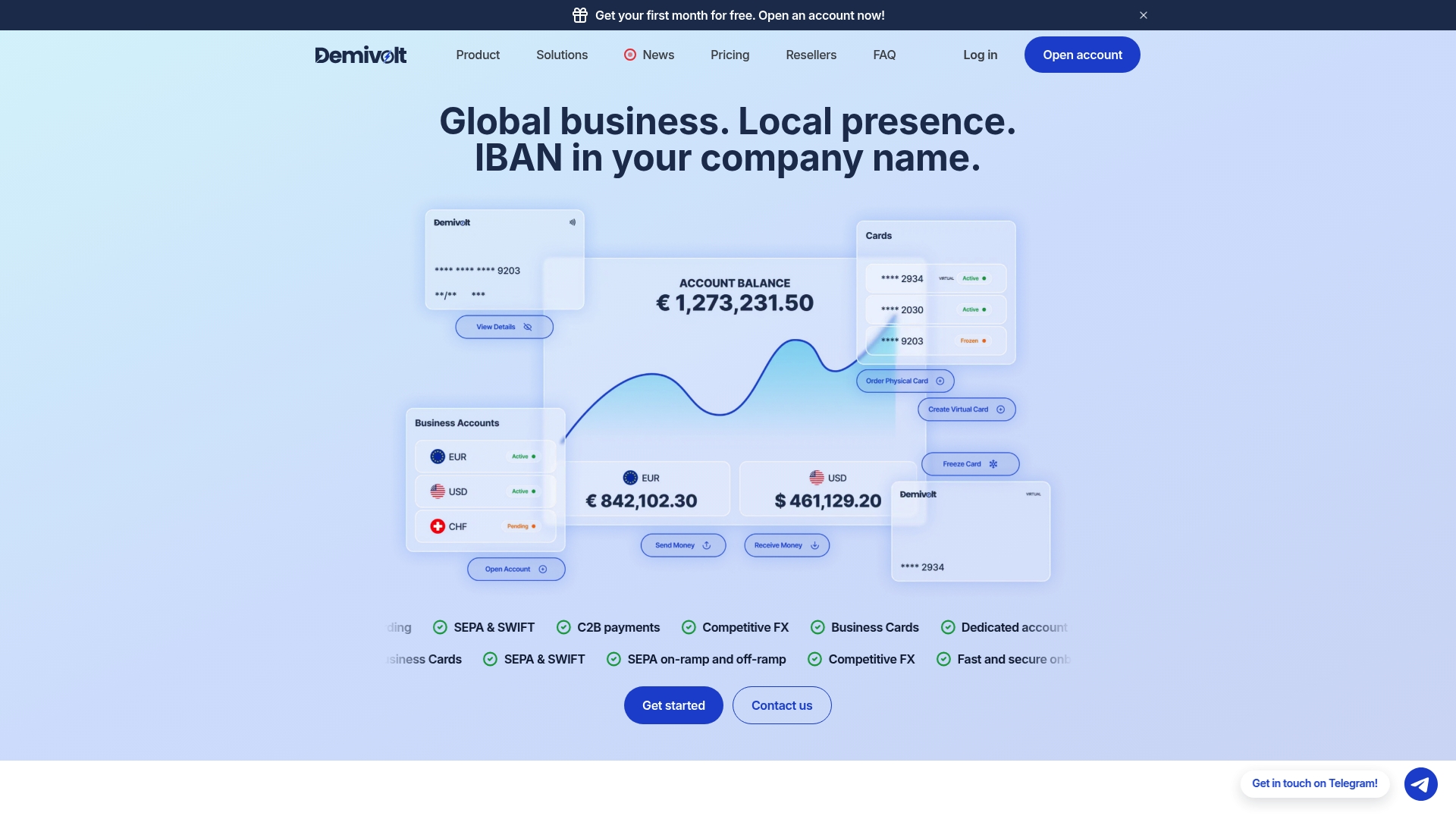
Explore Demivolt business banking to open an account, manage cross-border payments, and access guides tailored to growing businesses. Whether you need to meet a new e-invoicing mandate or tighten your fraud controls, Demivolt’s regulated platform makes the next step straightforward. Start with a free account review today.
Frequently asked questions
What are the key 2026 e-invoicing deadlines for European SMEs?
Belgium starts January 1, Poland phases in from February 1 through April 1, Croatia goes live July 1, and France begins its phased rollout on September 1, 2026. Each country uses different formats, so check local mandates carefully.
How can SMEs reduce late payment risks in 2026?
Shorten payment terms, automate pre-due and post-due reminders, and use structured e-invoicing tools to eliminate errors. 47% of B2B invoices in Western Europe are currently overdue, so proactive follow-up is essential.
Do all EU countries require the same e-invoicing format?
No. Required formats vary by country, with UBL, CII, Peppol BIS being the most common. The EU ViDA initiative will standardize cross-border B2B invoicing by 2030, but local mandates apply now.
What’s a practical first step to implement real-time payments?
Evaluate fintech providers that include certified fraud prevention tools like VoP before committing. Real-time payments boost liquidity significantly, but only when fraud controls are active from day one.