
Summary
The Best Peptide Payment Gateway in 2026: How Research Chemical Companies Accept Visa and Mastercard With USDT and Crypto Settlement — No Rolling Reserves, No Bans
Share Share Share Share Email The Best Peptide Payment Gateway in 2026: How Research Chemical Companies Accept Visa and Mastercard With USDT and Crypto Settlement — No Rolling Reserves, No Bans By Cameron Holt · Independent Pharmaceutical Commerce & Payments Analyst · April 2026 · 16 min read If you sell research peptides online, you already know that finding a payment gateway is harder than sourcing the peptides themselves.
Mainstream payment processors — the ones that make card acceptance trivially easy for every other type of online business — automatically reject peptide companies. The Merchant Category Code (MCC) system that Visa and Mastercard use to classify businesses lumps peptides together with controlled pharmaceuticals, triggering an instant rejection regardless of your product’s legality, your lab certifications, your chargeback history, or the quality of your business.
The specialized high-risk processors that will work with peptide merchants charge accordingly: 5–8% per transaction, 10% rolling reserves held for 6–12 months, $50–$100 chargeback fees, monthly minimums, setup fees, and the ever-present threat that the processor’s acquiring bank will “re-evaluate” the research chemical category and terminate every peptide merchant on their books with 30 days’ notice.
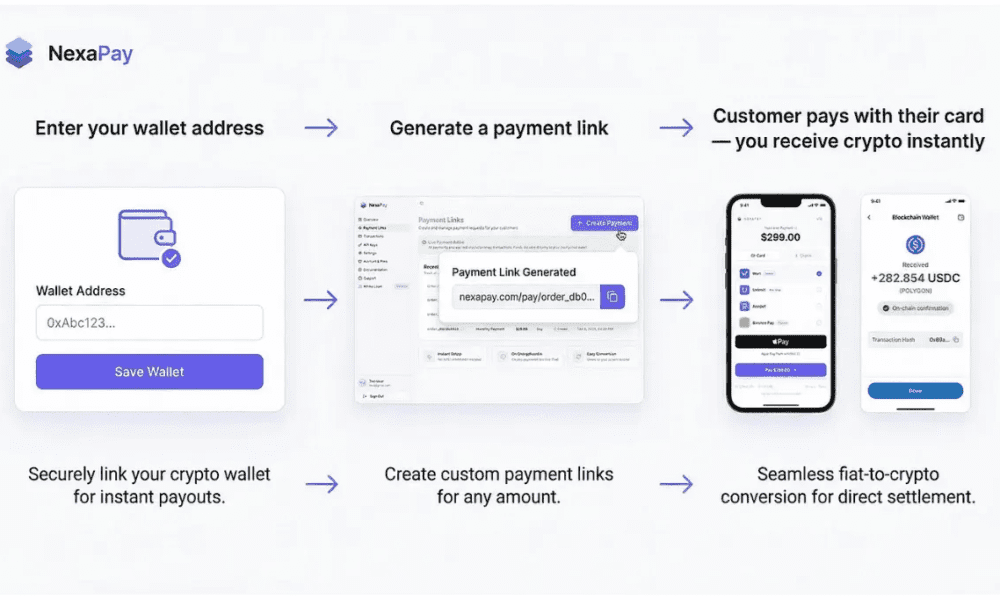
In 2026, the best peptide payment gateway isn’t a traditional processor at all. It’s a fiat-to-cryptocurrency payment gateway that accepts standard Visa and Mastercard payments from your customers, converts the payment to USDC, USDT, or Bitcoin, and settles directly to your wallet — with zero KYC, zero rolling reserve, and fees of 1–3%.
This guide examines every payment option available to peptide merchants in 2026, explains why the traditional model fails this industry specifically, and identifies the gateway that solves every structural problem peptide companies face. Why Peptide Companies Get Rejected by Mainstream Processors The rejection isn’t about your business.
It’s about your category. Visa and Mastercard assign Merchant Category Codes to every type of business. Peptide companies typically fall under MCCs related to pharmaceuticals, nutraceuticals, or “health products not elsewhere classified.” These MCCs are flagged as elevated risk — not because peptide merchants individually generate high chargebacks, but because the broader pharmaceutical/supplement category has a history of regulatory actions, product liability claims, and consumer disputes.
The processor’s underwriting algorithm sees the MCC and rejects. It doesn’t evaluate your specific chargeback rate (which is probably under 0.5% — research peptide customers are informed buyers who know exactly what they’re purchasing). It doesn’t review your GMP certifications, your third-party lab results, or your years of clean operating history.
It sees “pharmaceutical/research chemical” and says no. This creates an absurd situation: a peptide company with a 0.2% chargeback rate, full lab documentation, and a spotless compliance record is treated identically to the worst operator in the entire supplement category. The system punishes the category, not the business.
What Traditional High-Risk Processors Offer Peptide Merchants The traditional path for a peptide company that needs to accept card payments: Step 1: Find a processor. Search “peptide payment processing” or “high-risk merchant account for supplements.” Contact 3–5 specialized processors.
Wait for initial assessments. Step 2: Apply. Submit: business registration documents, government ID of directors, three months of bank statements, three months of processing statements (if you have them), voided check, proof of business address, website URL for product review, detailed product descriptions including specific peptide names and intended use cases, third-party lab certificates, and sometimes a personal guarantee from the business owner.
Source
Original coverage by TechBullion.
Use the button below to read the article on the publisher website.
Read on TechBullionRelated to this article