

TL;DR:
- Fintech accelerates SME banking by reducing account setup, compliance, and cross-border payment costs.
- A hybrid model combining fintech speed with traditional bank stability offers optimal benefits.
- Automated compliance and real-time tools improve operational efficiency and reduce risks for SMEs.
Fintech adoption is accelerating faster than most business owners realize. European SMEs that once spent weeks fighting paper-heavy bank processes and opaque cross-border fees are now opening accounts in days, automating compliance checks, and moving money across borders at a fraction of the old cost. Recent data shows revenue growth at 40% among fintech-powered firms, signaling this is far more than a technology trend. It is a fundamental redesign of how financial services work. This guide breaks down the real drivers behind that shift and explains exactly what it means for your business.
Table of Contents
- The engine of fintech transformation: Modern tools and impacts
- Cross-border payments reimagined: Speed, cost, and access
- Smarter compliance: How fintech simplifies complex regulations
- Risks and realities: Fintech’s disruptive effect on traditional banks
- A practical perspective: Why hybrid fintech-traditional models win for European SMEs
- Next steps: Experience the difference with modern SME banking
- Frequently asked questions
Key Takeaways
| Point | Details |
|---|---|
| Fintech streamlines banking | Digital tools like AI and automation slash costs and improve efficiency for European SMEs. |
| Faster, cheaper payments | Fintech platforms speed up cross-border transfers and can cut SME payment costs by up to three times. |
| Regulatory compliance made easy | Automated compliance helps SMEs onboard quickly and manage risks across borders. |
| Consider a hybrid model | Combining fintech innovation with traditional banking stability often delivers the best results for European SMEs. |
The engine of fintech transformation: Modern tools and impacts
Fintech is not just a faster version of old banking. It is a complete rethinking of the infrastructure underneath every transaction, approval, and compliance check your business touches. Understanding what specifically drives this change helps you pick the right tools rather than chase features that look impressive but deliver little.
Fintech enhances operational efficiency through AI, automation, and digital platforms that reduce costs and improve processes for SMEs. Think of AI-powered onboarding that reads and verifies documents in seconds, or automated reconciliation that eliminates hours of manual bookkeeping every month. These are not theoretical upgrades. They are working tools available to businesses right now.
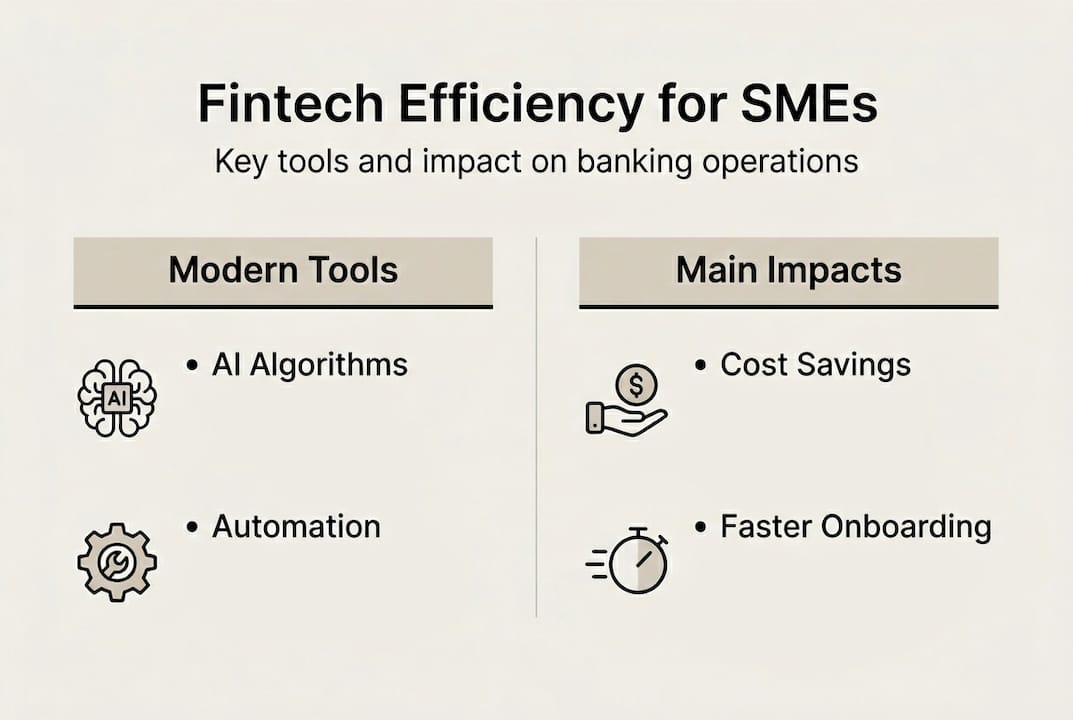
The numbers reflect real transformation. A recent survey recorded revenue growth at 40% and profit growth at 39% across fintech-driven firms, with roughly 80% already using AI for customer service and back-office automation. That scale of adoption changes the competitive baseline for every SME choosing a banking partner.
Here is a snapshot of what modern fintech tools deliver compared to traditional banking:
| Feature | Traditional bank | Fintech platform |
|---|---|---|
| Account opening | 5-15 business days | 1-3 days |
| Expense management | Manual or third-party | Built-in virtual cards |
| Compliance checks | Periodic, manual | Real-time, automated |
| API integrations | Limited or costly | Standard and open |
| Cross-border payments | High fees, slow | Competitive rates, fast |
Key capabilities that matter most for business banking trends in 2026:
- Digital onboarding with identity verification and document review built in
- Automated expense tracking via virtual and physical cards with real-time data
- Role-based access so your finance team controls the right accounts without risk
- Open API connections to your accounting, payroll, and ERP systems
- Real-time compliance monitoring that flags anomalies before they become problems
Pro Tip: When evaluating a fintech platform, do not just look at the feature list. Ask how fast you can go live, whether the API connects to tools you already use, and whether compliance is built in or bolted on. Integration speed and regulatory fit matter more than any single feature.
Exploring fintech innovation in banking gives a clearer picture of how these tools are reshaping the broader financial system that your business operates within.
Cross-border payments reimagined: Speed, cost, and access
For European SMEs, cross-border payments have historically been a source of frustration. Multi-day settlement windows, unpredictable foreign exchange markups, and correspondent banking fees have quietly eroded margins on international deals for years.
Fintech changes that equation. Faster, cheaper cross-border payments via SEPA, SWIFT optimizations, and open banking now save SMEs up to three times the cost compared to traditional banks. SEPA Instant, for example, settles euro transactions across most of the EU within ten seconds, around the clock. That kind of speed used to belong only to large corporates with premium banking relationships.
“Interlinking fast payment systems boosts trade by roughly 4%, with the effect being larger in high-cost regions and for wholesale payment systems.” — ECB Economic Bulletin 2026
That 4% trade boost sounds modest until you apply it to a business doing €2 million in annual international sales. Faster settlement means better cash flow, lower financing needs, and fewer deals lost because payment terms were too slow to close.
| Payment method | Speed | Typical SME cost | Fintech advantage |
|---|---|---|---|
| SEPA Credit Transfer | 1 business day | Low | Same-day options available |
| SEPA Instant | Under 10 seconds | Low | Accessible without premium tier |
| SWIFT (international) | 1-5 days | Medium-high | Optimized routing, lower fees |
| Open banking transfer | Real-time | Very low | No intermediary markups |
Common pain points that fintech cross-border payments directly address:
- Hidden correspondent bank fees that appear after the transfer
- Multi-day holds on funds arriving from non-EU suppliers
- Currency conversion spreads that are never disclosed upfront
- Limited access to SEPA Instant for businesses outside major financial centers
- Manual processes that require back-and-forth with relationship managers
Understanding the SWIFT payment guide details for European SMEs makes it easier to see where fees accumulate and how to avoid them. Similarly, knowing the IBAN role in seamless payments explains why having a dedicated European IBAN matters for receiving funds predictably. For a broader view on managing international SME payments, the compliance and efficiency interplay becomes especially clear.
Smarter compliance: How fintech simplifies complex regulations
Compliance is where many European SMEs feel the greatest day-to-day pressure. Anti-Money Laundering rules (AML), Know Your Customer requirements (KYC), and the Payment Services Directive (PSD2) create overlapping obligations that traditional banks often handle slowly and inconsistently.
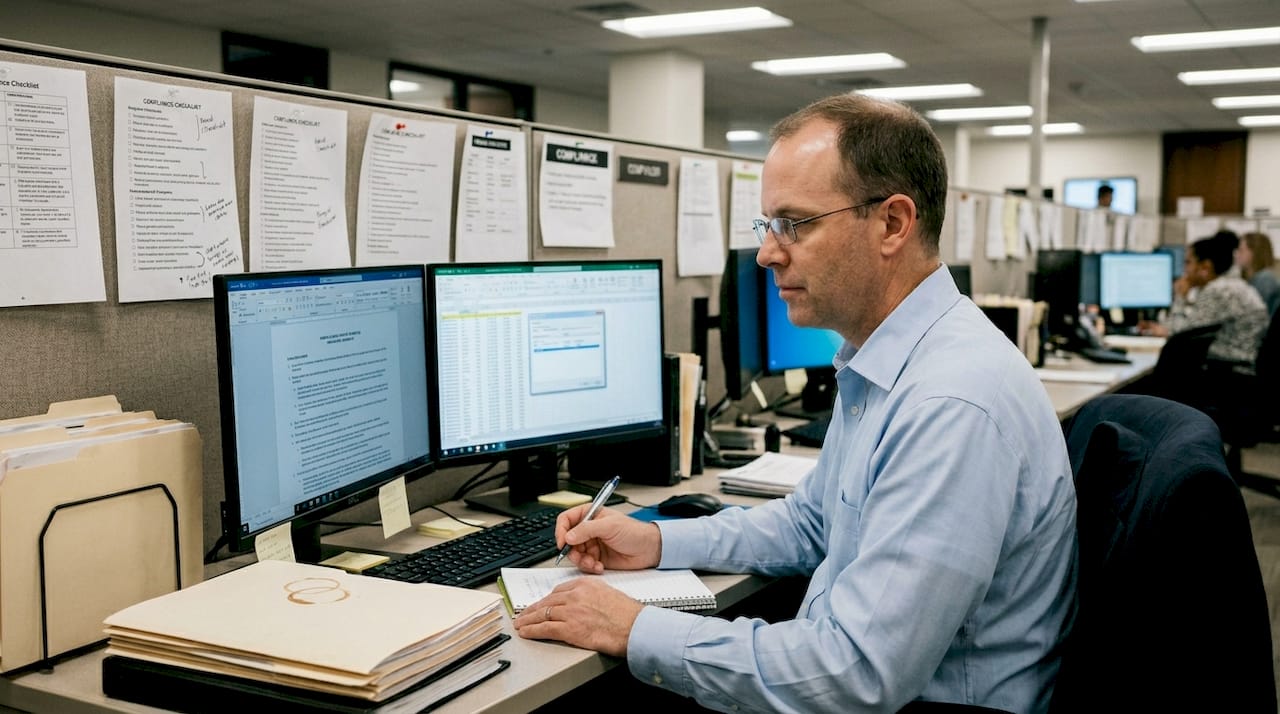
Fintech platforms automate these processes. Compliance automation across AML, KYC, and PSD2 has reduced onboarding from weeks to days, with medium-risk SMEs typically approved in one to three days. Low-risk businesses often see decisions in under 24 hours. High-risk sectors, such as crypto-adjacent businesses or those in regulated industries, receive specialized case-by-case review rather than an automatic rejection.
Only about 7% of SMEs are rejected during fintech onboarding, a far lower rate than many business owners expect after experiencing friction with traditional banks.
The typical fintech onboarding process for an SME looks like this:
- Submit company documentation online, including incorporation documents, ownership structure, and director identification
- Automated identity verification runs in real time using AI-powered document and biometric checks
- Risk profile assessment categorizes the business based on sector, transaction volume, and geography
- Compliance review is completed in one to three business days for most applicants
- Account activation with IBAN, payment access, and card issuance ready from day one
Pro Tip: Prepare your business registration certificate, proof of address, and beneficial ownership documentation before you start an application. Complete, accurate documents cut approval time significantly and reduce back-and-forth requests.
The modern compliance trends reshaping European banking show that automation is not just about speed. It also reduces human error in compliance reporting, creates audit trails automatically, and provides real-time alerts when transactions fall outside normal patterns.
Risks and realities: Fintech’s disruptive effect on traditional banks
Fintech disruption is real, but it is not a clean, linear story of progress. European SME owners deserve an honest picture of the risks alongside the gains.
Research on fintech’s effect on bank stability reveals a U-shaped relationship. Early fintech integration can increase bank fragility before stability improves at higher levels of adoption. This matters because if your primary banking partner is a smaller institution under fintech competitive pressure, their risk profile may be changing in ways that are not immediately visible.
Smaller banks face a specific structural challenge. Fintech platforms using big data and AI to challenge SME lending are steadily reducing the small business loan books of community and regional banks. The relationship-based lending advantage that smaller banks once held is eroding as algorithmic credit scoring becomes more accurate and accessible.
Key risks and mitigators for SMEs banking primarily with fintech platforms:
- Regulatory uncertainty: Fintech regulation varies across EU member states. Use platforms with EU licenses and segregated client funds.
- Limited credit products: Fintechs still lag in structured lending. Maintain a traditional banking relationship for credit needs.
- Platform concentration risk: If one fintech platform has issues, your payment flow stops. Maintain backup payment routes.
- Operational resilience: Check uptime SLAs and incident response policies before committing.
| Factor | Traditional bank | Fintech only | Hybrid model |
|---|---|---|---|
| Stability | High | Moderate | High |
| Innovation speed | Low | High | High |
| Compliance depth | High | Variable | High |
| Cross-border cost | High | Low | Low |
| Credit access | Strong | Limited | Strong |
The good news is that 84% of fintechs now partner with established banks for technology infrastructure and regulatory credibility, blending innovation with institutional stability. This convergence is reshaping what modern financial infrastructure looks like for SMEs and what fintech-agentic commerce will enable next.
A practical perspective: Why hybrid fintech-traditional models win for European SMEs
Here is the view that does not get enough airtime: going fully fintech is not always the smartest move for a European SME, even in 2026.
The businesses we see thriving are not the ones that abandoned their traditional bank entirely. They are the ones that allocated smartly. They use fintech for what it does best: fast account setup, automated compliance, low-cost cross-border transfers, and real-time expense visibility. They keep a traditional banking relationship for structured credit, established correspondent networks, and the occasional situation where institutional trust opens a door that a digital-only provider cannot.
PSD2 and open banking make this hybrid approach genuinely practical now. Interoperability between platforms was a friction point in 2020. Today, facilitating cross-border payments through connected systems means you can manage a SEPA Instant payment from your fintech account while your traditional bank handles your credit facility. That was nearly impossible before open banking standards forced interoperability.
The SMEs that get into trouble are the ones that chase the most innovative-sounding solution without checking regulatory fit, fund protection standards, and what happens when something goes wrong. Flexibility and regulatory alignment should outrank novelty every time.
Next steps: Experience the difference with modern SME banking
For SME owners ready to apply these insights, finding a banking partner that delivers all these fintech-powered advantages is the next crucial step.
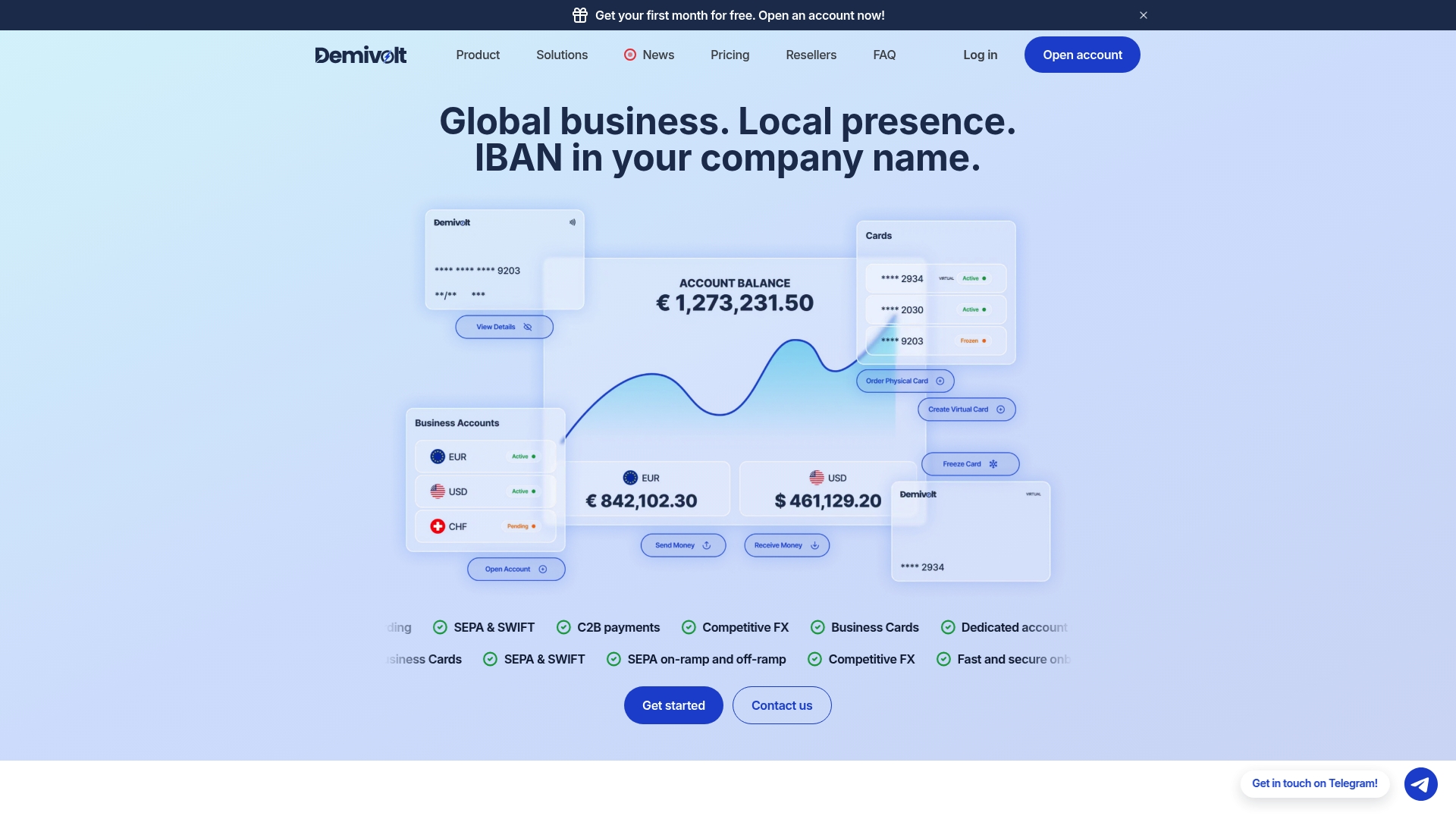
Demivolt’s business banking platform brings together everything covered in this guide: automated compliance, dedicated IBAN accounts, SEPA and SWIFT payment access, real-time expense management through virtual and physical cards, and multi-account structures built for cross-border operations. Onboarding is fast, transparent, and designed to meet EU regulatory standards from day one. Whether you are moving funds across borders regularly or simply want a financial setup that keeps your compliance obligations under control, Demivolt gives you the infrastructure to operate with confidence. Reach out to explore how it fits your specific business needs.
Frequently asked questions
How does fintech improve compliance for European SMEs?
Fintech platforms automate compliance tasks like AML, KYC, and PSD2 monitoring, with most SMEs onboarded in one to three days and real-time transaction monitoring built in from the start.
What are the main risks of relying solely on fintech for business banking?
Exclusive fintech use can expose SMEs to early-stage bank fragility risks and limited credit access, particularly as smaller traditional banks adjust to competitive pressure from algorithmic lenders.
How do fintechs cut cross-border payment costs for SMEs?
They use SEPA Instant, SWIFT optimization, and open banking rails to deliver faster transfers at up to three times lower cost than traditional banks, with transparent fee structures and no hidden correspondent charges.
Is hybrid (fintech + traditional) banking better for European SMEs?
A hybrid approach combines fintech speed with traditional bank stability, and open banking interoperability now makes managing both simultaneously far more practical for European SMEs handling compliance and cross-border risk.
Recommended
- Demivolt | Blog – Modern business banking trends: boost efficiency & compliance
- Demivolt | Blog – International payments for SMEs: efficiency, compliance, growth
- Demivolt | Blog – How to streamline your digital business banking workflow
- Demivolt | Blog – Onboarding in fintech: Efficient, compliant solutions for SMEs
- Role of Technology in Mortgages – Impact in Ontario
- Machine Learning in Finance – Maximizing Trading Efficiency