
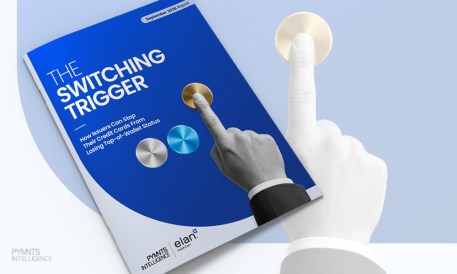
Wallet Hierarchy Shifts Quickly
A credit card's position in a consumer's wallet can change rapidly, and when it does, spending patterns typically follow. Research from PYMNTS Intelligence in collaboration with Elan Credit Card examines how cardholders select a primary card, what prompts them to switch, and which retention strategies can preserve the relationship.
The study demonstrates that issuers frequently have opportunities to defend their position — if they can identify early warning signals and respond with relevant value propositions.
Competitors Win With Stronger Offers
Rival issuers capture market share by delivering superior value propositions. The research identifies three dominant attractions:
- 38% of switchers moved to cards offering better rewards
- 36% were drawn by higher credit limits
- 30% responded to sign-up bonuses
While dissatisfaction contributes to some departures, a more compelling competitive offer frequently proves decisive.
Generational Divide Defines Loyalty
Age emerges as a critical variable in card retention. 82% of baby boomers and seniors maintained the same primary card over the past two years, compared to just 44% of Gen Z cardholders.
Digital experience carries greater weight among younger segments. 66% of Gen Z consumers cite mobile app quality as a loyalty factor, making technology infrastructure a competitive differentiator for this demographic.
Thirty Million Cardholders at Risk
Approximately 30 million U.S. credit card users report being very or extremely likely to change their primary card within the next 12 months. Gen Z demonstrates the highest switching propensity.
Cardholders who have previously switched show significantly elevated risk of switching again, suggesting behavioral patterns rather than isolated incidents.
Proactive retention strategies — including enhanced rewards structures, mobile feature upgrades, and targeted promotional offers — can provide cardholders with concrete reasons to maintain their current primary card.
Research Methodology
The analysis draws on a survey of 2,460 U.S. consumers holding at least one general-purpose credit card, conducted in June 2026. The sample comprised 884 cardholders who changed their primary card in the preceding 24 months and 1,576 who did not.
Detailed switching analysis examined 426 switchers who described a specific triggering event, 335 whose issuers attempted retention offers, and 114 who cited poor mobile app experiences as a contributing factor to their departure.
Source
Original coverage by PYMNTS.
Use the button below to read the article on the publisher website.
Read on PYMNTSRelated to this article