
Geography as a financial barrier
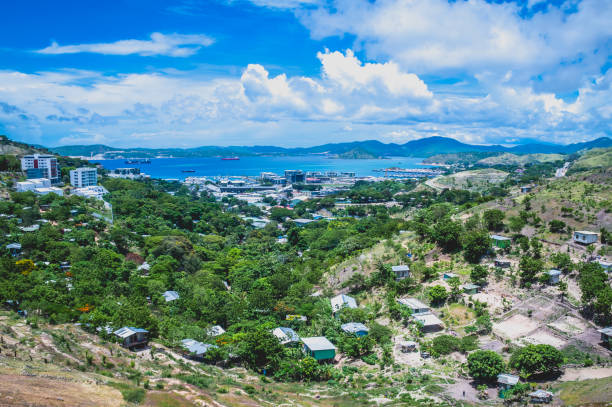
Across Papua New Guinea, getting to a bank branch can mean travelling by boat, crossing mountains, or leaving a rural community for the nearest town. For many households — especially women and people in the informal economy — the real cost of reaching a bank often exceeds the amount they'd deposit.
That geography sets Papua New Guinea's digital finance story apart from more urban markets. Mobile banking and fintech here aren't just about convenience; they're about reaching communities that traditional branch networks have never served.
According to the International Monetary Fund, Papua New Guinea's economy is expected to reach approximately $34.4 billion in 2026, with GDP per capita around $2,630. The IMF projects real growth of 3.8 per cent this year, with inflation at five per cent. Mining, liquefied natural gas, agriculture, fisheries, and forestry remain the economy's backbone, centred on Port Moresby.
Four-fifths lack formal accounts
Around 80 per cent of Papua New Guinea's population is unbanked or underbanked, the Asian Development Bank estimates. That figure reflects more than income levels — it's the outcome of serving a scattered population across islands, highlands, and remote districts.
Bank branches and ATMs cluster in larger towns. Unreliable power, weak connectivity, and transport costs limit access elsewhere. Under those conditions, mobile banking, agent networks, and low-cost digital accounts can deliver more value than another brick-and-mortar branch.
In June 2026, the opening of a Mama Bank access point in Wau-Waria restored formal banking to the district after several years. The facility provides EFTPOS and ATM access, blending physical infrastructure with digital services.
National strategy targets women
Papua New Guinea's National Financial Inclusion Strategy 2023–2027 aims to bring two million unbanked people into the formal system, with women expected to make up half of the new customers. The plan prioritises financial literacy, digital infrastructure, consumer protection, green finance, and partnerships between public institutions and financial providers.
The Centre for Excellence in Financial Inclusion reported in April 2026 that national bank-account ownership had risen above 4.3 million, with more than 1.5 million accounts held by women. Yet the gender gap remains wide, and account numbers don't necessarily mean active use.
The Bank of Papua New Guinea, the country's central bank, has acknowledged that credit access remains low and that the gender gap in financial access has widened despite improvements in account ownership. Women in rural areas continue to face obstacles involving identification, collateral, financial literacy, and control over household income.
From opening to using accounts
The next challenge is meaningful usage, not just registration.
As of December 2022, Papua New Guinea had around 1.27 million mobile-banking accounts, but women owned only about 30 per cent of them. That historical imbalance explains why the current inclusion strategy emphasises gender-responsive digital products and financial education.
The Centre for Excellence in Financial Inclusion has delivered financial-literacy training to more than 250,000 people, including approximately 120,000 women. The programmes cover savings, budgeting, digital security, and practical product use — not just account opening.
A dormant account does little to improve household resilience. A regularly used digital account can enable savings, receive wages, document transactions, and eventually support credit access.
Modernising payment infrastructure
The Bank of Papua New Guinea continues modernising the national payments system, covering electronic transfers, card payments, and high-value transactions between financial institutions. Its Retail Electronic Payments System provides common infrastructure for participating banks and financial-service providers.
In November 2025, the Asian Development Bank approved a $100 million programme to improve financial access and maintain Papua New Guinea's connection to international payment systems. The reforms include stronger e-money regulation, digital identification, and measures to support online identity verification.
Measuring fintech success
Papua New Guinea's fintech progress won't be measured by how many start-ups launch in Port Moresby. It will be measured by whether a woman in a remote district can open and safely use an account, whether a farmer can receive payment without travelling for hours, and whether a small enterprise can build the financial record needed to obtain credit.
Digital finance can't remove the mountains or shorten the sea routes separating communities. But it can reduce the distance between people and the financial system. For Papua New Guinea, that may be fintech's most important contribution.
Source
Original coverage by The Fintech Times.
Use the button below to read the article on the publisher website.
Read on The Fintech Times