

BIN sponsorship lets a regulated issuer lend its license and BIN to a fintech, so the fintech can issue cards and accept payments without becoming a licensed issuer itself. The sponsor keeps legal and scheme accountability; the fintech runs the product and customer experience. Most startups choose this route for one reason: it cuts months, sometimes years, off the time it takes to launch a card program.
TL;DR:
- Most fintechs prefer BIN sponsorship because it significantly reduces the time to market by avoiding the lengthy process of obtaining a direct issuer license.
- The sponsor, usually a regulated bank or e-money institution, holds legal responsibility for the BIN, while the fintech manages the customer experience and product design.
- Regulators are increasingly treating BIN sponsorship as outsourcing, requiring sponsors to maintain continuous oversight, training, and operational transparency to ensure compliance.
- Key criteria for selecting a sponsor include scheme coverage, geographic settlement ability, settlement models, fraud tools, reporting quality, SLA commitments, and clear migration procedures.
- Most founders should prioritize contractual guarantees on data portability, reporting access, and migration clauses over the initial cost when choosing a BIN sponsor.
DemivoltBuild On Compliant Payment InfrastructureDemivolt helps modern businesses manage IBAN accounts, SEPA and SWIFT payments, and business cards through regulated European fintech infrastructure.Explore Demivolt
Table of Contents
- How BIN Sponsorship in Fintech Actually Works
- Which Businesses Actually Need a BIN Sponsor?
- Who Is Legally Responsible When Something Goes Wrong?
- How to Choose a BIN Sponsor: Checklist and Red Flags
- Planning BIN Architecture, Fraud Controls, and Timelines
- How Demivolt’s Infrastructure Maps to These Requirements
- Priorities for Founders Evaluating BIN Sponsors in 2026
- Get Regulated Card and Payment Infrastructure Without the Guesswork
- Sources
- FAQ
How BIN Sponsorship in Fintech Actually Works
A BIN sponsorship arrangement involves more parties than most founders expect. Each one has a distinct job, and understanding the handoffs between them matters more than memorizing titles.
- Sponsor/issuer: the regulated bank or e-money institution that owns the license and the Bank Identification Number (BIN), and carries legal responsibility to the card scheme.
- Issuer processor: the technical layer that authorizes transactions, manages card data, and connects to the scheme’s rails.
- Program manager: often the fintech itself, or a third party, that designs the card product, sets spending rules, and owns the customer relationship.
- Card scheme: Visa or Mastercard, which sets network rules and ultimately approves the BIN’s use.
- Card manufacturer: produces the physical cards when the program isn’t virtual-only.
When a cardholder taps to pay, the transaction routes through the scheme to the BIN, which identifies the sponsor as the accountable issuer. The sponsor clears and settles the funds, even though the fintech’s app is what the customer sees. Most sponsors expose this process through APIs for authorization data, daily reconciliation files, and settlement reporting, which is what lets fintech operations teams reconcile transactions against their own ledgers without manual work. Demivolt’s own explainer on BIN sponsorship basics covers the mechanics of this handoff in more depth.
Which Businesses Actually Need a BIN Sponsor?
Not every fintech needs sponsorship, but a specific set of business models depend on it almost entirely.
- Neobanks issuing debit cards without holding a full banking license.
- Embedded finance brands adding payment cards to a non-financial product, like a logistics or HR platform.
- Payroll and expense platforms issuing cards tied to employee spending controls.
- Card-enabled lenders distributing credit lines through physical or virtual cards.
Sponsorship wins on speed and cost when a company needs to launch within months rather than the one to two years a direct issuer license can take, and it avoids the capital reserves regulators demand of standalone issuers. A company should prioritize pursuing its own license only when card issuance is the entire business, not a feature, and long-term margin depends on removing sponsor fees from the cost structure.
Who Is Legally Responsible When Something Goes Wrong?
The sponsor carries legal and scheme accountability for the BIN, full stop. That doesn’t mean the fintech is off the hook. Fintechs remain responsible for customer-facing compliance, including their own AML and KYC controls, transaction monitoring, and how they represent the product to end users.

Regulators are actively formalizing this split; for a closer look at regional market dynamics, see Digitalne banke i mobilno bankarstvo u Hrvatskoj. The European Banking Authority’s 2025 report on white labelling found the model in use at 35% of responding banks, and flagged concentration risk and outsourcing oversight as areas needing harmonized supervisory standards across the EU. That finding signals regulators increasingly treat BIN sponsorship as a form of outsourcing requiring active third-party risk management, not a hands-off referral arrangement.
Mastercard moved first on the network side. Its new BIN Sponsor Plus program formalizes enhanced training, deeper due diligence, and ongoing operational accountability for sponsors, with a pilot launched in the U.K.
Mastercard’s accreditation isn’t a one-time badge. Sponsors have to maintain continuous training, ongoing due diligence, and demonstrated operational transparency, or risk losing standing in the program.
Industry observers see this as the end of informal sponsorship deals. PYMNTS reporting frames the shift as sponsors acting more like true principals with active oversight, which raises the diligence bar fintechs face at onboarding and throughout the relationship, not just at signing.
How to Choose a BIN Sponsor: Checklist and Red Flags
Picking a sponsor is closer to picking a regulated business partner than buying software. Work through these criteria before signing anything:
- License and scheme coverage — confirm the sponsor holds direct scheme membership for every market and card type your roadmap requires.
- Geographic coverage — verify the sponsor can settle in the currencies and jurisdictions your customers actually live in.
- Settlement and prefunding model — understand exactly how and when funds move, and what capital you need to hold in reserve.
- Fraud tools and PCI scope — clarify what fraud monitoring the sponsor provides versus what you must build yourself.
- Reporting and APIs — test the actual data feeds, not just the sales deck’s screenshots.
- SLAs and uptime commitments — get these in writing with financial remedies attached.
- BIN ownership and migration terms — know upfront what happens to your cardholder base if the relationship ends.
Contract negotiations should prioritize liability allocation, audit rights, exit and migration terms, and data ownership over headline pricing. Pro Tip: Ask every prospective sponsor to walk you through an actual past migration, not a hypothetical one. If they can’t name a client who moved BINs smoothly, that’s your answer.
Walk away from any sponsor vague about its regulatory footprint, unable to describe a concrete BIN migration path, or offering reporting that can’t be tested during due diligence.

Planning BIN Architecture, Fraud Controls, and Timelines
Most founders assume one BIN will cover the whole product roadmap. It rarely does. Card scheme guidance increasingly recommends planning for multiple BINs from the start, segmented by product line or risk tier, so a fraud spike in one segment doesn’t force a scramble across your entire card base.
Operational planning should account for:
- BIN segmentation by product, geography, or risk profile, decided before launch rather than retrofitted later.
- Fraud monitoring and chargeback workflows, including who owns dispute resolution day to day.
- PCI DSS scope, since outsourcing card issuance to a sponsor doesn’t remove the fintech’s own cardholder-data handling obligations.
- Onboarding timeline, typically running from a signed letter of intent through integration, a pilot phase, and finally production, often spanning several months.
Cost line items usually include setup fees, per-transaction interchange sharing, monthly minimums, and prefunding requirements tied to settlement volume. Budget for all four before comparing sponsor quotes side by side.
How Demivolt’s Infrastructure Maps to These Requirements
Every criterion above points to the same underlying need: infrastructure built for regulatory scrutiny from day one, not retrofitted after a compliance gap surfaces. A regulated European platform offers dedicated IBAN accounts, SEPA and SWIFT processing, and card program infrastructure, with client funds held in segregated accounts.
That structure directly addresses two of the checklist items founders struggle with most: settlement transparency and fund safeguarding. Multi-account structures and role-based user management also give operations teams the reporting granularity that BIN segmentation demands, reducing the migration risk that catches unprepared fintechs off guard when a sponsor relationship changes.
Priorities for Founders Evaluating BIN Sponsors in 2026
Founders who get burned by sponsorship rarely fail because of pricing. They fail because they signed without a real migration clause or transparent reporting, then discovered both too late. Prioritize contractual guarantees on data portability and reporting access over the lowest quoted rate.
If your roadmap includes multiple products or markets, design for multiple BINs now, not after your first fraud incident forces the issue. Treat your sponsor as a governance partner you’ll manage for years, not a vendor you select once.
— dd
Get Regulated Card and Payment Infrastructure Without the Guesswork
Demivolt gives fintechs and SMEs a direct route to regulated banking infrastructure without navigating a patchwork of vendors for accounts, payments, and card issuance separately.
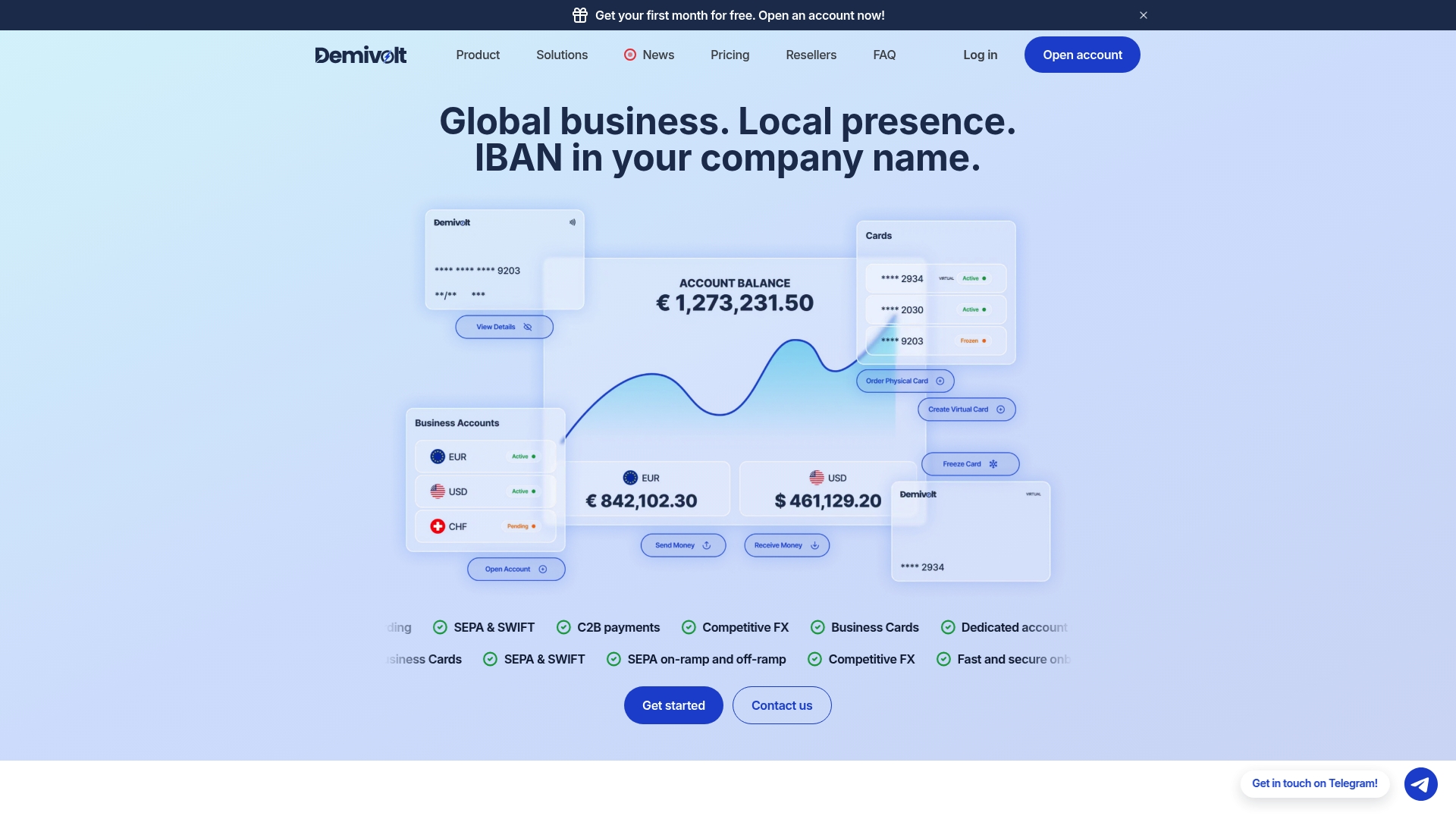
If the sections above left you weighing sponsor migration clauses or wondering how card programs fit into your existing banking setup, that’s exactly the gap Demivolt’s card programmes infrastructure closes, alongside dedicated business accounts, SEPA and SWIFT payment processing, and compliance services built for cross-border operations. Founders exploring a full banking layer instead of a single card feature can review Banking-as-a-Service (BaaS) options, while advisors working with multiple fintech clients can look into the reseller program for recurring revenue share. Start by visiting the business accounts page to see how account opening and verification work, or request a walkthrough of the card program infrastructure directly.
Sources
FAQ
What Is a Fintech Company?
A fintech company uses technology to deliver financial services, such as payments, lending, or banking infrastructure, typically faster and with lower overhead than traditional banks. Many fintechs, including neobanks and embedded finance platforms, rely on BIN sponsorship rather than holding their own issuer license.
Is Zelle a Fintech Company?
Zelle is a payments network jointly owned by major U.S. banks, so it operates more like bank-owned infrastructure than an independent fintech startup. It doesn’t rely on BIN sponsorship in the way a card-issuing neobank does, since it moves money between existing bank accounts rather than issuing cards.
What Are the Top Fintech Companies Using BIN Sponsorship?
There’s no single official ranking, since sponsorship arrangements are rarely public, but neobanks, payroll card platforms, and embedded finance brands make up the bulk of BIN sponsorship users globally. The common thread is a need to issue cards fast without pursuing a direct issuer license.
Who Is Considered the Father of Fintech?
There’s no single agreed-upon founder of fintech, since the term describes a decades-long convergence of banking and technology rather than one invention. Some credit early ATM and electronic trading pioneers, though the label is more industry shorthand than a settled historical fact.
How Much Does BIN Sponsorship Cost?
Costs vary by sponsor and typically include setup fees, per-transaction interchange sharing, and monthly minimums, so there’s no single flat rate across the industry. Demivolt publishes current pricing for related services like payment processing directly on its site rather than through generic industry averages.