
Fintech paaiškinta
Fintech paaiškinta pagal Demivolt
Trumpi, suprantama kalba paaiškinti vaizdo įrašai, kurie paprastai paaiškina fintech, mokėjimus ir pramonę – po vieną temą.
Why Is My Bank Asking Where My Money Came From?
A transfer shows who sent the money, not what it was for. A request for evidence is an extra check, not an accusation.

Why Was I Charged More Than Google's Exchange Rate?
Google's rate is a guide, not a promise. Card issuers add margins and fees, and a shop converting the price for you can cost even more.
Why Does My Card Sometimes Ask for a PIN When I Tap?
Contactless is built to be quick, but after several taps or higher spending your bank may add a security check — even for a coffee.
Refund Never Arrived? What to Do (Card Refunds, Part 3)
Get the refund confirmed in writing, ask for a tracking reference, and if the shop goes quiet, ask your bank about disputing the charge.

How a Card Refund Gets Back to Your Account (Card Refunds, Part 2)
From the shop's payment processor to its acquiring bank, through Visa or Mastercard, to your card issuer — and finally into your account.
Why Is My Refund Taking So Long? (Card Refunds, Part 1)
The shop approving your refund is only step one — the payment companies and banks still need to process it, which can take days to weeks.
Sent Money to the Wrong IBAN? Do This Fast
Contact your bank or transfer service straight away — the payment may be rejected or stopped, but a return isn't guaranteed.
Why Is My Card Payment Still Pending?
A pending payment is usually a hold — the money is set aside, but the business hasn't collected it yet.

I'm Speaking at iFX EXPO Asia — The Compliance Tightrope
A panel in Hong Kong on the question every growing financial firm faces: how fast can you grow without breaking the rules?
How to Actually Stop a Recurring Card Payment
Cancel with the company first, keep the confirmation, and know that stopping the payment isn't the same as ending the contract.
You Replaced Your Card — So Why Did the Subscription Still Renew?
Your new card details can follow you automatically. Cancelling the card is not the same as cancelling the subscription.

What Is a Virtual IBAN — and Why Do Businesses Use Them?
One account underneath, many IBANs on top — so an incoming payment says who it came from without anyone matching it by hand.
What Actually Happens After a Suspicious Transaction Is Detected?
An alert fires, then a person takes over — and the aim is to find the ones worth a closer look, not to assume guilt.
KYC vs KYB vs EDD — What's the Difference?
Three acronyms doing three different jobs: verifying a person, a company, and the cases that need a closer look.
What Is the Travel Rule — and Why Does It Matter for Crypto?
Identifying information has to travel with a transfer — which is straightforward for banks and awkward for blockchains.
Is a Digital Wallet the Same as a Bank Account?
Usually not — most wallets are a way to pay, not a place your money actually sits.
What Is Open Banking? Can Anyone See Your Account?
No, it doesn't make your account public — it lets you choose who sees what, and take that permission back.
Why Do Card Payments Get Declined?
Funds, details, limits, expiry, the merchant's own checks — a decline rarely means anything is wrong with your account.
What Actually Happens When You Tap Your Card?
Three systems talk to each other in the second between the tap and the beep.
Why Do Fintech Companies Ask So Many Questions?
Onboarding can feel like an interrogation — here's the reason behind each question, and why it's a legal requirement.
Why Do Some Payments Get Delayed or Reviewed?
A held payment usually isn't a problem — it's a check running, and complete details are the fastest way past it.
What Is BIN Sponsorship? Card Programmes Explained
The route to issuing your own branded cards without joining a card network yourself.
What Is Embedded Finance? Explained Simply
Financial services built straight into a product you already use — payouts, cards and accounts without leaving the platform.
What Is Banking as a Service (BaaS)?
How a company offers accounts, IBANs and cards under its own brand without holding the licence itself.
What Is an IBAN and What Is It Used For?
That long string of letters and numbers is an address — and despite the name, it isn't only for international payments.
What Is a Virtual Card? Explained Simply
A real payment card that never exists physically — issued instantly, controllable, and ready before plastic would arrive.
What Is Transaction Monitoring? Explained Simply
How institutions spot payments that don't fit the pattern — and why the point isn't to block ordinary customers.
What Is Sanctions Screening? Explained Simply
The check that runs behind the scenes when an account opens or money moves — and why it sometimes pauses a payment.
What Is an MLRO? The Role Explained
The person inside a regulated institution who is accountable for spotting and reporting financial crime.
What Is AML? Anti-Money Laundering Explained Simply
The rules and controls that stop financial services being used to move illegally obtained money.
What Is KYC and Why Does It Matter?
Why financial institutions ask so many questions before opening an account — and how it protects you.
What Does Fintech Actually Mean?
The word gets used everywhere — here's what fintech actually covers, for individuals and businesses alike.
How to Keep Your Personal Information Safe in Fintech Apps
Practical steps to protect your personal information across every fintech app you use.
How to Know if a Fintech App Is Safe
A few quick checks to confirm a fintech app is properly licensed before you trust it with your money.
Daily Fintech
Where fintech already shows up in your day, from tap-to-pay to fraud alerts, and how businesses use it too.
What is an EMI?
What an Electronic Money Institution actually is, how it differs from a bank, and where Demivolt fits in.
SEPA vs SWIFT, explained
Two rails, two speeds, two price tags: when each one is used, and why it matters for your business payments.
Are banks actually fintech?
Yes and no — where banks and fintech overlap, and why they're stronger together.
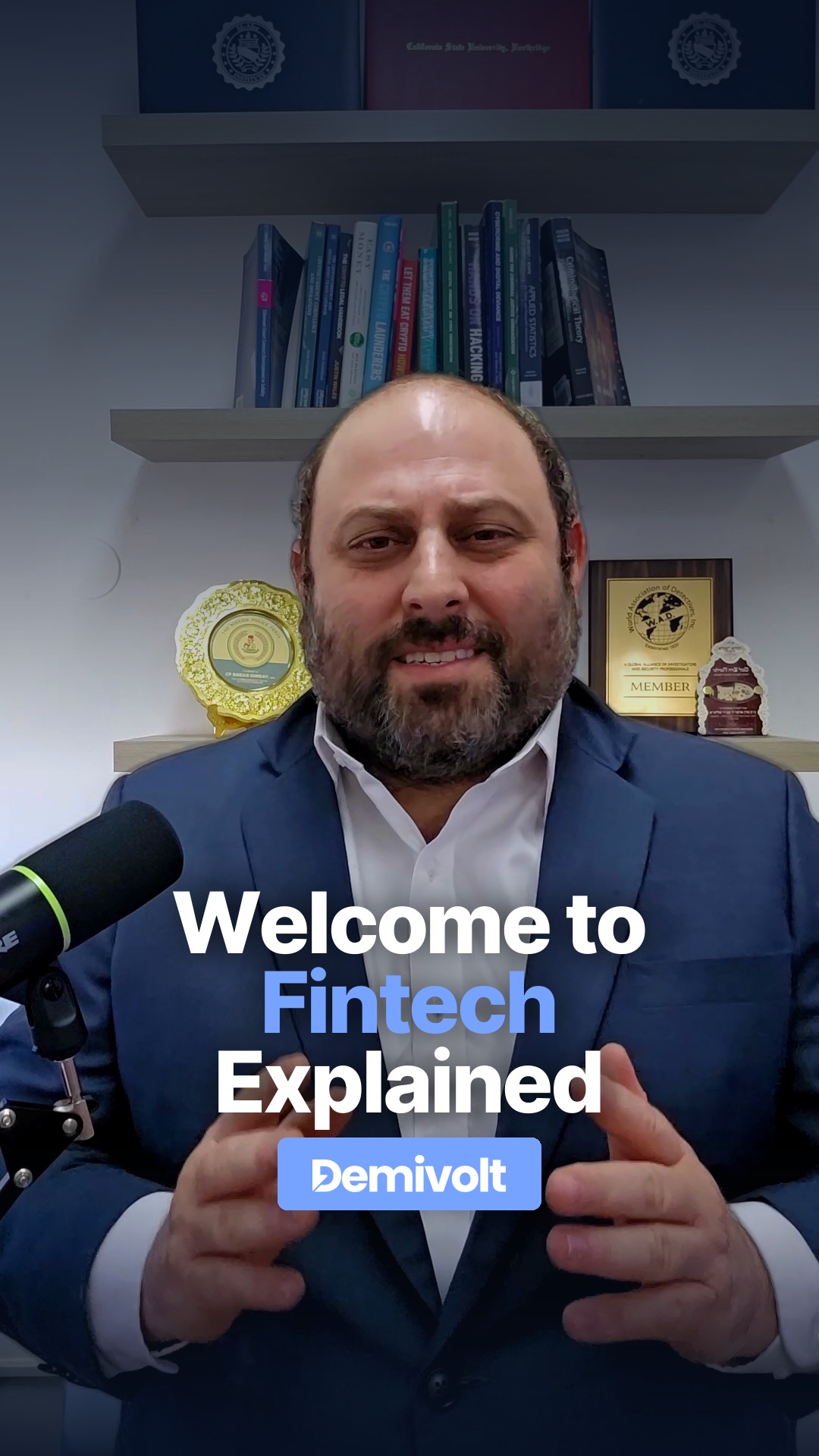
Welcome to Fintech Explained by Demivolt
Meet the host and find out what this series is all about.