
Stablecoins and Crypto Seen as Identical by Most Consumers
Many consumers lump stablecoins and cryptocurrency into the same category despite key differences between the two digital assets, according to June 2026 research from PYMNTS Intelligence and Velera.
Cryptocurrency prices swing widely, and most people treat the assets as investments. Stablecoins are typically pegged to traditional currencies like the U.S. dollar and built for payments. Yet the study reveals those distinctions barely register with consumers across age groups — they perceive both products as variations of the same thing.
Interest Levels Track Closely Across Asset Types
The data shows minimal separation in consumer attitudes toward the two digital currencies:
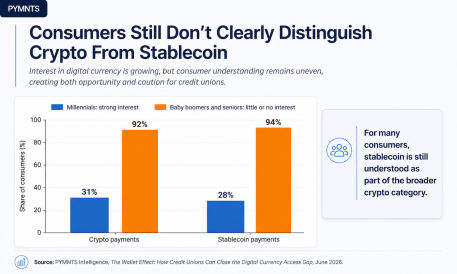
- 31% of millennials express strong interest in using cryptocurrency for payments
- 28% of millennials express strong interest in stablecoin payments, just 3 percentage points lower
- 94% of baby boomers and seniors report little or no interest in stablecoin payments, compared with 92% for cryptocurrency
The narrow gaps suggest stablecoins have failed to carve out a distinct identity. Crypto has built broad recognition through years of media attention and app-based investing platforms. Stablecoins remain less familiar, so consumers transfer their assumptions about crypto — including worries about price swings — to the newer asset class.
Education Opportunity for Credit Unions
The confusion opens a door for credit unions rather than closing one. Consumer behavior around digital assets is still taking shape, giving financial institutions space to clarify how the products differ, where they might prove useful, and what risks they carry.
The report advocates for measured engagement built on familiar experiences rather than a rush into speculative offerings. The goal is to meet members where they are and expand understanding over time.
Digital Wallets Drive Higher Engagement
Digital wallets may serve as the connecting point. Interest climbs when consumers can reach digital assets through tools they already use to pay, transfer, and manage money.
Among millennials, strong interest in cryptocurrency rises from 31% for direct payments to 35% when accessed through a digital wallet. Among credit union members, strong interest in stablecoin payments jumps from 5% to 12% when wallet access is available.
The findings suggest credit unions can strengthen relevance by pairing education with trusted interfaces and selective partnerships that integrate digital assets into existing member experiences.
Source
Original coverage by PYMNTS.
Use the button below to read the article on the publisher website.
Read on PYMNTSSusiję su šiuo straipsniu