
ICBA Challenges Trust Charter Rule
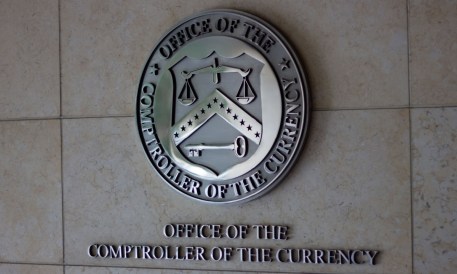
The Independent Community Bankers of America filed a lawsuit Friday against the Office of the Comptroller of the Currency, arguing the regulator has allowed cryptocurrency companies to enter the banking system without facing the same level of scrutiny applied to traditional community banks.
At the heart of the legal challenge is the OCC's March 2 final rule concerning Interpretive Letter No. 1176. The banking association contends both the rule and accompanying guidance improperly grant the OCC powers to charter national banks that exceed the authority provided under the National Bank Act.
The lawsuit requests a federal court to declare both the final rule and the interpretive letter unlawful.
Alleged Regulatory Loophole
The OCC's decision to allow companies to obtain national trust bank charters to conduct substantial non-fiduciary activities exceeds the authority Congress granted the agency, ICBA President and CEO Rebeca Romero Rainey said in a statement.
Romero Rainey argued that Congress never intended the national trust charter to serve as an alternative pathway into the banking sector for cryptocurrency firms looking to gain the credibility associated with a federal bank charter while avoiding obligations such as Community Reinvestment Act requirements, consolidated supervision, capital and liquidity standards, and FDIC insurance that apply to insured depository institutions.
OCC Defends Final Rule
When the regulator issued its National Bank Chartering final rule, the OCC maintained it merely clarifies long-established authority for national banks limited to trust company operations to conduct non-fiduciary activities alongside their fiduciary services.
According to the agency, the final rule neither expands nor contracts the OCC's existing charter authority.
The OCC has historically supervised national trust banks, many of which perform non-fiduciary custody and safekeeping services in addition to traditional fiduciary functions.
Industry Reaction
The Bank Policy Institute weighed in on the dispute, emphasising that novel entities should face equivalent regulatory standards as established chartered institutions.
Companies should not receive trust charters unless they plan to limit their operations to genuine trust activities, Paige Pidano Paridon, executive vice president and co-head of regulatory affairs at BPI, said in a statement Friday.
Paridon added that firms wanting to engage in traditional banking activities should pursue full-service banking charters instead. BPI supports bringing innovative products and services into the regulated banking ecosystem, provided those entities operate under the same rules and responsibilities as every other chartered institution conducting similar activities.
What the Rule Changes
The OCC stated its amendment to the final rule aims to eliminate potential confusion created by earlier regulatory language and to better align its rule with the National Bank Act.
By explicitly referencing operations of a trust company and activities related thereto, the rule confirms that trust-chartered national banks are not restricted exclusively to traditional fiduciary functions, potentially opening the door for a broader range of permissible activities.
Source
Original coverage by PYMNTS.
Use the button below to read the article on the publisher website.
Read on PYMNTSRelated to this article