

Submit your payment before your bank’s published cut-off, and same-day processing is realistic; miss it, and standard SEPA defaults to next business day. SEPA Instant (SCT Inst) skips this calculation entirely, settling around the clock nearly instantly when both banks support it, and the Instant Payments Regulation is steadily pushing more banks into that category. Until your bank and your payee’s bank are both instant-ready, cut-off times still decide whether money moves today or tomorrow. For businesses juggling both rails, a provider built around SEPA and instant payment operations removes much of that guesswork.
TL;DR:
- Payments submitted after your bank’s day-end cut-off are processed the next business day, unless both banks support instant transfer through SCT Inst.
- Standard SEPA transfers usually arrive within one business day, but delays can occur due to cross-border routing, mismatched details, or weekends.
- Over 90% of payment users can complete instant transfers anytime, but reachability depends on both banks supporting SCT Inst and having it enabled.
- Regulations are expanding SCT Inst adoption across Europe, but actual instant processing depends on individual banks’ technical readiness and support.
- Building operational procedures around validated cut-off times and a fallback to instant payments reduces the risk of missing deadlines and delays.
DemivoltKeep Cross-Border Payments MovingDemivolt provides business accounts and SEPA and SWIFT payment solutions for companies managing international operations.Explore Demivolt
Table of Contents
- What Does “Cut-off Time” Mean for SEPA Payments?
- How Long Does a Standard SEPA Transfer Actually Take?
- SEPA Instant vs Standard SEPA: When Does the Cut-off Stop Mattering?
- What Do Typical SEPA Cut-off Windows Look Like?
- How Do You Guarantee Same-Day or Next-Day Credit?
- How Is the Instant Payments Regulation Changing Cut-offs?
- Operational Lessons for Finance Teams Handling Euro Payments
- A Payment Setup Built Around Deadlines, Not Around Guesswork
- Sources
- FAQ
What Does “Cut-off Time” Mean for SEPA Payments?
A cut-off time is the deadline your bank sets for accepting a payment instruction into its next outgoing batch to the clearing system. Submit after that deadline, and your instruction waits for the following window or the next business day, regardless of when you actually clicked “send.”
EU payment rules define this moment as the “time of receipt,” the point when your bank has all the information it needs to execute the transfer, not the moment you initiated it in your banking app. Clearing systems like STEP2 and Germany’s SEPA-Clearer process transfers in scheduled batches. Deutsche Bundesbank’s own procedural rules for SEPA credit transfers list several submission windows across a business day.
Each bank sets its own internal cut-off ahead of the clearing system’s window to leave room for validation and fraud checks. That is why two banks publishing “SEPA cut-off” on their websites can quote different hours. Your bank’s own published time, not a generic industry figure, is the one that governs your transfer.

How Long Does a Standard SEPA Transfer Actually Take?
Under EU rules, a payer’s bank must get an ordinary SEPA credit transfer to the payee’s bank by the end of the next business day after receipt. In practice, many transfers arrive same day when submitted early, but D+1 remains the legal baseline banks are built around, not a worst case.
Several things push a transfer past D+1. Cross-border routing between smaller or less-connected banks can add a hop. Missing or mismatched IBAN and beneficiary name details trigger manual review. Anti-fraud screening holds a transfer for verification. Weekends and public holidays don’t count as business days, so a Friday afternoon submission commonly lands the following Monday or later.
Timing also splits by side. The debit from your account often happens the same day you submit, while the credit to the payee depends on their bank’s own processing queue. That gap is normal and explains why your account balance drops before the recipient sees funds arrive.
SEPA Instant vs Standard SEPA: When Does the Cut-off Stop Mattering?
SEPA Instant, known formally as SCT Inst, settles in seconds and runs 24/7, including weekends and holidays. Lietuvos bankas has confirmed that more than 90% of payment service users can already send instant transfers to accounts at other banks or electronic money institutions and complete them within seconds, any day of the year.
The catch is reachability. Both your bank and the payee’s bank need to participate in SCT Inst and be technically reachable through settlement infrastructure like TIPS and verification-of-payee systems. If either side hasn’t opted in, your payment automatically falls back to standard SCT and its D+1 expectations, cut-off included.

Per-transaction limits still apply at some banks, and not every institution enables instant transfers for every account type. Before assuming instant will bail you out of a tight deadline, confirm both reachability and your own limit. A complete guide to SCT Inst mechanics covers how adoption varies across providers.
What Do Typical SEPA Cut-off Windows Look Like?
Clearing operators publish multiple daily submission windows rather than one fixed deadline, and individual banks set their own internal cut-off ahead of each window to leave processing time. Deutsche Bundesbank’s SEPA-Clearer documentation lists representative windows through the day, giving an illustrative sense of how the schedule typically breaks down, with early windows in the morning through evening and value dates that are typically same day or next business day depending on the timing.
These figures come from SEPA-Clearer’s procedural rules and illustrate a general pattern rather than any single bank’s exact schedule. Your own bank’s website is the authoritative source for the hour that applies to your account. Large or batched files often carry earlier internal cut-offs than single transfers, since banks need extra time to validate volume before handing a file to the clearing system.
How Do You Guarantee Same-Day or Next-Day Credit?
A short pre-submission routine catches most of the problems that push a payment past its expected value date.
- Confirm whether both your bank and the payee’s bank support SCT Inst before assuming instant is available.
- Check your bank’s currently published cut-off rather than relying on memory or an old notice.
- Add a margin of at least an hour before the cut-off for anything beyond a routine single transfer.
- Verify the IBAN and beneficiary name match exactly. A mismatch triggers manual review and delay.
- Confirm sufficient funds and correct payment reference formatting before submitting.
- Avoid scheduling time-critical payments for late Friday, weekends, or the day before a public holiday.
Pro Tip: For large files or high-value batches, submit well ahead of the published cut-off and call your bank’s payments desk directly. Institutions often accommodate exceptions when notified in advance, but rarely after a batch has already missed the window.
These habits echo standard SEPA transfer practice for SMEs, and pairing them with an instant-capable fallback account limits how often a missed cut-off actually costs you a business day.
How Is the Instant Payments Regulation Changing Cut-offs?
The Instant Payments Regulation, adopted in March 2024, is the reason cut-off times matter less each year without disappearing entirely. It set staged deadlines requiring euro-area payment service providers to first receive instant payments, then send them, expanding SCT Inst reachability across the currency area on a fixed timeline rather than leaving adoption voluntary.
Infrastructure like the Eurosystem’s TIPS settlement service and verification-of-payee tools underpin this rollout, giving banks the pan-European rails needed to settle instantly rather than through overnight batches. Regulation sets the deadline, but actual reachability still depends on each bank finishing its own technical readiness. Until every institution you deal with has done that work, checking cut-offs stays part of the job.
Operational Lessons for Finance Teams Handling Euro Payments
The recurring mistake is treating cut-off times as fixed knowledge instead of checking them per transfer. Banks revise these windows, and last-minute submissions rarely leave room to fix a mismatched IBAN. Build an instant-capable fallback into your payment stack, validate payee data before deadline day, and treat platforms built around this discipline, Demivolt included, as part of the playbook rather than an afterthought.
— dd
A Payment Setup Built Around Deadlines, Not Around Guesswork
A regulated European fintech platform can give businesses dedicated IBAN accounts alongside SEPA and SWIFT processing, so you’re not stitching together cut-off rules across multiple banking relationships. Multi-account structures and role-based user management mean finance teams can separate time-critical payment runs from routine ones, and see exactly who approved what before a submission window closes.
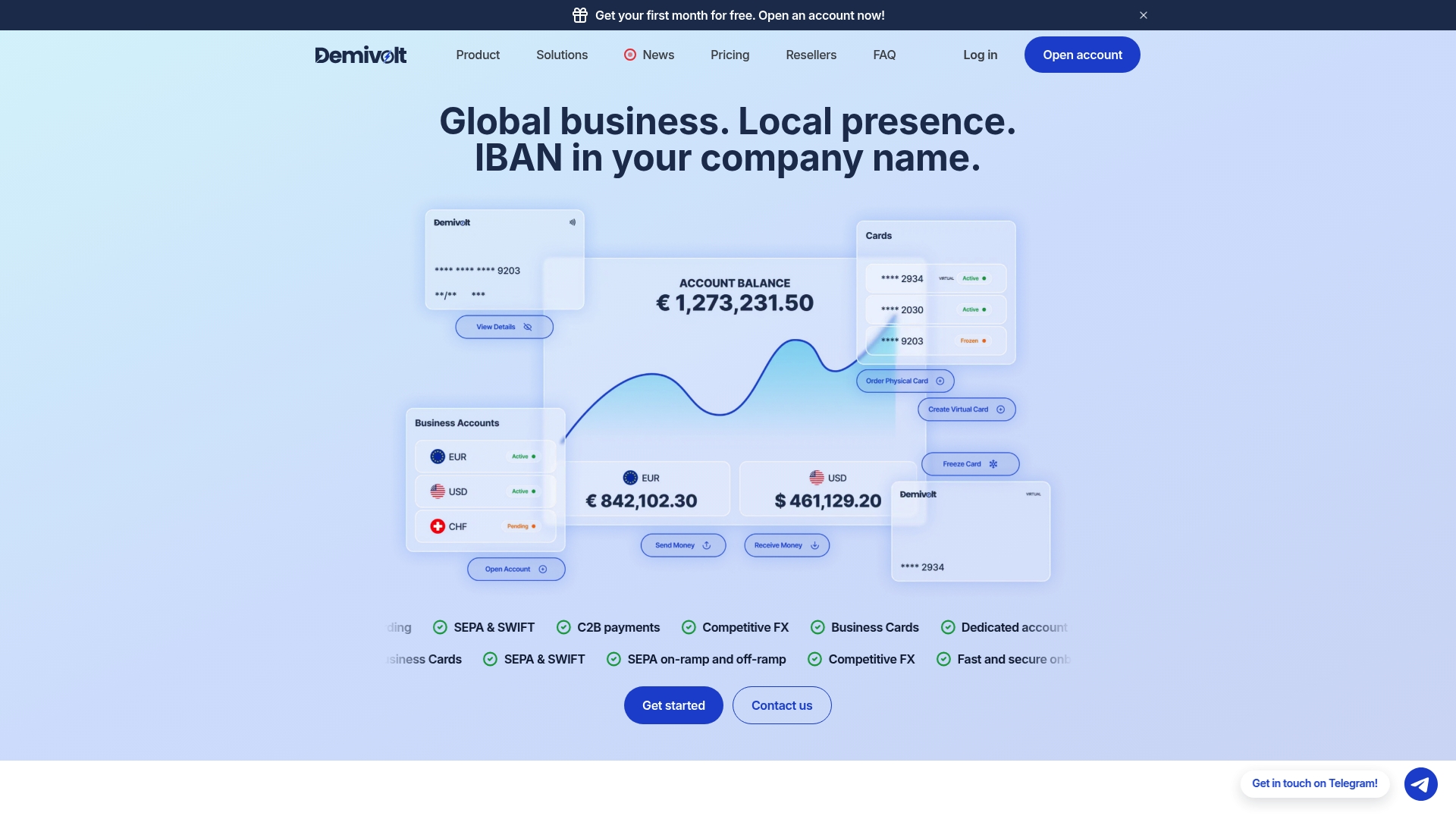
For a business sending payroll, supplier payments, or cross-border settlements on a schedule, the practical advantage is consolidation: one dashboard for SEPA and SWIFT timing instead of juggling several bank portals with different published cut-offs. Demivolt’s payments infrastructure is built for exactly this kind of operational predictability, and outgoing SEPA transfers carry a flat €0.40 fee per transfer, a cost you can check against your own volume using the SEPA fee calculator. If your operation needs a dedicated account structure to keep time-sensitive euro payments organized, start by reviewing Demivolt’s business account setup.
Sources
- Instant Payments Regulation — ECB
- Kredito ir momentiniai mokėjimai … | Lietuvos bankas
- Regulatory text (EUR-Lex) — Instant Payments-related amendments and SEPA rules
FAQ
What Is a SEPA Cut-off Time?
A SEPA cut-off time is the deadline your bank sets for accepting a payment instruction into that day’s outgoing batch to the clearing system. Miss it, and your transfer typically waits until the next business day for processing.
How Long Does a Standard SEPA Transfer Take?
EU rules require the payer’s bank to get funds to the payee’s bank by the end of the next business day after receipt. Submitting well before your bank’s cut-off often results in same-day arrival instead.
Does SEPA Instant Have a Cut-off Time?
No. SCT Inst settles within seconds, 24 hours a day, including weekends and holidays, as long as both the sender’s and receiver’s banks support instant reachability. If either bank doesn’t, the payment falls back to standard SEPA timing.
What Happens if I Miss My Bank’s SEPA Cut-off?
Your payment moves into the next available submission window, which usually means next-business-day value date rather than same-day. Weekends and public holidays extend that further, so a payment missed on Friday often doesn’t land until Monday or later.
Does Demivolt Charge for Outgoing SEPA Transfers?
Demivolt charges €0.40 per outgoing SEPA transfer, a flat fee you can verify with the SEPA fee calculator. Incoming SEPA transfers carry no fee.