

What is a fintech reseller program?
A fintech reseller program is a commercial partnership where a business sells fintech services under its own brand, manages customer relationships and pricing, and earns recurring commissions while the technology provider handles infrastructure and compliance. Unlike affiliate programs, which pay a one-time referral fee, resellers earn residual income from transaction fees for the entire life of each merchant contract.
The distinction matters practically. Affiliates promote. Resellers build and manage a branded business with real customer ownership.
Common services resold through these programs include:
- Payment gateways and merchant processing
- Business banking and IBAN account solutions
- Lending platforms and credit decisioning tools
- Compliance and KYC verification services
- Expense management and virtual card issuance
Table of Contents
- Partnership types and how commissions work
- How to become a fintech reseller
- Benefits and support fintech reseller programs offer
- Typical contractual obligations and terms
- Demivolt’s reseller program for business banking partners
- Key takeaways
Partnership types and how commissions work
Three core partnership structures define most fintech reseller arrangements. Each carries a different balance of control, margin, and operational responsibility.
- Referral partnerships: The lightest model. Partners introduce merchants and earn a commission split, with the provider handling everything else.
- Sales reselling: Partners set their own pricing on top of a wholesale rate, owning the merchant relationship and capturing the margin between cost and sale price.
- White-label partnerships: Partners fully rebrand the platform, managing onboarding, support, and pricing as though the product is entirely their own.
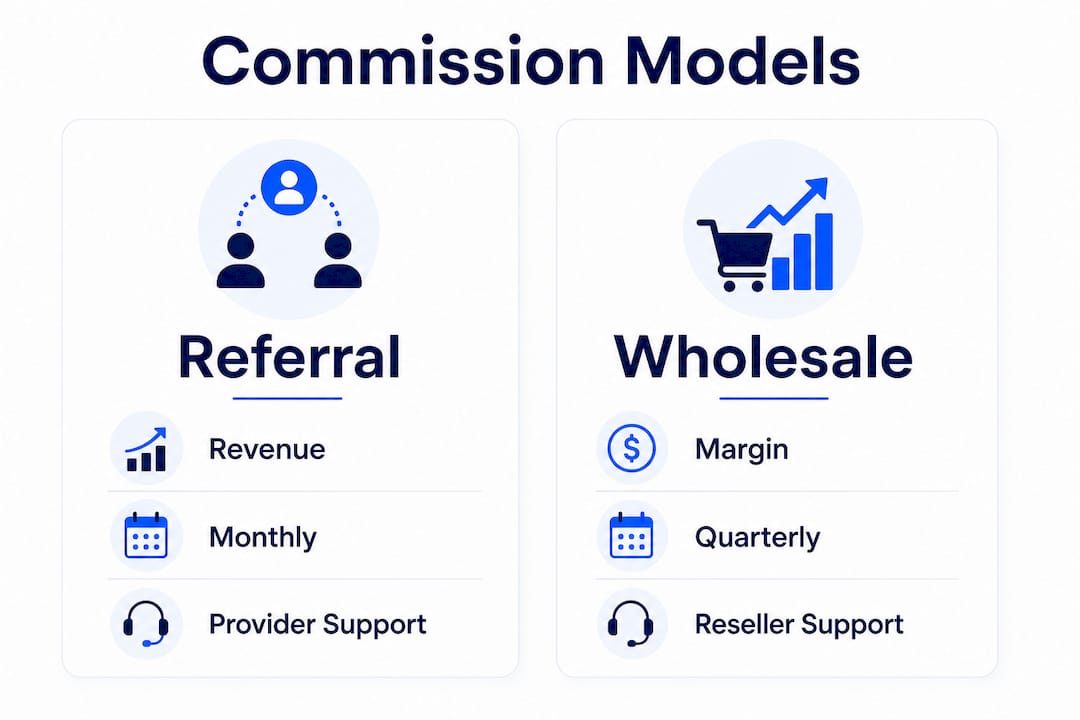
| Model | Commission structure | Payout frequency | Merchant support responsibility |
|---|---|---|---|
| Referral | Revenue share on profits | Monthly | Provider |
| Sales reselling | Wholesale markup, own pricing | Monthly or weekly | Reseller |
| White-label | Up to 50% of merchant margins | Monthly | Reseller (or outsourced) |
Revenue sharing suits smaller or newer resellers because the provider absorbs compliance and technical risk. The wholesale reselling model fits established businesses that want full pricing control and are prepared to own the merchant relationship end to end.
How to become a fintech reseller
The process follows a clear sequence. Skipping steps, particularly around agreements and compliance, creates operational problems that erode margins later.
- Select a provider. Prioritize platforms offering white-label capabilities, outsourced onboarding support, and documented compliance frameworks. Providers like HES FinTech and VoPay, as well as regulated platforms like Demivolt, publish formal partner programs with defined terms.
- Finalize the reseller agreement. The agreement should specify authorized products, territory, pricing structure, and deal registration rights. Deal registration lets you claim exclusive rights to merchant opportunities, protecting your pipeline investment.
- Customize your branding. Configure the merchant portal, dashboard, and payment pages with your logo and color scheme. Providers that support white-label payment gateways give you full interface control.
- Complete sales training and certification. Most structured programs require product certification before you can sign merchants. This protects both parties and improves close rates.
- Onboard merchants and manage relationships. Some providers offer “on-behalf-of” services, handling technical onboarding and support so you can focus on acquisition. This option significantly reduces operational burden, especially for newer resellers.
Pro Tip: Before signing any reseller agreement, confirm whether the provider offers outsourced merchant support. Underestimating onboarding and compliance duties is the most common reason reseller margins erode in the first year.
Benefits and support fintech reseller programs offer
The financial case for joining a reseller program is straightforward: recurring residual income from every transaction, for the life of each merchant contract. But the operational benefits are equally significant for businesses that want to grow without building payment infrastructure from scratch.

Smaller SaaS providers and independent agents can enter new markets using enterprise-grade infrastructure from Cray rather than building a payment stack from the ground up. Programs like those offered by Demivolt, HES FinTech, and VoPay also provide go-to-market workshops, co-branded marketing materials, and dedicated partner success managers. Resellers can further increase earnings per merchant by bundling value-added services such as advanced reporting, security add-ons, and compliance tools alongside core payment processing.

Typical contractual obligations and terms
A well-structured reseller agreement covers more than commission rates. Expect the following obligations on both sides:
- Territory and exclusivity: Agreements define where you can sell and whether you have exclusive rights in that region.
- Authorized product set: Only the products listed in the agreement may be resold. Adding services outside this scope requires an amendment.
- Performance minimums: Many programs require resellers to meet annual merchant volume or revenue thresholds to maintain their tier and discount entitlements.
- Deal registration: Resellers must register merchant opportunities to receive pipeline protection and prevent competing partners from claiming the same account.
- Compliance responsibilities: Even when providers handle PCI DSS and KYC infrastructure, resellers carry responsibility for ensuring their merchants meet verification requirements. Reviewing regulated fintech standards before signing is advisable.
- Termination and transition terms: Understand notice periods, data portability rights, and what happens to your merchant portfolio if the partnership ends.
Demivolt’s reseller program for business banking partners
Demivolt offers advisors and business partners a direct path to recurring commission income by referring clients to its regulated business banking platform.
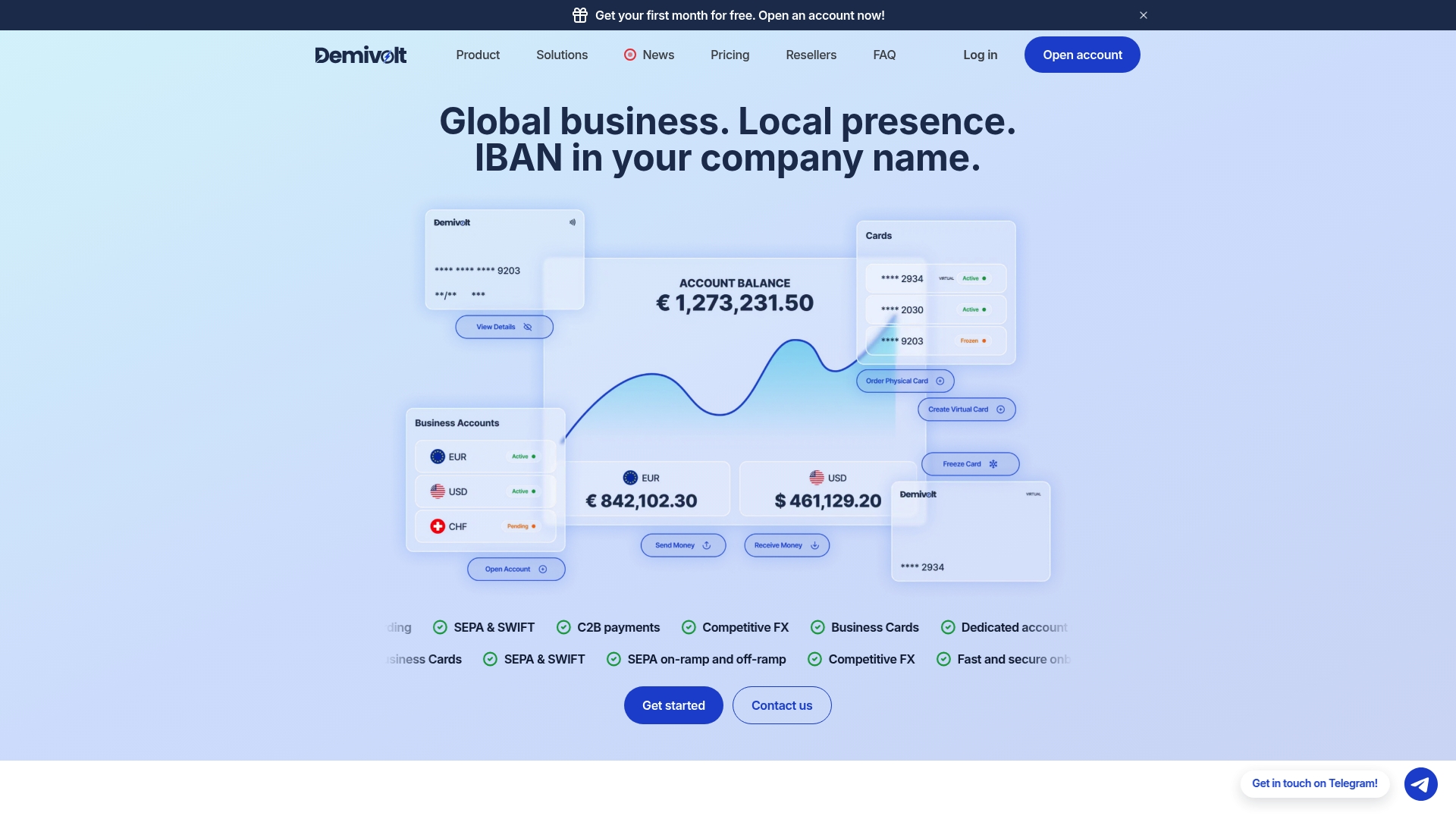
Partners who refer clients to Demivolt gain access to a platform built on dedicated IBAN accounts, SEPA and SWIFT payment infrastructure, and EU-regulated compliance frameworks. The onboarding process is transparent and fast, reducing friction for both the reseller and the end client. Demivolt’s free business compliance tools and IBAN validator support partners during client onboarding at no additional cost. For businesses evaluating fintech partnership opportunities in 2026, Demivolt’s program combines compliant infrastructure with a clear, recurring revenue model. Contact Demivolt directly at demivolt.com to discuss partner terms and get started.
Key takeaways
A fintech reseller program delivers recurring income and brand ownership, but the margin quality and provider support determine whether it is worth the operational commitment.
| Point | Details |
|---|---|
| Reseller vs. affiliate | Resellers earn recurring residuals and own the merchant relationship; affiliates receive one-time referral payouts. |
| White-label margin potential | White-label resellers can earn up to 50% of merchant margins, the highest ceiling among partnership models. |
| Deal registration matters | Claiming exclusive rights to merchant opportunities through deal registration protects your pipeline and stabilizes revenue. |
| Contractual obligations | Agreements define territory, authorized products, performance minimums, and compliance responsibilities for both parties. |
| Demivolt’s program | Demivolt offers partners recurring commissions for referring clients to its regulated IBAN and payment infrastructure platform. |