

TL;DR:
- Digital payment platforms enable faster, more secure transactions and provide real-time financial visibility for businesses. They support cross-border operations, reduce operational costs, and enhance customer experience through multiple payment options. Choosing a platform aligned with specific business needs is essential to maximize benefits and avoid friction.
Digital payment platforms are defined as technology-based systems that process financial transactions electronically, replacing cash and paper checks with encrypted, near-instant transfers. For business owners and finance professionals, the benefits of digital payment platforms extend well beyond convenience. They reshape how companies manage cash flow, protect sensitive data, satisfy customers, and scale across borders. Platforms like PayPal, Apple Pay, and Stripe have set a new standard: customers now expect a sub-10-second checkout as the baseline, and businesses that cannot deliver it lose sales to those that can.
1. Faster transaction processing and checkout speed
Speed is the most immediate and measurable digital payment advantage. A checkout under 10 seconds significantly reduces cart abandonment and improves customer satisfaction. That threshold is now achievable through stored credentials, one-click payment flows, and direct POS integration. The business implication is direct: every second shaved off checkout translates into a higher conversion rate.
Automation removes the manual steps that slow traditional payment handling. Instead of staff manually logging receipts or chasing bank confirmations, digital platforms trigger instant payment confirmations, update records automatically, and release funds faster. Faster fund availability tightens the cash conversion cycle, which means your working capital is accessible sooner and can be redeployed into operations or inventory.
Pro Tip: Enable stored payment credentials for returning customers. Platforms like Stripe and PayPal allow one-click repeat purchases, which can cut checkout time by more than half for loyal buyers.
Key efficiency gains from faster digital processing include:
- Instant payment confirmations replacing manual bank reconciliation
- Automated invoicing triggered at the point of sale
- Faster settlement windows compared to traditional wire transfers
- Reduced dependency on physical cash handling and counting
2. Security advantages that protect your business and customers
Digital payment platforms use encryption, tokenization, and multi-factor authentication to protect payment data, reducing fraud and unauthorized transactions. This matters because a single data breach can cost a business far more than the investment in a secure payment platform. Tokenization replaces sensitive card data with a unique identifier, so even if intercepted, the data is useless to attackers.
The security architecture of modern platforms includes several layers that work together:
- End-to-end encryption protects data from the moment a customer enters payment details until the transaction settles.
- Two-factor and multi-factor authentication require customers to verify identity through a second channel, such as a one-time SMS code or biometric scan.
- Biometric authorization via face recognition or fingerprint scanning adds a hardware-level barrier against account takeover.
- Real-time fraud detection uses machine learning models to flag unusual transaction patterns before they complete.
- PCI DSS compliance is maintained by the platform itself, reducing the compliance burden on your internal team.
For businesses handling cross-border transactions, securing online transactions requires all five layers working in concert. Customers and suppliers both extend more trust to businesses that can demonstrate this level of protection, which directly supports long-term commercial relationships.
3. Real-time financial visibility and cash flow management
Digital payment platforms automate reconciliation and create real-time transaction dashboards, giving finance teams accurate financial data without waiting for end-of-month statements. This shift from periodic to continuous reporting changes how finance professionals make decisions. Instead of reacting to last month’s numbers, you act on what happened this morning.

Real-time dashboards typically display revenue by channel, outstanding receivables, and expense breakdowns by category. That granularity supports better working capital management because you can see exactly when funds will clear and plan disbursements accordingly. Businesses with tighter cash flow visibility are also better positioned to negotiate credit terms with lenders and suppliers.
| Financial benefit | Practical impact |
|---|---|
| Automated reconciliation | Eliminates manual data entry and reduces accounting errors |
| Real-time revenue dashboards | Supports same-day financial decisions instead of monthly reviews |
| Faster fund settlement | Improves working capital availability and reduces borrowing needs |
| Accurate audit trails | Simplifies tax preparation and regulatory compliance |
Pro Tip: Connect your digital payment platform directly to your accounting software, such as QuickBooks or Xero. The automated data sync eliminates duplicate entry and gives your finance team a single source of truth for all transaction records.
4. Scalability and support for global expansion
Multi-currency support for cross-border payments is one of the most strategically significant digital payment solutions benefits for growth-oriented businesses. Accepting payment in a customer’s local currency removes a major friction point in international sales. Without it, customers face conversion uncertainty and businesses face abandoned transactions at the final step.
Digital payment platforms also integrate with both online storefronts and physical POS systems, enabling true omnichannel commerce. A business selling through its website, a mobile app, and a retail location can consolidate all transaction data into one platform. Omnichannel payment integration drives customer retention because buyers experience consistency regardless of where they purchase.
Specific scalability features that support global operations include:
- Multi-currency wallets and automatic conversion at competitive exchange rates
- SWIFT and SEPA payment rails for international and European transfers
- API-based integration with ERP and e-commerce platforms like Shopify and WooCommerce
- Role-based user access so regional finance teams manage their own accounts within a single structure
- Support for international supplier payments without requiring separate banking relationships in each country
For businesses expanding into European markets, understanding the cross-border payment checklist for digital banking is a practical starting point before committing to a platform.
5. Reduced operational costs and administrative workload
Digital payment platforms reduce manual accounting workload and errors, freeing finance teams to focus on analysis rather than data entry. The cost reduction is not just in labor hours. Businesses that rely on cash handling incur costs for counting, storage, transport, and the risk of theft or error. Digital transactions eliminate all of those categories.
The comparison between traditional and digital payment operations makes the efficiency gap concrete:
| Operational area | Traditional payments | Digital payment platforms |
|---|---|---|
| Reconciliation | Manual, error-prone, monthly | Automated, accurate, real-time |
| Cash handling | Physical counting, storage, transport | Eliminated entirely |
| Supplier payment status | Phone calls and email follow-ups | Automated notifications |
| Audit preparation | Manual document retrieval | Exportable digital records |
| Staff time on payments | High, repetitive | Low, exception-based |
Automated supplier payment notifications reduce inbound inquiries and create the foundation for negotiating early payment discounts or better credit terms. This is a benefit that most businesses transitioning to digital payments overlook entirely. When suppliers know exactly when to expect payment, they extend more favorable terms because the relationship carries less uncertainty.
6. Broader payment options and improved customer experience
Multiple payment options, including mobile wallets, credit and debit cards, and bank transfers, increase customer convenience and broaden a business’s reach. Customers who cannot pay in their preferred method abandon transactions at a higher rate. Offering Apple Pay, Google Pay, and card payments alongside bank transfers removes that barrier across different customer segments and geographies.
The customer experience benefit compounds over time. A buyer who completes a fast, secure transaction is more likely to return and less likely to dispute charges. Fewer disputes mean lower chargeback costs and less time spent on resolution. For subscription businesses and B2B companies with recurring billing, digital platforms also automate payment collection, reducing the manual follow-up required for late invoices.
The growth of agentic commerce is pushing this further. Platforms and brands are now building AI-driven purchasing flows where payments happen automatically within workflows, and only digital payment infrastructure can support that model. Businesses that have not yet built flexible payment acceptance into their operations will find themselves excluded from these emerging channels.
Key takeaways
Digital payment platforms deliver measurable advantages in speed, security, financial visibility, and cost reduction that traditional payment methods cannot match.
| Point | Details |
|---|---|
| Speed drives conversion | Sub-10-second checkout reduces cart abandonment and improves customer satisfaction directly. |
| Security is layered | Encryption, tokenization, and biometric authentication together reduce fraud and build trust. |
| Real-time data improves decisions | Automated dashboards replace monthly statements with continuous financial visibility. |
| Global reach requires multi-currency | Cross-border expansion depends on platforms that handle currency conversion and international rails. |
| Automation cuts costs | Eliminating manual reconciliation and cash handling frees finance teams for higher-value work. |
Why platform choice matters more than most businesses realize
Most articles on the pros of cashless transactions focus on the obvious wins: speed, security, and lower costs. Those are real. But after working closely with businesses at various stages of digital payment adoption, the factor that separates successful implementations from frustrating ones is alignment between platform capability and business structure.
A business processing mostly domestic transactions has different needs than one managing supplier payments across five currencies. Choosing a platform built for consumer retail when your core use case is B2B cross-border payments creates friction that no amount of feature configuration resolves. I have seen finance teams spend months trying to work around platform limitations that were visible in the product documentation before they signed up.
The second underappreciated issue is payment transparency with suppliers. Businesses that automate payment status notifications report fewer supplier disputes and better credit terms within months of switching. That outcome has nothing to do with transaction speed or fraud protection. It comes purely from giving suppliers reliable information. Most businesses never measure this benefit, so they never optimize for it.
My advice: before evaluating any platform, map your actual payment flows. List every payment type, currency, counterparty category, and reporting requirement your finance team handles in a month. Then match platforms against that list rather than against a generic feature comparison. The right platform for your business is the one that covers your specific flows without requiring workarounds.
— dd
How Demivolt supports your digital payment operations
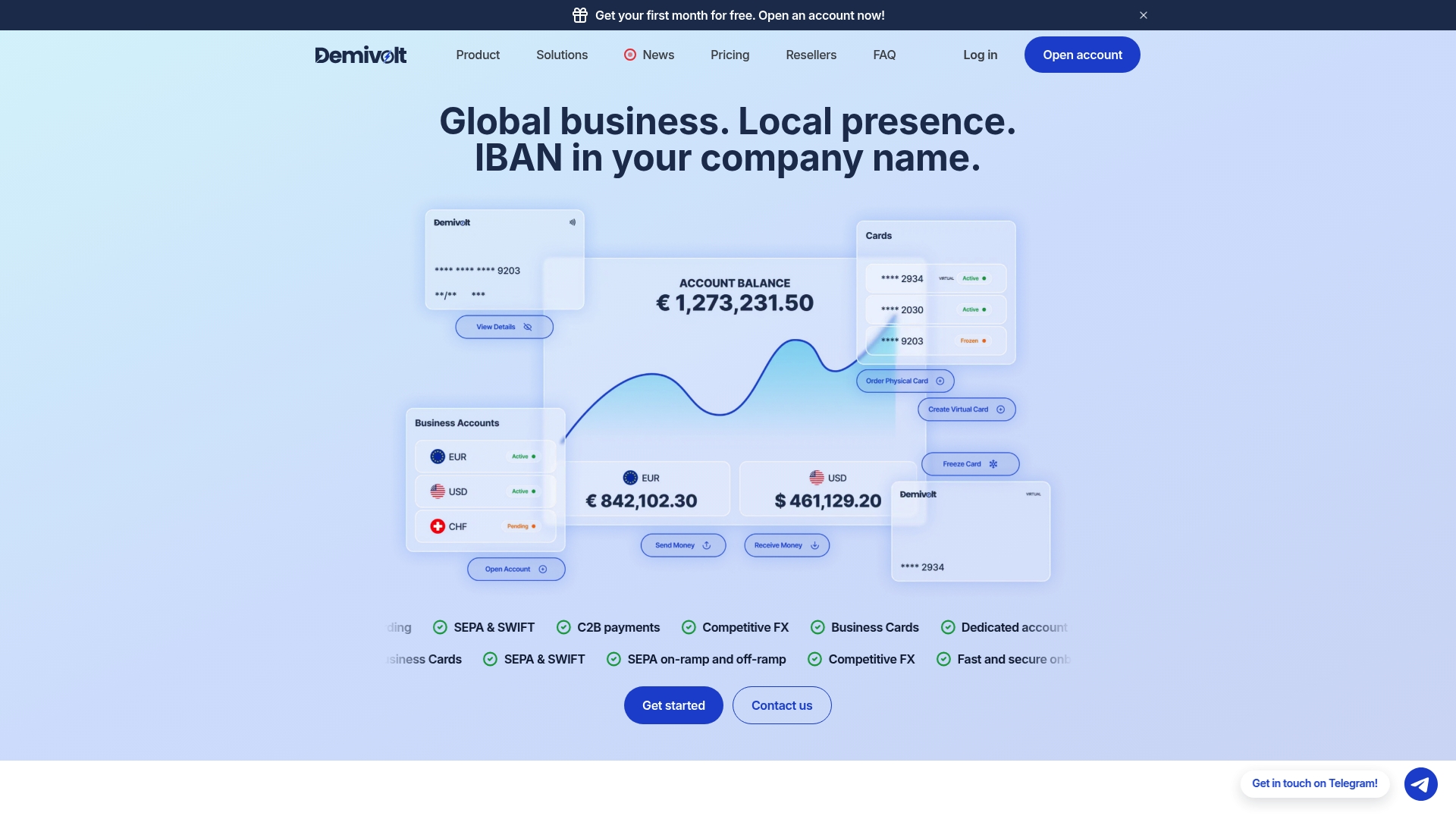
Demivolt is a regulated European fintech platform built specifically for businesses that need reliable, compliant digital payment infrastructure. It supports dedicated IBAN accounts, SEPA and SWIFT payment management, and both virtual and physical business cards for expense control. For finance teams managing cross-border transactions, Demivolt’s free IBAN validation tool catches account number errors before payments are sent, reducing failed transfers and the administrative cost of correcting them. The platform also offers a suite of free SEPA tools designed to simplify euro-denominated payment processing. If your business is evaluating digital payment solutions that combine EU regulatory compliance with practical financial controls, Demivolt’s business banking platform is worth a direct look.
FAQ
What are the main benefits of digital payment platforms?
Digital payment platforms deliver faster transaction processing, enhanced fraud protection through encryption and tokenization, real-time financial reporting, and support for multi-currency cross-border payments. Together, these features reduce operational costs and improve cash flow management for businesses of all sizes.
How do digital payments improve cash flow?
Digital payment platforms accelerate fund settlement compared to traditional bank transfers and automate reconciliation, giving finance teams accurate, real-time visibility into available cash. Faster settlement means working capital is accessible sooner and can be redeployed without waiting for manual processing cycles.
Are digital payment platforms secure for business transactions?
Yes. Modern platforms use end-to-end encryption and multi-factor authentication alongside real-time fraud detection to protect every transaction. PCI DSS compliance is maintained at the platform level, which reduces the security burden on your internal team.
Can digital payment platforms support international business growth?
Digital payment platforms with multi-currency transaction support enable businesses to accept and send payments across borders without requiring separate banking relationships in each country. SWIFT and SEPA integration covers the majority of international and European payment corridors.
What operational costs do digital payments reduce?
Digital platforms eliminate cash handling costs, reduce manual reconciliation labor, and cut the time finance teams spend on payment status inquiries. Automated payment workflows also lower error rates, which reduces the cost of corrections and disputes downstream.
Recommended
- Demivolt | News – The Global Digital Payments Market Projected to Hit $20 Trillion: Opportunities for Fintech Platforms
- Demivolt | News – Platforms, brands accelerate agentic commerce push as fintechs plug payment gaps
- Demivolt | Blog – Why automate business payments? Reduce costs, risks and delays
- Demivolt | Blog – What Is Payment Onboarding for Business Owners