
AI Threat Landscape Escalates Sharply
Governing autonomous artificial intelligence agents has emerged as a critical enterprise security priority as AI systems increasingly handle sensitive data, execute transactions, and operate with minimal human supervision. Security leaders are calling for comprehensive overhauls of identity, authorisation, and data governance frameworks ahead of major industry events.
The urgency stems from a dramatic rise in AI-powered threats. CrowdStrike's 2026 Global Threat Report revealed that attacks launched by AI-enabled adversaries jumped 89% in 2025. The World Economic Forum's Global Cybersecurity Outlook 2026 found that 87% of respondents identified AI-related vulnerabilities as the fastest-growing cyber risk. Meanwhile, the UAE Cyber Security Council reports more than 800,000 cyberattack attempts daily across the Emirates.
Non-Human Agents Set to Dominate Enterprise Networks
Industry projections indicate that autonomous agents will soon outnumber human users on corporate networks and the broader internet, making traditional security models centred on perimeters and user identities obsolete.
Cloudflare predicts AI agents will surpass humans as the internet's primary users by 2030. The connectivity cloud provider plans to demonstrate shadow AI visibility, workload protection, and a unified gateway for managing AI models while expanding its UAE data centres to support local control over AI workloads.
Forcepoint forecasts that by 2030, an enterprise with 40,000 employees could operate millions of AI-powered working entities. The firm is showcasing its AI Data Security platform and ARIA AI Assistant, which enables security teams to create and enforce data protection policies across cloud, endpoints, and AI environments using natural language.
The biggest reset in 2027 will be the shift from AI that answers questions to AI agents that take action across the Internet. The teams that win will stop asking 'is this user real?' and start asking 'is this agent authorised?'
Waseem Hattar, country manager for UAE and Oman at Cloudflare, told industry observers.
Zero Trust Principles Extended to Autonomous Systems
As autonomous workflows become embedded in financial operations and enterprise processes, cybersecurity providers are rolling out governance frameworks that subject AI agents to the same scrutiny as human employees.
Digital identity specialist Keypasco is unveiling the next generation of its Trust Identity Platform, extending Zero Trust governance beyond employees and devices to autonomous agents executing business workflows. The company projects that by 2030, organisations will manage AI agents with the same rigour they apply to staff today, requiring verifiable identities, defined authority, delegated permissions, and auditable records for every operational AI agent.
Exposure management firm Rapid7—demonstrating its AI-enabled Command Platform—emphasises agent accountability as a top priority for 2027. The company stresses that an AI agent with business access needs safeguards comparable to those of a new colleague: an accountable manager, appropriate permissions, and defined responsibilities. Significant agent actions must be logged, require human approval where appropriate, and allow for rapid access revocation.
Sovereign Security and Post-Quantum Readiness in Focus
Beyond agentic governance, global cybersecurity leaders are addressing sovereign security, nation-state threats, supply-chain vulnerabilities, IT/OT convergence, and post-quantum preparedness at major industry forums.
Key discussions will be led by:
- H.E. Dr. Mohamed Al Kuwaiti, head of cybersecurity for the UAE Government
- Michelle Bordachar Benoit, national director of Chile's National Cybersecurity Agency
- Ioannis Alexakis, director general of Greece's National Cybersecurity Authority
Amid escalating state-sponsored threats and AI-powered attacks, cyber resilience is a strategic imperative. GITEX Cyber Valley convenes the expertise and partnerships essential to advancing the UAE's vision for proactive cyber defence and secure digital progress.
H.E. Dr. Mohamed Al Kuwaiti stated.
Industry Leaders Gather for Global Reset 2027
The speaker lineup for the upcoming showcase includes international security leaders such as Mikko Hyppönen, chief research officer at Sensofusion; Kevin T. Shin, head of information security at Samsung Semiconductor; Corey Deng, chief security officer at Huawei; and Christian Reilly, field CTO at Cloudflare.
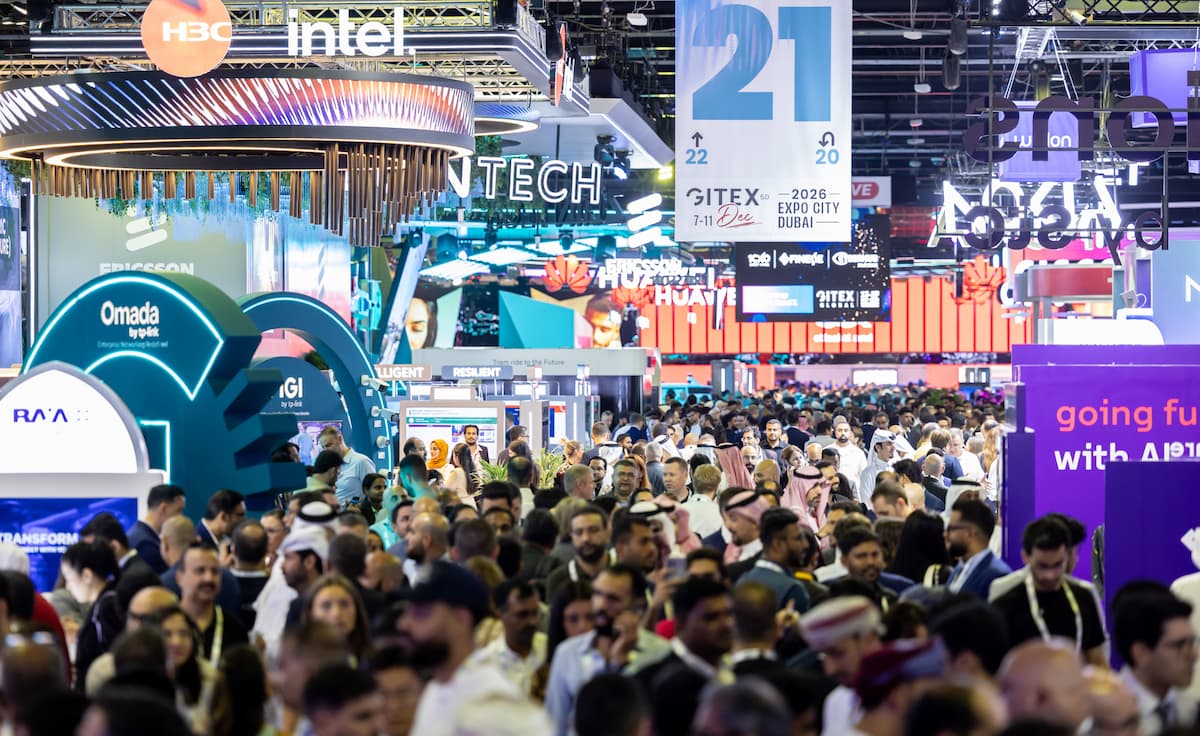
Organised by inD under the theme 'Global Reset 2027', the 46th edition of GITEX GLOBAL runs from 8 to 11 December at the Dubai Exhibition Centre, Expo City Dubai. The event opens with the GITEX Summit at Dubai World Trade Centre on 7 December, bringing together more than 6,000 enterprise and startup exhibitors alongside Expand North Star.
Source
Original coverage by The Fintech Times.
Use the button below to read the article on the publisher website.
Read on The Fintech TimesSusiję su šiuo straipsniu