

TL;DR:
- Optimizing payment workflows significantly reduces costs, errors, and enhances cash flow control for SMEs through automation.
- Centralized payment platforms improve transparency, approval consistency, and risk management, fostering better financial oversight.
Optimizing and automating payment workflows, commonly called payment process optimization in financial operations, is the single most direct lever SMEs have to cut transaction costs, reduce errors, and gain real-time control over cash flow. Manual payment processing costs between $12 and $40 per transaction and carries a 39% invoice error rate. That means every unaddressed inefficiency in your payment workflow compounds into measurable financial loss. For business owners and financial managers running lean operations, the case for why you should optimize payment processes is not theoretical. It is quantifiable, immediate, and tied directly to your competitive position.
Why streamline payment processes: the core business case
The primary reason to optimize payment processes is cost. Automation reduces per-transaction costs by 70 to 90 percent, which translates directly to margin improvement without headcount reduction. For an SME processing hundreds of vendor payments monthly, that gap between $12 and $40 per manual transaction versus an automated equivalent adds up to tens of thousands of dollars annually.
Beyond cost, the error argument is equally compelling:
- Manual processing accuracy sits between 96% and 99%, which sounds acceptable until you consider volume. At 1,000 monthly transactions, that means up to 40 errors per month requiring correction.
- Automated systems achieve 99.5% or higher accuracy, cutting error-related rework to near zero.
- Compliance readiness improves because automated workflows create consistent, timestamped audit trails that manual processes cannot replicate.
- Vendor relationships strengthen when payments arrive on schedule without disputes caused by data entry mistakes or lost invoices.
- Finance team capacity shifts from reactive error correction to forward-looking financial analysis.
Pro Tip: Before selecting any payment automation tool, map your current monthly transaction volume by type. Recurring vendor payments, payroll, and intercompany transfers are typically the highest-volume categories and deliver the fastest return on automation investment.
The importance of efficient payment systems extends beyond internal operations. Late payments damage supplier trust, trigger penalty clauses, and in some jurisdictions create legal liability. Consistent, automated payment execution removes that risk entirely.
How does centralization improve cash flow control?
Fragmented payment operations create financial blind spots. When different departments, subsidiaries, or regional offices manage their own payment approvals and banking relationships, no single person in your organization has an accurate picture of your cash position at any given moment. Centralized corporate payments solve this by unifying approvals, scheduling, and reconciliation into one controlled environment.
The operational gains from centralization follow a clear sequence:
- Unified visibility. All payment activity flows through one system, giving treasury and finance teams a real-time view of outgoing cash across every account and currency.
- Consistent approval hierarchies. Centralized platforms enforce role-based authorization, so no payment executes outside the defined approval chain.
- Automated reconciliation. Payments match automatically against invoices and purchase orders, reducing the manual reconciliation burden that consumes up to one-third of finance staff time.
- Audit-ready records. Every transaction carries a complete digital trail, which simplifies both internal audits and regulatory reporting.
- Fraud risk reduction. Centralized controls make it significantly harder for unauthorized payments to execute undetected.
“Centralizing payments transforms treasury from a reactive cost center to a strategic profit driver by enabling real-time cash visibility and audit-ready controls.” — Ripple Treasury
The payment workflow guide for SMEs published by Demivolt illustrates how SMEs that consolidate payment operations into a single platform consistently report faster month-end closes and fewer cash flow surprises. Real-time payment scheduling also allows proactive management of working capital, letting you time outgoing payments to protect liquidity without straining vendor relationships.
What pitfalls does manual payment processing create?
Manual payment processes do not just cost more. They create compounding operational risks that grow proportionally with your transaction volume.

The most damaging pitfall is reconciliation lag. When payment records live in spreadsheets, email threads, or disconnected banking portals, mismatches between what was paid and what was invoiced can go undetected for days or weeks. Reconciliation lag causes cascading financial issues because the longer a discrepancy goes undetected, the more expensive and complex the correction becomes. A duplicate payment discovered after 30 days may already have affected your reported cash position, your vendor’s account, and your tax records.
The secondary pitfall is administrative overhead. Finance staff spending a third of their time on manual data entry and payment chasing cannot contribute to forecasting, analysis, or strategic planning. That opportunity cost is invisible on a balance sheet but real in its impact on business decision quality.
Additional risks include:
- Duplicate payments caused by invoice re-submission or poor tracking, which are common in manual accounts payable environments.
- Compliance gaps when payment records are incomplete or inconsistently formatted, creating exposure during audits.
- Fraud vulnerability in decentralized processes where authorization controls are informal or inconsistently applied.
Pro Tip: Run a 90-day audit of your current payment records and count how many transactions required manual correction, re-approval, or follow-up. That number, multiplied by your average correction cost, is your baseline case for automation investment.
The real cost of manual payment operations is not just the direct transaction cost. It is the cumulative drag on your finance team’s capacity and your organization’s ability to respond quickly to financial information.
How can SMEs practically optimize payment workflows?
Transitioning from manual to optimized payment processes does not require replacing your entire financial infrastructure overnight. A phased approach delivers efficiency gains while managing organizational change effectively.
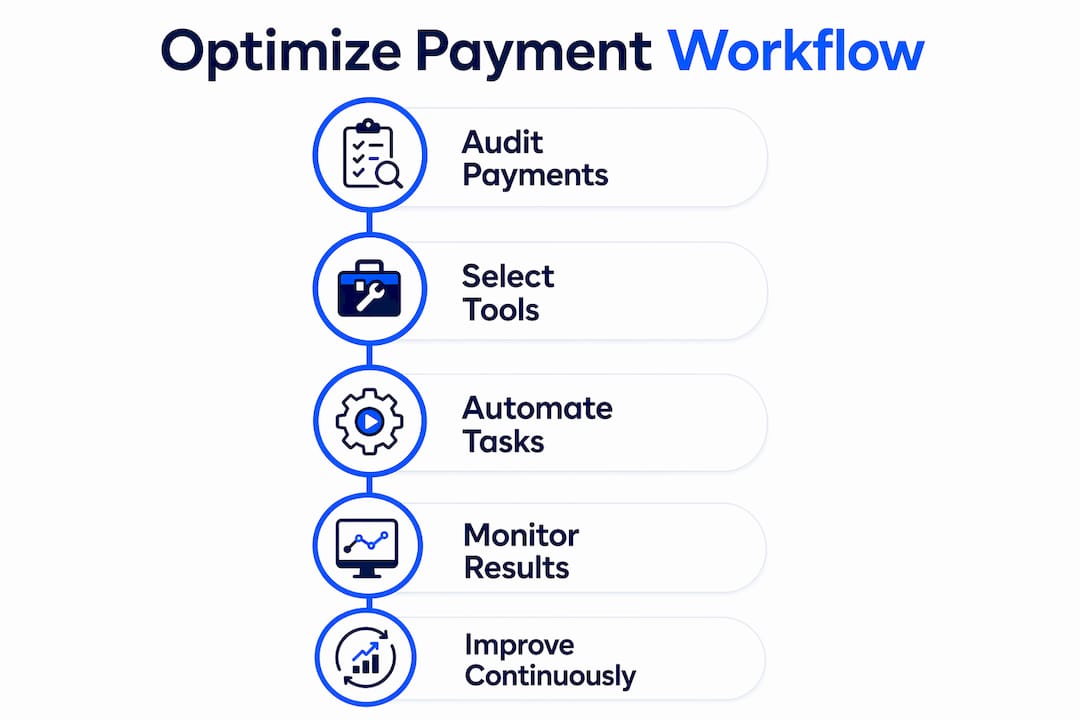
- Audit your current workflows. Document every payment type, frequency, and approval step. Identify which transaction categories are highest volume and most repetitive. These are your automation priorities.
- Select tools that integrate across functions. Payment automation works best when your invoicing, payment execution, and accounting systems share data automatically. Disconnected tools replicate the fragmentation problem in digital form.
- Adopt a centralized payment platform. Platforms that unify SEPA, SWIFT, and card payments under one approval and reporting structure give you the control and visibility that fragmented banking relationships cannot provide.
- Start with high-impact categories. A phased rollout beginning with your largest recurring payment types, such as supplier invoices or payroll, delivers measurable results quickly and builds internal confidence in the new process.
- Train staff on the new workflow. Automation tools only deliver their full value when the people using them understand the approval logic, exception handling, and reporting capabilities.
- Monitor and refine continuously. Set monthly KPIs for error rates, processing time, and reconciliation speed. Use that data to identify remaining manual steps worth automating.
The comparison below shows how manual and automated payment workflows differ across the metrics that matter most to SME financial managers:
| Metric | Manual process | Automated process |
|---|---|---|
| Cost per transaction | $12 to $40 | $2 to $8 (estimated post-automation) |
| Invoice error rate | ~39% | Under 0.5% |
| Reconciliation time | Days to weeks | Hours or real-time |
| Audit trail quality | Inconsistent | Complete and timestamped |
| Finance staff time on payments | Up to 33% | Under 10% |
Most operational inefficiencies in payment workflows exist not in invoice capture but in the handoff between approval and execution. Businesses that automate invoice receipt but leave approval routing and payment scheduling manual capture only a fraction of the available efficiency gain.
What role do optimized payments play in cross-border competitiveness?
For SMEs operating across borders, the advantages of quick payment solutions extend well beyond domestic efficiency. Cross-border payment friction directly affects your ability to compete for international suppliers and customers who expect reliable, fast settlement.
Over 80 countries now have fast payment systems interlinked to reduce transaction times and costs across borders. This infrastructure shift, driven by G20 priorities and central bank coordination, means that SMEs with modern payment infrastructure can access faster, cheaper international settlement than was possible even three years ago.
The fintech innovations transforming cross-border payments for SMEs center on three capabilities: ISO 20022 compliance for richer payment data, multi-currency account structures that reduce conversion costs, and real-time payment status tracking that eliminates the uncertainty of correspondent banking chains.
Compliance with international standards like ISO 20022 is not optional for SMEs with serious cross-border ambitions. Banks and payment networks increasingly reject or delay non-compliant payment messages, creating delays that damage supplier relationships and working capital cycles. Efficient payment infrastructure is foundational for financial trust, economic connectivity, and regulatory compliance in international markets.
The global payment gateways available to SMEs in 2026 have narrowed the gap between enterprise-grade international payment capability and what a 20-person company can access through a fintech platform. The strategic advantage now goes to SMEs that adopt this infrastructure early, not those that wait for it to become standard.
Key takeaways
Optimizing payment processes delivers measurable gains in cost, accuracy, compliance, and cash flow control that compound over time as transaction volume grows.
| Point | Details |
|---|---|
| Automation cuts costs sharply | Per-transaction costs drop 70 to 90 percent when manual processes are replaced with automated systems. |
| Error rates fall to near zero | Automated systems achieve 99.5% accuracy, compared to a 39% invoice error rate in manual workflows. |
| Centralization creates control | Unified payment platforms deliver real-time cash visibility, consistent approvals, and audit-ready records. |
| Phased rollout reduces risk | Starting automation with high-volume recurring payments delivers fast results without disrupting all operations at once. |
| Cross-border efficiency is now accessible | Over 80 countries have interlinked fast payment systems, giving SMEs access to faster, cheaper international settlement. |
The overlooked cost of doing nothing
Most financial managers I speak with understand that manual payments are inefficient. What surprises them is where the real cost hides. It is not the transaction fee. It is the reconciliation lag.
When a payment mismatch sits undetected for two weeks in a spreadsheet, it does not just create an accounting problem. It distorts your cash position, potentially triggers an overdraft or a missed payment to another vendor, and then requires hours of finance staff time to unwind. I have seen SMEs with otherwise solid operations lose meaningful supplier discounts and damage key vendor relationships entirely because their payment records were too fragmented to catch errors quickly.
The other thing most articles on this topic miss is the handoff problem. Businesses invest in invoice scanning software or accounts payable tools and then declare themselves automated. But if the approval routing still happens over email and the payment execution still requires someone to log into a banking portal and manually enter details, you have automated the easy part and left the expensive part untouched. The gap between invoice approval and payment execution is where most of the cost and error risk actually lives.
My practical advice: do not start with the most sophisticated tool. Start with the most fragmented process. Find the payment category where approvals are most inconsistent, reconciliation takes the longest, and errors are most frequent. Fix that first. The efficiency gain will be immediate and visible, and it will build the internal case for expanding automation across your entire payment operation.
— dd
How Demivolt helps SMEs take control of payment operations
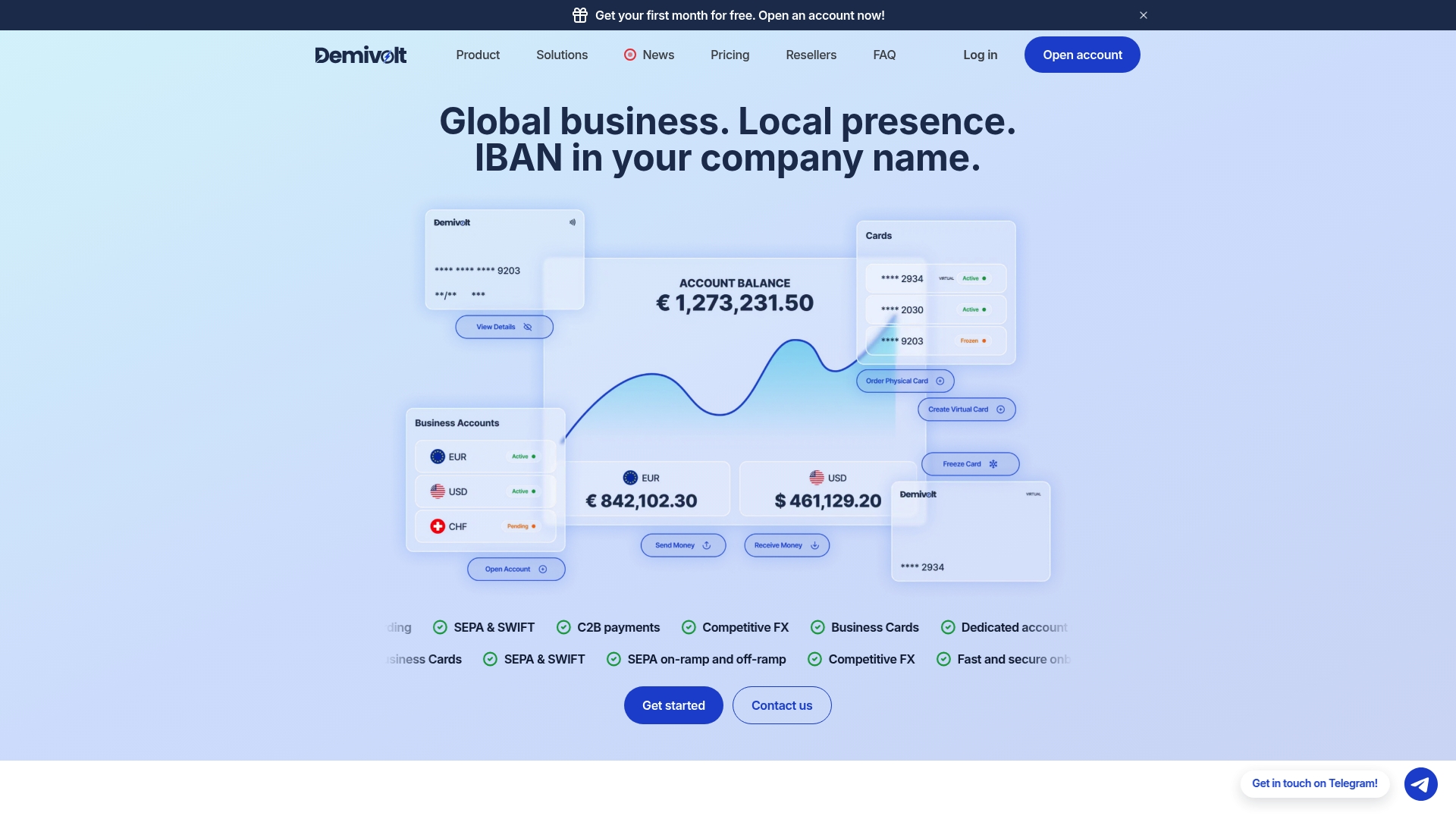
Demivolt is a regulated European fintech platform built specifically for SMEs that need reliable, compliant payment infrastructure without the complexity of traditional banking. The platform supports SEPA and SWIFT payments, dedicated IBAN accounts, multi-account structures, and role-based user management, giving financial managers the control and visibility that manual processes cannot deliver. To reduce payment errors at the source, Demivolt’s free IBAN validation tool checks account numbers against ISO 13616 standards before any payment executes. You can also explore the full suite of free SEPA tools designed to support accurate, efficient payment processing across the European market. For SMEs ready to move beyond fragmented payment workflows, Demivolt’s platform provides the infrastructure to do it compliantly and at scale.
FAQ
What does it mean to optimize payment processes?
Optimizing payment processes means replacing manual, fragmented workflows with automated systems that handle invoice capture, approval routing, payment execution, and reconciliation in a connected sequence. The goal is to reduce cost, errors, and processing time while improving compliance and cash flow visibility.
How much can automation reduce payment processing costs?
Automation reduces payment processing costs by 70 to 90 percent compared to manual methods, which cost between $12 and $40 per transaction. The savings come from eliminating manual data entry, reducing error correction, and accelerating reconciliation.
What is the biggest risk of manual payment processes?
The biggest risk is reconciliation lag. When payment mismatches go undetected for days or weeks, they create cascading financial problems including distorted cash positions, duplicate payments, and strained vendor relationships that are far more expensive to resolve than the original error.
How should SMEs start optimizing their payment workflows?
Start by auditing your highest-volume, most repetitive payment categories and identifying where approvals and reconciliation consume the most time. Automate those categories first using a platform that integrates invoicing, payment execution, and accounting, then expand the rollout based on measured results.
Why does cross-border payment efficiency matter for SMEs?
Cross-border payment efficiency directly affects supplier relationships, working capital cycles, and market access. With over 80 countries now operating interlinked fast payment systems, SMEs that adopt compliant, modern payment infrastructure gain faster settlement and lower costs in international transactions.