

For business cross-border payments, the rule is simple: use SEPA for euro payments within the EEA, SWIFT for everything outside that zone, and a specialist payment provider once those flows become recurring or multi-currency. SEPA is fast and cheap for euro transfers between participating countries, with SEPA Instant delivering funds in seconds when both banks support it. SWIFT and correspondent banking handle non-SEPA or non-euro payments reliably, but expect one to five business days and intermediary fees. Businesses managing several currencies at volume typically outgrow standard bank portals and move to a regulated fintech account built for it.
TL;DR:
- Using SEPA for euro payments within the EEA ensures fast transfers, often same-day or instant, while outside the zone, SWIFT transfers take one to five business days.
- Confirm all beneficiary details precisely, including IBAN and BIC, especially for first-time or high-value payments, to prevent delays or rejections.
- Expect SWIFT fees to include outgoing, intermediary, inbound, and currency markups, which are often larger than the advertised transfer fee.
- Transition to a specialized fintech account for high volumes, multi-currency needs, and automation, as standard bank portals often lack efficiency for recurring payments.
- Verify SEPA participation and instant scheme support directly with the ECB to ensure compliance and optimal transfer speed.
DemivoltSimplify Cross Border PaymentsDemivolt provides regulated business banking infrastructure with dedicated IBAN accounts, SEPA and SWIFT payments, and business cards.Explore Demivolt
Table of Contents
- How SEPA Payments in Euros Work for Businesses
- Non-SEPA International Transfers: SWIFT and Correspondent Banks
- Fees, Exchange Rates, and Who Actually Pays What
- Payment Details That Commonly Trigger Rejections
- Internet Banking, PSPs, and API Automation: Choosing Your Workflow
- What Causes Compliance Holds and How to Avoid Them
- What Finance Teams Consistently Get Wrong About Cross-Border Payments
- Simplify Multi-Currency Payments With a Dedicated Business Account
- Where to Verify Rail Details and Regulatory Scope
- Sources
- FAQ
How SEPA Payments in Euros Work for Businesses
SEPA covers euro transfers between banks in EU and EEA member states, plus a handful of participating non-EEA jurisdictions, and it standardizes how those payments move so a euro transfer from Vilnius to Lisbon works the same way as one from Vilnius to Tallinn, according to the European Central Bank. Whether a country actually falls inside that zone depends on its EEA status, which is worth checking before you assume a corridor qualifies.
Standard SEPA credit transfers usually clear within one business day, often same day if submitted before your bank’s cut-off. SEPA Instant moves the same payment in seconds, 24 hours a day, but most banks cap instant transfers at a lower value than standard transfers, and both the sending and receiving bank need to support the instant scheme for it to work.
Default to SEPA whenever the payment is in euros and both parties bank inside the zone. Step outside either condition, and you’re back to SWIFT.
- Single payments work fine for occasional supplier invoices through internet banking.
- Batch or bulk SEPA files save time once you’re paying more than a handful of suppliers monthly.
- Confirm your bank’s SEPA Instant limit before relying on it for time-sensitive payments.
Non-SEPA International Transfers: SWIFT and Correspondent Banks
Once a payment leaves the euro zone or changes currency, it typically routes through SWIFT, a messaging network that instructs a chain of correspondent banks to move funds step by step rather than directly. Each bank in that chain can deduct a fee and add processing time, which is why a payment to a supplier in Ho Chi Minh City often takes longer and costs more than one to Hamburg.
Most SWIFT payments settle within several business days. Delays usually trace back to incomplete beneficiary details, public holidays in the receiving country, or sanctions screening that flags a name or jurisdiction for manual review. Some corridors also route through local clearing alternatives, such as domestic ACH-style networks or specialist payout services built for a specific country, which can be faster than a full SWIFT chain.
- Include the full legal beneficiary name, address, and account details exactly as the bank has them on file.
- Use local-currency routing when a corridor supports it, rather than forcing a USD conversion through an extra intermediary.
- Test a new corridor with a small transfer before committing to a large one, especially for a first-time supplier.
Fees, Exchange Rates, and Who Actually Pays What
Every SWIFT payment carries an instruction for who absorbs the fees: OUR means the sender pays all fees, including any intermediary charges; SHA (shared) splits sender and receiving-bank fees, with intermediaries typically deducted from the amount received; BEN means the beneficiary absorbs everything, including the sender’s own bank fee. Choosing OUR guarantees your supplier gets the full invoiced amount, which matters when a contract specifies a net payment.
The real cost of an international transfer rarely shows up as one line item. It usually breaks into four pieces:
- The sending bank’s outgoing fee, charged upfront and visible on your statement.
- Correspondent or intermediary fees, deducted mid-chain and often invisible until the beneficiary reports a shortfall.
- The receiving bank’s incoming fee, which varies widely by country.
- The foreign exchange markup, applied to the mid-market rate and frequently the largest cost of all.
Ask your bank or provider for an all-in landed cost estimate before sending a large payment. A small test transfer on a new corridor tells you more about real costs than any published fee schedule.
Pro Tip: Request the FX rate in writing before confirming a transfer. A quoted rate that expires in minutes is a signal the provider is pricing in a wide margin.
Currency exposure is a separate problem from transfer cost. Businesses paying the same supplier repeatedly in a foreign currency often look at hedging strategies to lock in a rate ahead of the payment date, rather than absorbing whatever the market does on the day funds move.
Payment Details That Commonly Trigger Rejections
Most rejected or delayed transfers trace back to missing or mismatched data, not fraud concerns. Get these fields right and most payments clear without a manual hold:
- IBAN, entered exactly as the beneficiary provided it, with no spaces missing or added.
- BIC/SWIFT code matching the receiving bank, not a parent company or branch with a different code.
- Beneficiary’s full legal name as it appears on their bank account, not a trading name or abbreviation.
- A clear payment reference or purpose, especially for corridors that require it for regulatory reporting.
- Additional data such as a tax ID, registered address, or intermediary bank details for certain countries, particularly in Asia and Latin America.
Name and IBAN mismatches are the single most common cause of a returned payment. When in doubt, confirm the IBAN directly with the beneficiary rather than pulling it from an old invoice, and keep a validated beneficiary list so your team isn’t re-entering the same details every payment run.
Internet Banking, PSPs, and API Automation: Choosing Your Workflow
A standard business banking portal handles occasional, low-volume payments well enough. It becomes a bottleneck once your finance team is processing dozens of international payments a month across several currencies, because most bank portals were not built for bulk entry or multi-user approval flows.
A regulated payment service provider or fintech business account earns its cost once payments become recurring, multi-currency, or need more than one person involved in approving them. These platforms typically offer dedicated IBANs per currency, clearer fee visibility per transfer, and role-based access that a generic bank portal rarely matches.
For treasury or accounting teams running high payment volumes, API, batch, or SFTP integration with an ERP system removes manual entry entirely. Payment files generated from your accounting software flow directly to the payment rail, cutting both processing time and keying errors.
- Staged approval workflows require a second (or third) sign-off above a set payment amount.
- Daily or per-transaction limits cap exposure if a login is ever compromised.
- Role-based access lets a bookkeeper prepare payments without the authority to release them.
What Causes Compliance Holds and How to Avoid Them
Corporate payments get held for verification more often than personal ones, largely because banks apply know-your-customer and anti-money-laundering checks at both the account and transaction level. A large one-off payment, a brand-new beneficiary, or a transfer to a higher-risk jurisdiction are the three most common triggers for manual review.
Banks and payment providers routinely ask for the underlying invoice or contract behind a transaction-level payment, particularly for first-time counterparties or amounts well above your typical payment pattern.
- Keep incorporation documents, ownership structure, and proof of address current with your provider before you need to send an urgent payment.
- Prepare an invoice or contract to accompany any first-time payment above your usual range.
- Flag new beneficiaries to your provider proactively rather than letting the system catch them.
- Save every reference number and confirmation; it shortens investigation time if a payment is held.
Pro Tip: Build a standing document pack (registration certificate, proof of address, sample invoice) once, and reuse it for every new counterparty instead of assembling it under deadline pressure. Legal and regulatory review early in an expansion plan, as outlined by AMLAW’s guidance on company expansion, tends to prevent exactly this kind of last-minute scramble.
What Finance Teams Consistently Get Wrong About Cross-Border Payments
Most delays and hidden costs come down to sequencing: teams pick a bank or provider first, then discover it doesn’t handle their currency or volume well. The better order is currency and speed requirement first, rail second, provider third.
Recurring cross-border flows deserve automation and a specialist account, not a workaround bolted onto a domestic banking setup. A pre-validated beneficiary list and a ready document pack solve more real-world problems than any amount of provider comparison shopping.
— dd
Simplify Multi-Currency Payments With a Dedicated Business Account
A regulated fintech business account replaces the patchwork of a domestic bank account plus ad hoc international transfers with one setup built for multi-currency handling, SEPA and SWIFT support, and role-based access so a bookkeeper can prepare a payment while a director retains sign-off.
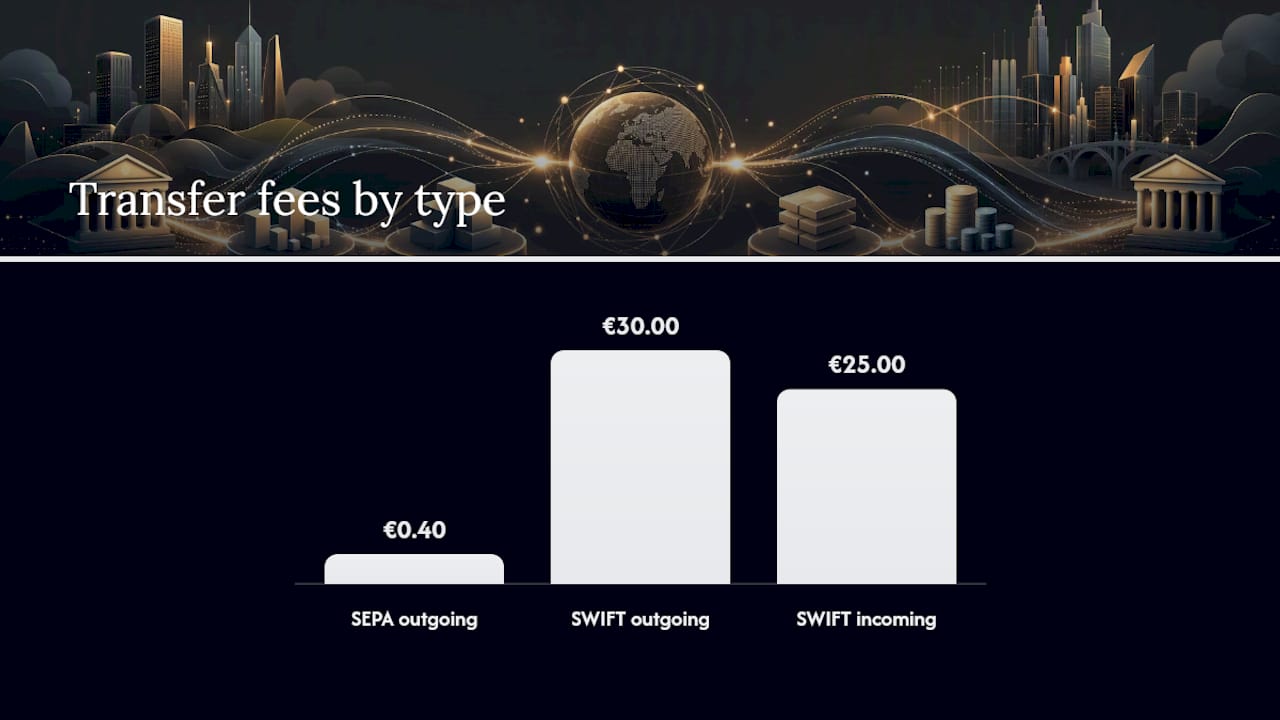
Fee visibility is where most businesses feel the difference first. SEPA outgoing transfers are priced at a flat €0.40 per transfer, SWIFT outgoing at €30.00, and SWIFT incoming at €25.00, so you can calculate landed cost before you send rather than after a supplier reports a shortfall. Client funds sit in segregated accounts, and multi-account structures let a company running several entities or currencies manage them under one login instead of juggling separate bank relationships. For teams processing regular payment batches, API integration connects directly to your existing accounting workflow.
If your business sends recurring international payments and wants clearer costs and tighter controls, review the business accounts page or explore payment options to see how account setup works.
Where to Verify Rail Details and Regulatory Scope
Confirm SEPA participation and instant-payment rules directly through the ECB’s SEPA integration page and TARGET2 settlement documentation. For consumer and business protections on cross-border financial products, see Your Europe’s guidance.
Sources
- SEPA (ECB)
- European Economic Area (EEA) (Eurostat gloss.)
- Financial products and services (EU – Your Europe)
FAQ
What Is the Fastest Way to Send Money Abroad for Business?
SEPA Instant is the fastest option for euro payments within the EEA, delivering funds in seconds when both banks support the scheme, according to the ECB. Outside that zone, SWIFT transfers typically take one to five business days depending on the corridor and intermediary banks involved.
Who Pays the Fees on an International Wire Transfer?
It depends on the payment instruction chosen: OUR means the sender covers all fees, SHA splits fees between sender and receiving bank, and BEN means the beneficiary absorbs everything. Choosing OUR is the only way to guarantee the beneficiary receives the full invoiced amount.
What Details Do I Need to Send a Payment Abroad?
You need the beneficiary’s IBAN, BIC/SWIFT code, full legal name as it appears on their bank account, and a clear payment reference. Certain corridors also require a tax ID or intermediary bank details, so confirming requirements before sending avoids a rejected transfer.
Why Do International Payments Get Held for Review?
Banks flag large one-off payments, brand-new beneficiaries, and transfers to higher-risk jurisdictions for compliance review under standard KYC and anti-money-laundering rules. Keeping current company documents and a sample invoice ready for first-time counterparties speeds up that review considerably.
Does Demivolt Support Both SEPA and SWIFT Payments?
Yes. Demivolt processes both SEPA and SWIFT payments from dedicated IBANs, with SEPA transfers priced at €0.40 per transfer and SWIFT transfers priced separately for outgoing and incoming payments, giving businesses one account for both euro and non-euro flows.