

The right default is either a central-billing travel card or per-trip virtual cards, paired with role-based permissions, transaction limits, merchant and geolocation restrictions, and a defined reconciliation workflow. Five controls matter most: who can book, how much a card can spend per transaction and overall, which merchant categories are allowed, where the card works, and how every charge gets matched to a traveler. Strong Customer Authentication rules and fraud monitoring shape how each of these gets implemented in practice.
TL;DR:
- Using role-based permissions and merchant category restrictions helps prevent unauthorized bookings and minimizes misuse of travel cards.
- Per-trip financial caps based on actual itinerary costs are more effective than monthly limits, reducing approval friction and avoiding trip delays.
- Confirming proper setup, including accurate billing details and successful test transactions, is essential before going live with travel cards.
- Rapid reconciliation of charges with booking metadata and timely review of spend prevents delays and resolves mismatches early.
- Demivolt’s platform supports compliant travel card programs through dedicated IBAN accounts, role-based controls, and seamless integration for cross-border payments.
DemivoltBring Travel Spending Under ControlDemivolt helps businesses manage travel payments with dedicated IBAN accounts, role-based controls, and virtual or physical business cards.Explore Demivolt
Table of Contents
- Setting up a travel payment method step by step
- Who can book, spend, and approve: roles and limits
- How SCA rules and fraud controls shape travel payments
- Reconciling travel spend without the guesswork
- How Demivolt supports compliant travel card setups
- What finance teams get wrong about travel card setup
- Demivolt products built for travel card controls
- Sources
- FAQ
Setting up a travel payment method step by step
Before assigning a card to a trip, decide whether central billing or traveler-specific virtual cards fits your organization better. Central billing works well when one company card covers most bookings and a finance admin wants full visibility from a single source. Virtual cards per trip suit businesses with frequent travelers, variable budgets, or a need to cap exposure per booking.
- Create the card record: assign a nickname, link it to the cardholder or department, and confirm the billing address matches your company’s registered details.
- Add the card as a travel payment method inside your booking or expense platform, following a workflow similar to Expensify’s Central Billing setup, where admins add the card under payment methods and assign it to specific roles or trip types.
- Configure the booking-tool integration so the card appears automatically as an option during flight, hotel, or car rental checkout.
- Toggle which travel categories the card covers: flights, hotels, rail, or car rental, rather than leaving every category open by default.
- Run a test booking for a hotel and a car rental to confirm how pre-authorization holds convert into final charges, since some vendors still require a physical card at checkout.
- Review the checklist below before releasing the card to travelers.
Pro Tip: Book a refundable hotel room as your first live test. It shows you exactly how the pre-authorization and final capture differ before a traveler hits the same issue mid-trip.
Confirm these four items before go-live: the card nickname and billing details are accurate, the booking tool reflects the correct travel categories, a test transaction completed without a decline, and the finance team can see the transaction in its dashboard within minutes of authorization.
Who can book, spend, and approve: roles and limits
Clear role definitions prevent the two most common failures in travel card programs: unauthorized bookings and surprise overspend. Four roles cover most organizations:
- Travel Admin: configures card settings, approves exceptions, and manages integrations with booking tools.
- Booker or Agent: initiates reservations on behalf of travelers but does not hold spending authority beyond the trip budget.
- Traveler: uses the card for approved categories within preset limits.
- Finance Approver: reviews flagged transactions and signs off on reconciliation.
Per-transaction and cumulative caps should reflect realistic travel costs rather than generic expense limits. Hotel nights or flights often cost more than routine office purchases, so caps set too low generate constant approval friction, while caps left too high invite misuse.
Merchant category code (MCC) restrictions narrow what the card can buy. Allow airline, hotel, and car rental MCCs while blocking unrelated categories such as electronics or general retail. Country or region restrictions add another layer: a card limited to the traveler’s typical markets and intended destinations reduces exposure if the card number is compromised. For multi-country itineraries, build in a temporary exception process so legitimate charges in additional countries are not declined mid-trip, a point the Bank of Lithuania’s risk-maturity guidance frames as scaling controls to the complexity of the activity rather than applying a single rigid rule.
How SCA rules and fraud controls shape travel payments
Strong Customer Authentication, defined under Commission Delegated Regulation (EU) 2018/389, requires two of three elements (something the cardholder knows, has, or is) for most card payments. The regulation also permits risk-based exemptions when a payment provider’s real-time risk analysis shows low fraud probability, subject to per-transaction and cumulative thresholds.
Low-risk exemptions can reduce authentication friction for repeat travel charges, but they shift more responsibility onto transaction monitoring, since the RTS ties the exemption directly to a provider’s fraud-rate performance rather than treating it as a permanent setting.
Hotel and car rental bookings complicate this further. A pre-authorization hold often differs from the final captured amount, and the capture may happen days after the original authentication. Admins should confirm with their card provider how authentication applies to the capture step, not just the initial hold, since a mismatch here is a common source of declined final charges.
Operational fraud controls worth setting alongside SCA include velocity checks that flag unusual transaction frequency, location-based risk signals that compare the card’s registered region to the transaction origin, and automatic blocks for transactions that fail both checks. The Bank of Lithuania’s fraud prevention guidance asks payment participants to document disputed transactions with a reasoned assessment, which makes a clear audit trail, not just a decline notice, part of the control itself. Our guide to business card security covers these authentication layers in more detail.

Reconciling travel spend without the guesswork
Central-billing systems assign each charge to a traveler by matching card details and booking information, but mismatches happen more often than finance teams expect. A traveler’s legal name on the booking differing from the cardholder name, or two cards sharing the same last four digits across departments, are the most frequent causes. When a match fails, most systems default to assigning the expense to the person who made the booking rather than leaving it unassigned, a pattern documented in Expensify’s Central Billing workflow.
Matching charges reliably depends on a few habits:
- Use booking metadata (confirmation number, traveler ID, trip dates) as the primary link between a charge and a trip.
- Reference the virtual card number assigned to a specific booking rather than relying on cardholder name alone.
- Run spend checks daily or weekly rather than waiting for a monthly close, so a pending or suspended booking gets flagged while it is still fixable.
- Keep a documentation trail for each transaction: booking ID, traveler ID, approver, receipt, and the authorized versus captured amount, which speeds up any dispute.
Pro Tip: When a multi-currency trip is involved, reconcile the settled amount against the original authorization in the transaction currency, not just the converted total, to catch fee discrepancies early, a practice outlined in multi-currency reconciliation guidance for branch networks.
How Demivolt supports compliant travel card setups
Demivolt is a regulated European fintech platform built for compliant, digital-first business banking, with EU regulatory compliance and segregated client funds as core design principles rather than add-ons. That matters for travel card programs specifically, since the same infrastructure that holds a dedicated IBAN also needs to support fast SEPA and SWIFT settlement for vendor payments and reimbursements.
The platform’s feature set maps directly onto the controls this guide recommends: dedicated IBAN accounts for isolating travel budgets, virtual and physical business cards for the central-billing or per-trip models described above, and role-based user management so a Travel Admin, Booker, and Finance Approver each operate within defined permissions. Multi-account structures and external banking integrations round out the setup for businesses running cross-border travel programs alongside other payment flows.
What finance teams get wrong about travel card setup
Most travel card failures are not fraud incidents. They are permission gaps left open because a finance admin assumed default settings were safe enough. A card with no MCC restriction and no geolocation limit is not a travel card, it is a general-purpose card that happens to get used for travel, and the difference shows up the first time someone uses it for an unrelated purchase.

The conventional advice to “set a monthly limit and review expenses later” treats travel spend like routine office spend. It is not. Travel charges cluster in short, high-value bursts (a flight, a hotel deposit, a rental deposit) within days of each other, which makes monthly caps either too loose to catch misuse or too tight to let a legitimate trip proceed. Per-trip limits tied to an actual itinerary are more useful than a flat monthly ceiling.
If you only fix one thing this quarter, fix reconciliation speed. A control that catches a problem after the monthly close is a record, not a prevention mechanism.
— dd
Demivolt products built for travel card controls
Setting up travel-specific MCC rules, per-transaction caps, and role-based approvals is only practical when the underlying account infrastructure supports it. Demivolt’s business accounts give finance teams a dedicated IBAN to isolate travel budgets from general operating funds, while card programmes provide the virtual and physical card infrastructure to implement the role-based limits and restrictions covered in this guide.
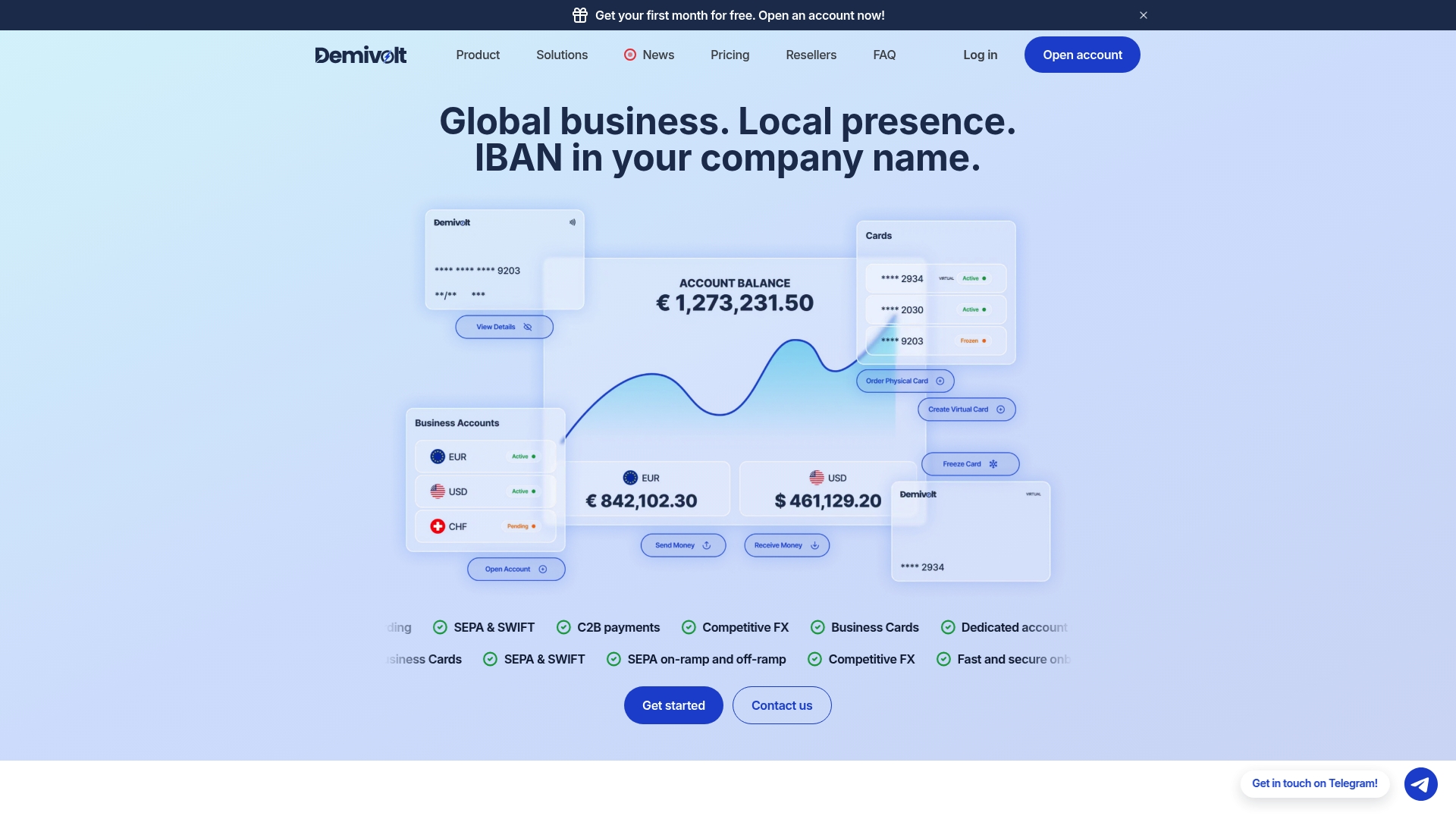
- Open a dedicated IBAN for travel spend through business accounts.
- Issue role-based virtual or physical cards through card programmes.
- Settle vendor payments and reimbursements with SEPA and SWIFT payment management.
Account opening may carry no fee, and a dedicated client manager may be included, so a finance team can move from setup to a live travel card within days rather than weeks.
Sources
- COMMISSION DELEGATED REGULATION (EU) 2018/389
- Central Billing — Expensify (implementation doc)
- Guidelines for Electronic Money and Payment Institutions — Bank of Lithuania
FAQ
What are the essential verslo kortelių kelionių nustatymai for a new travel card?
Start with role-based permissions, per-transaction and cumulative spending caps, merchant category restrictions limited to travel-related vendors, and country or region limits matched to the itinerary. These five settings, combined with a clear reconciliation workflow, cover most of what a finance admin needs before issuing a travel card.
Do travel cards need separate SCA handling from regular business cards?
Travel cards follow the same Strong Customer Authentication requirements as other card payments, but hotel pre-authorizations and delayed final captures can complicate how authentication applies to the actual charged amount. Admins should confirm with their provider how authentication is handled between the initial hold and the final capture.
How do central billing and employee reimbursement differ for travel expenses?
Central billing charges a company card directly and reconciles the expense to the traveler through booking metadata, while reimbursement has the employee pay personally and claim the cost back afterward. Central billing, as implemented in Expensify’s Central Billing workflow, reduces the number of personal reimbursement claims and keeps spend visible in near real time.
What should finance teams do when a travel card transaction can’t be matched to a traveler?
Most systems default to assigning an unmatched charge to the person who made the booking rather than leaving it unassigned, which is why accurate booking metadata and consistent cardholder names matter. Keeping a documentation trail (booking ID, traveler ID, receipt, authorization amount) makes it faster to correct a misassignment when it happens.
How does Demivolt support travel card configuration for business clients?
Demivolt offers dedicated IBAN accounts, role-based user management, and virtual and physical card programmes that let finance teams apply the permission and limit structures described in this guide. Account opening and verification carry no published fee, with pricing details for ongoing services available on request.