

Electronic money (e-money) is a prepaid digital representation of fiat currency stored electronically, representing a direct claim on the issuer, and accepted as a means of payment by parties beyond that issuer. Load funds onto a PayPal balance, tap a prepaid Visa card at checkout, or send money through Venmo — each of those actions involves e-money at work.
Core attributes that define e-money:
- Stored electronically on a device, server, or account-based ledger
- Issued on receipt of funds — the user pays first, value is credited second (prepaid model)
- Accepted by third parties beyond the issuer for payment transactions
- Redeemable at face value on demand from the issuer
E-money is a digital store of monetary value representing a claim on the issuer, issued on receipt of funds, redeemable at face value, and accepted as a means of payment by parties other than the issuer.
Recognizable US examples: a PayPal or Venmo balance sitting in your account, a prepaid Mastercard purchased at a pharmacy, or stored value loaded onto a merchant gift card. Each fits the definition. Bitcoin does not — and that distinction matters more than most people realize.
Key Takeaways
Electronic money is a prepaid, fiat-backed digital instrument representing a claim on a licensed issuer, distinct from both bank deposits and cryptocurrency, and protected by safeguarding requirements rather than FDIC insurance.
| Point | Details |
|---|---|
| E-money definition | Prepaid, fiat-backed stored value representing a claim on the issuer, redeemable at face value on demand. |
| Not a bank deposit | E-money is not FDIC-insured; protection comes from issuer safeguarding and state money transmitter licensing. |
| Crypto is different | Cryptocurrency lacks fiat backing, statutory redeemability, and government regulation — it does not qualify as e-money. |
| Three checks before loading funds | Verify state money transmitter license, confirm fund segregation language in the terms, and test the redemption process. |
| Demivolt for businesses | Demivolt provides regulated IBANs, SEPA/SWIFT rails, Visa card programs, and segregated accounts for business clients. |
Table of Contents
- What is electronic money, and how does it differ from deposits?
- What types of e-money products exist?
- How does e-money get issued, transferred, and redeemed?
- What are the practical benefits of e-money for individuals and businesses?
- What risks do e-money users face, and what protections exist in the US?
- Which US products actually function as e-money?
- How should you verify and choose a legitimate e-money provider?
- How Demivolt implements e-money infrastructure for businesses
- A perspective on e-money and regulated infrastructure
- Demivolt provides regulated payment accounts for modern businesses
- Sources
What is electronic money, and how does it differ from deposits?
The formal regulatory test for e-money has four parts, drawn from guidance frameworks including the FCA’s PERG 3A.3 and referenced across BIS and World Bank policy work:
- Stored electronically — value exists on a chip, server, or account record
- Issued on receipt of funds — the issuer receives payment before crediting value (prepaid)
- Used for payment transactions — the balance functions as a payment instrument
- Accepted by persons other than the issuer — a third-party merchant or recipient can receive it
That four-part test is what separates e-money from a bank deposit. A bank deposit creates a debtor-creditor relationship: the bank owes you money and can use your funds in its lending operations. E-money creates a prepaid claim: the issuer holds your funds in trust (or a segregated account) and must return them on demand at face value. The issuer cannot lend those funds out. That structural difference is why e-money issuers are not banks and why the regulatory treatment differs.
Unlike bank deposits, e-money balances are not covered by FDIC insurance in the US. The protection comes instead from safeguarding requirements — the issuer must hold customer funds in segregated accounts or equivalent arrangements.
Electronic Money Institutions (EMIs) are the licensed entities that issue e-money in regulated markets. In the US, the closest functional equivalent is a licensed money transmitter operating under state-level authorization and FinCEN registration. Payment service providers (PSPs) may process transactions without issuing e-money themselves; the distinction turns on whether they hold customer balances or simply route payments.
Pro Tip: When reviewing a provider’s terms of service, search for the phrase “stored value” or “prepaid balance.” If the terms describe a balance you can load, hold, and spend with third-party merchants, you are likely looking at an e-money product — and you should then check whether the provider is a licensed money transmitter in your state.
What types of e-money products exist?
E-money is not a single product. It covers a range of instruments that share the same prepaid, claim-based structure but differ in how value is stored and accessed.
| Type | Common US Examples | Typical Use Case |
|---|---|---|
| Card-based stored value | Prepaid Visa, Mastercard gift cards | POS retail, online checkout |
| Account-based e-money | PayPal balance, Venmo balance | P2P transfers, online commerce |
| Mobile wallet stored value | Apple Pay (stored card credentials), Google Pay | Contactless POS, in-app payments |
| Merchant-stored balances | Starbucks app wallet, Amazon gift card balance | Loyalty, repeat purchase |
| BaaS/programmatic e-money | White-label wallet platforms, issuer APIs | Business disbursements, gig payroll |
A few clarifications on where common products sit:
- Apple Pay and Google Pay are primarily payment credential passthrough systems, not e-money issuers. When you tap your phone at a register, the transaction runs through your underlying card. If the wallet holds a separate stored balance (as some configurations allow), that balance is e-money. The distinction is whether value is stored or merely tokenized.
- Stablecoins are often described as digital cash, but they are not e-money under standard regulatory definitions. A stablecoin like USDC is issued on a blockchain, not by a licensed EMI, and its redemption depends on the issuer’s reserve practices rather than a statutory redeemability obligation. As Investopedia notes, e-money is backed by fiat currency and regulated by authorities, while cryptocurrencies generally lack government backing and operate on distributed ledgers.
- Cryptocurrency sits entirely outside the e-money category. Bitcoin, Ether, and similar assets are not prepaid representations of fiat value and carry no statutory redeemability requirement.
The World Bank’s digital finance resources draw a useful distinction between e-money (a stored-value instrument), mobile money (e-money accessed via mobile device, common in developing markets through services like M-PESA), and mobile banking (access to a traditional bank account via phone). In the US, most consumer-facing “mobile wallets” are either mobile banking interfaces or e-money products, depending on whether they hold a balance.
How does e-money get issued, transferred, and redeemed?
The operational flow of e-money follows a clear sequence, and understanding it reveals where risks appear.
- Customer loads funds — the user transfers fiat currency to the issuer via bank transfer, debit card, or cash at a retail point.
- Issuer credits e-money balance — the issuer records an equivalent balance in the customer’s account or on the stored-value device (prepaid card chip, server-side ledger).
- Customer initiates a payment — the balance is debited and the merchant receives a payment instruction routed through card rails (Visa/Mastercard networks), ACH, or SEPA for cross-border transactions.
- Settlement occurs — the issuer settles with the merchant’s acquiring bank, typically on a T+1 or T+2 basis depending on the payment rail.
- Customer redeems remaining balance — on request, the issuer returns the remaining fiat value to the customer’s bank account at face value, with no deduction beyond disclosed fees.
Where value is stored matters operationally. Device-local storage (a chip on a prepaid card) means the balance exists on the physical card and is lost if the card is destroyed. Server-side or account-based storage (a PayPal balance, a Venmo account) means the balance is held on the issuer’s ledger and accessible from any device. Most modern e-money products use account-based models because they allow real-time transaction monitoring, dispute resolution, and KYC/AML compliance checks at the account level.
Safeguarding is the operational control that protects customers in both models. The issuer must hold customer funds in a segregated account — separate from the issuer’s own operating capital — so that if the issuer becomes insolvent, customer balances are ring-fenced and returnable. BIS policy analysis identifies safeguarding, legal framework clarity, and security of schemes as the central policy issues raised by e-money development.
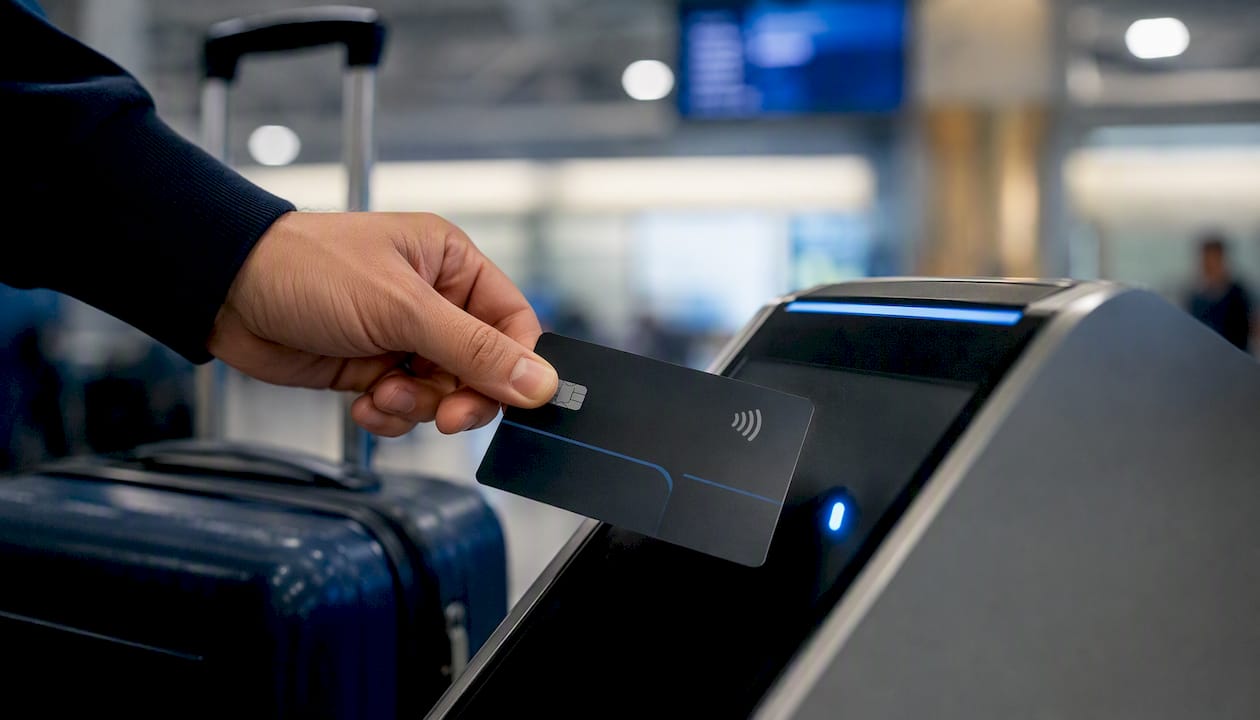
A concrete example: you load $200 onto a prepaid Visa card at a pharmacy. The card issuer receives $200, credits a $200 balance to the card’s chip or server record, and holds your $200 in a segregated pool alongside other cardholders’ funds. You spend $150 at a grocery store — the card rails debit $150 from your balance and settle with the grocer’s bank. You request a refund of the remaining $50 to your bank account, and the issuer returns exactly $50.
What are the practical benefits of e-money for individuals and businesses?
E-money solves specific problems that cash and traditional bank accounts handle poorly.
For individuals, the most immediate benefit is speed and accessibility. P2P transfers through Venmo or PayPal settle in seconds rather than the one-to-three business days of a standard ACH bank transfer. Prepaid cards give people without bank accounts a way to shop online, receive payroll, and manage spending without a credit check or minimum balance requirement. The World Bank describes e-money as a first wave of digital financial inclusion precisely because it lowers the barrier to storing and moving value for the unbanked.
For businesses, the advantages are more structural. Programmatic e-money accounts allow companies to issue virtual cards for employee expenses, set per-card spending limits, and reconcile transactions automatically against accounting systems. Gig economy platforms use stored-value disbursements to pay contractors instantly rather than waiting for payroll cycles. Merchants benefit from reduced cash handling and faster settlement compared to check-based receivables.

The benefits of digital payment platforms extend further for businesses operating across borders: e-money accounts with SEPA and SWIFT access allow companies to hold and move value in multiple currencies without maintaining separate bank accounts in each jurisdiction.
Key business use cases:
- Expense management — virtual cards with programmable limits replace petty cash and manual reimbursement
- Contractor disbursements — instant payouts to gig workers or freelancers without payroll infrastructure
- Cross-border payments — SEPA and SWIFT-enabled e-money accounts for international suppliers
- Merchant float management — holding customer prepayments in segregated wallets until goods are delivered
- Financial inclusion programs — prepaid instruments for employees or customers without bank accounts
What risks do e-money users face, and what protections exist in the US?
E-money carries real risks, and the US regulatory framework provides meaningful but incomplete protection.
Principal risks:
- Provider insolvency — if the issuer fails and customer funds are not properly segregated, balances may be lost or delayed in recovery. Financial experts identify provider insolvency as the primary consumer hazard, which is why regulatory frameworks emphasize safeguarding and redeemability at par value.
- Platform security failures — account takeover, phishing, and unauthorized transactions are common attack vectors. Unlike credit cards, e-money accounts may have limited fraud liability protections depending on the provider’s terms.
- Mistaken or irreversible transactions — many e-money transfers are final once initiated, with no chargeback mechanism equivalent to a credit card dispute.
- AML/KYC gaps — providers with weak identity verification create exposure for users whose accounts may be frozen during regulatory investigations.
- Privacy risks — e-money platforms collect detailed transaction data; users should review data-sharing and retention policies carefully.
US regulatory framework:
The US does not have a single federal e-money license. Instead, providers operate under a patchwork of state money transmitter licenses (required in most states) and federal registration with FinCEN under the Bank Secrecy Act. The CFPB has supervisory authority over large nonbank payment providers and has issued guidance on prepaid accounts under Regulation E, which provides some error-resolution and disclosure protections for prepaid card users.
Critically, e-money balances are not FDIC-insured. FDIC insurance covers deposits at member banks; a PayPal or Venmo balance is not a bank deposit. Some providers “pass through” FDIC insurance by holding customer funds at partner banks in the customer’s name, but this protection depends on the specific arrangement and is not universal.
Before loading significant funds onto any e-money platform, verify that the provider holds a money transmitter license in your state, confirm how customer funds are safeguarded, and check whether FDIC pass-through insurance applies to your balance.
Consumer checklist before loading funds:
- Confirm the provider is registered as a money transmitter with FinCEN and licensed in your state
- Check the terms of service for explicit safeguarding or fund segregation language
- Verify the redemption process: can you withdraw your full balance to a bank account, and how long does it take?
- Review the dispute resolution process and error-resolution timeframes
- Read the fee schedule for dormancy fees, withdrawal fees, and inactivity charges
- Check whether FDIC pass-through insurance applies and under what conditions
Which US products actually function as e-money?
Several widely used US services qualify as e-money products, though the regulatory classification is not always prominently disclosed.
PayPal balance — funds held in a PayPal account represent a stored-value balance and a claim against PayPal as the issuer. PayPal is licensed as a money transmitter across US states. The balance is not a bank deposit, though PayPal offers an optional FDIC-insured savings feature through partner banks that is separate from the core PayPal balance.
Venmo balance — Venmo operates under PayPal’s money transmitter licenses. A Venmo balance functions identically to a PayPal balance: it is prepaid stored value, redeemable to a linked bank account, and usable for payments to other Venmo users and participating merchants.
Apple Pay and Google Pay — these are primarily payment credential systems that tokenize your existing debit or credit card for contactless transactions. They do not typically hold a stored balance and are therefore not e-money in the standard sense. The underlying card transaction is what settles the payment. When these platforms introduce stored-value features (as some configurations allow), those specific balances would qualify as e-money.
Prepaid Visa and Mastercard cards — general-purpose reloadable (GPR) prepaid cards issued by licensed banks or money transmitters are the most straightforward US e-money product. The card networks (Visa, Mastercard) provide the acceptance infrastructure; the issuing bank or program manager holds the stored value. Regulation E applies to GPR prepaid cards, providing error-resolution rights.
Merchant stored balances — the Starbucks app wallet, Amazon gift card balance, and similar merchant-specific stored values are e-money in function but are often exempt from money transmitter licensing under “closed-loop” exemptions because they are redeemable only with the issuing merchant. They carry higher insolvency risk than licensed e-money products because safeguarding requirements may not apply.
Digital wallets now account for 12% of US in-store payments, a figure that reflects the scale at which these instruments have moved from novelty to infrastructure. The regulatory posture toward wallet providers and prepaid issuers continues to evolve, with the CFPB’s prepaid account rule (effective 2019) setting minimum disclosure and error-resolution standards for GPR cards and digital wallets that hold stored value.
How should you verify and choose a legitimate e-money provider?
Verification is not optional. The range of providers in the US market spans fully regulated institutions and lightly supervised platforms, and the difference matters when something goes wrong.
For consumers:
- Search the provider’s name in your state’s financial regulator database (each state publishes a list of licensed money transmitters).
- Check FinCEN’s MSB Registrant Search to confirm federal registration.
- Read the terms of service for the word “safeguarding” or “segregated.” If neither appears, ask the provider directly how customer funds are held.
- Confirm the redemption process in writing: how long does a withdrawal take, and are there conditions that could delay or block it?
- Review the dispute resolution section for error-resolution timeframes consistent with Regulation E (generally 10 business days for investigation).
- Check the privacy policy for data-sharing practices, particularly whether transaction data is sold to third parties.
For businesses:
- Confirm the provider holds appropriate authorization (money transmitter license, or EMI authorization for cross-border operations) and review the scope of that license against your intended use.
- Request documentation of the safeguarding arrangement: which bank holds segregated funds, under what account structure, and what happens to customer balances in an insolvency scenario.
- Review settlement and reconciliation options: can the provider deliver transaction-level data via API for automated reconciliation against your accounting system?
- Examine multi-user account controls: can you assign role-based permissions so that different team members have appropriate access levels?
- For financing structures, note that e-money balances cannot be secured in the same way as bank deposits — the enforceable asset is the customer’s claim against the issuer, and contract terms must reflect that. E-money accounts are generally unsuitable for blocked-account or escrow structures that require funds to remain fixed.
Red flags to watch for:
- The provider cannot explain its safeguarding arrangement clearly
- Terms of service are vague or silent on redeemability
- Accounts can be restricted or frozen without a clear dispute process
- No state money transmitter license is listed on the website
- The provider describes balances as “investments” rather than stored value
A practical compliance reference: the fintech compliance checklist from Bitecode covers the regulatory requirements businesses should verify when integrating with payment and e-money platforms, including AML/KYC obligations, data protection, and licensing checks.
For businesses building payment infrastructure, the international payment compliance checklist for SMEs provides a structured framework for evaluating cross-border e-money and payment account providers.
How Demivolt implements e-money infrastructure for businesses
Demivolt is a regulated fintech platform that provides B2B banking and payment infrastructure, including dedicated IBAN accounts, SEPA and SWIFT payment processing, and virtual and physical Visa business card issuance. Its architecture reflects the operational controls that finance leaders should expect from any regulated e-money or payment account provider.
Core infrastructure features:
- Dedicated IBANs — each business client receives its own IBAN, enabling clean segregation of funds and straightforward reconciliation against bank statements
- SEPA and SWIFT rails — inbound and outbound payments across both networks, supporting EUR-denominated SEPA transfers and international SWIFT wires
- Virtual and physical Visa cards — card programs with programmable spending controls, real-time transaction data, and role-based issuance for team members
- Multi-account structures — businesses can maintain separate accounts for different entities, projects, or currencies within a single platform
- Role-based user management — finance teams can assign granular permissions, limiting which users can initiate payments, view balances, or manage cards
On safeguarding, Demivolt holds client funds in segregated accounts, separate from the platform’s own operating capital. This structure means client balances are ring-fenced in the event of platform insolvency — the same principle that regulators require of licensed EMIs. Reconciliation is supported through API-based transaction data, allowing businesses to automate matching against their accounting systems without manual export.
For businesses evaluating a Banking-as-a-Service (BaaS) or white-label payment partner, Demivolt’s reseller and partner program also allows advisors and intermediaries to refer clients and earn recurring commissions, which is relevant for firms building payment products on top of regulated infrastructure.
Pro Tip: When negotiating with any EMI or BaaS partner, request explicit contract language on three points: (1) the identity of the bank holding segregated funds, (2) the timeline and process for returning customer balances in an insolvency scenario, and (3) the API endpoints available for real-time reconciliation. Providers that cannot answer all three clearly are not ready for business-grade deployment.
Understanding digital identity and KYC controls in banking is also relevant here: Demivolt’s onboarding process integrates identity verification at account opening, which satisfies FinCEN-equivalent AML/KYC obligations for cross-border business clients.
A perspective on e-money and regulated infrastructure
Demivolt is a regulated fintech platform providing B2B payment accounts, IBAN infrastructure, and card programs for businesses operating across borders. The perspective here reflects direct experience with the compliance and operational demands of regulated payment services.
The most underappreciated aspect of e-money is not the technology — it is the regulatory classification. Most businesses that use PayPal, prepaid cards, or wallet-based disbursements have no clear picture of whether their provider is a licensed money transmitter, what safeguarding arrangement protects their funds, or what their legal recourse is if the platform freezes their account. That gap is not a minor oversight. It is the difference between a recoverable operational disruption and an unrecoverable loss of working capital.
The conventional wisdom says “use a big-name provider and you’ll be fine.” That is not wrong, but it is incomplete. Large platforms have failed to protect business accounts during fraud investigations, platform outages, and policy enforcement actions — often with no clear dispute timeline and no FDIC backstop. The businesses that navigate those situations best are the ones that understood their provider’s safeguarding structure before the problem occurred.
For businesses building payment flows into their products or operations, the right question is not “which wallet is most popular?” It is “which provider can demonstrate, in writing, how my funds are held, how they are returned, and what controls I have over access?” That is a compliance question, and it deserves a compliance-grade answer.
Demivolt provides regulated payment accounts for modern businesses
Businesses that need more than a consumer wallet — dedicated IBANs, SEPA and SWIFT payment rails, Visa card programs, and multi-account structures with role-based controls — have a clear alternative in Demivolt. The platform is built for founders, CFOs, and finance teams that require regulated infrastructure without the complexity of a traditional bank relationship.
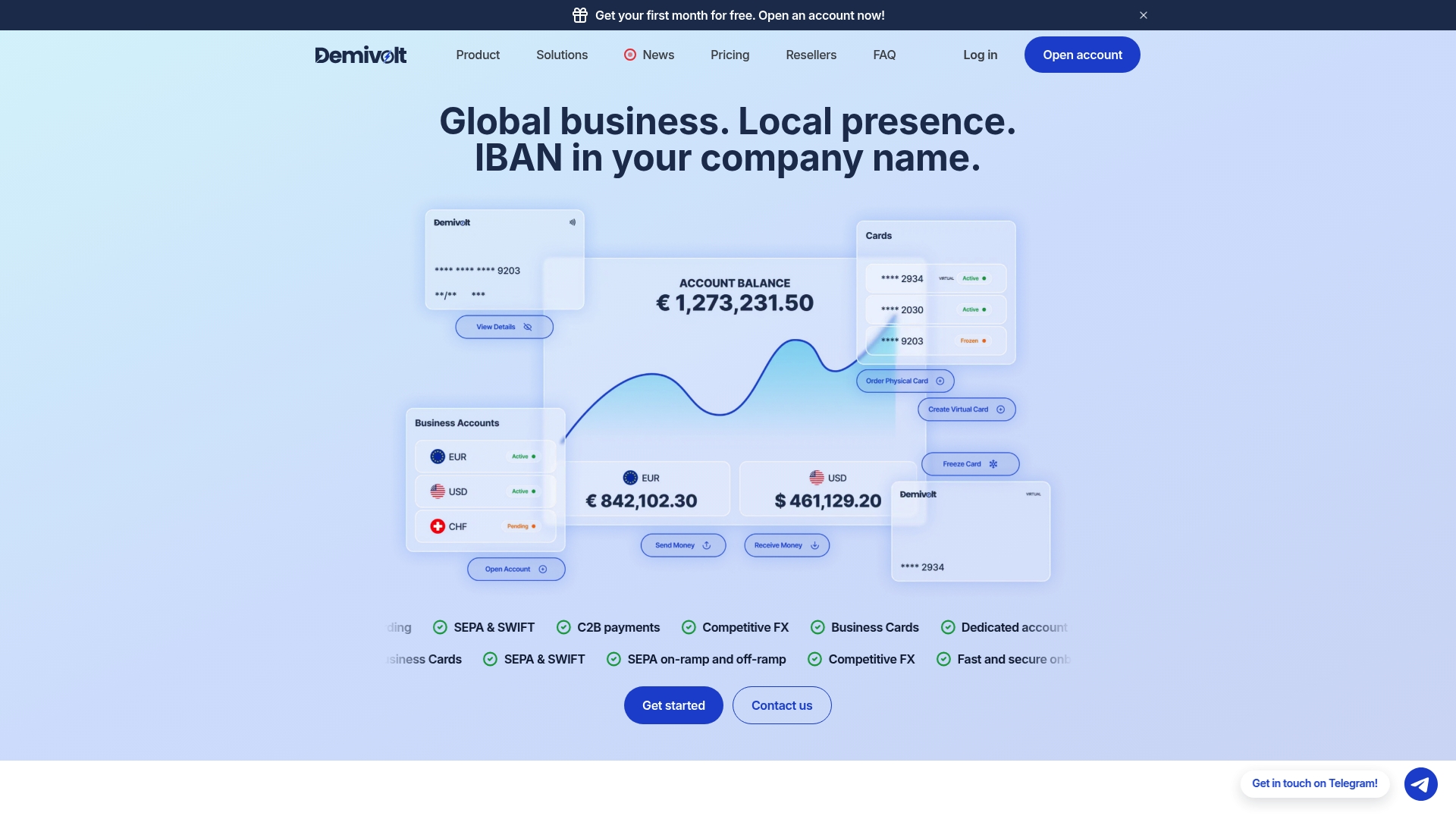
Where consumer e-money platforms like PayPal and Venmo are designed for individual use, Demivolt is purpose-built for business: segregated client funds, API-based reconciliation, compliance support for cross-border operations, and card programs that finance teams can manage directly. The onboarding process is transparent and fast, with no opaque fee structures or hidden restrictions on business account use.
For finance teams evaluating cross-border payment infrastructure, Demivolt’s free IBAN validator is a practical starting point for verifying account details before initiating international transfers. Businesses ready to open a regulated account can get started with Demivolt directly, or explore the full suite of SEPA and payment tools available to business clients.
Sources
The following primary sources were used in this article and are recommended for readers who want to verify definitions, regulatory tests, or policy context directly.
- E-money | Digital Finance Inclusion
- E-Money – Mobile Money – Mobile Banking – What’s the Difference?
- Understanding eMoney: A Guide to Electronic Transactions and Benefits
- FCA Handbook - PERG 3A.3 The definition of electronic money
- Implications for central banks of the development of electronic money
- E-money and e-money accounts – a guide for lenders
This article is general information, not a substitute for advice from a qualified financial advisor. Consult a qualified financial professional about your own circumstances before acting on anything here.
Recommended
- Demivolt | Blog – Digital banking explained: streamline cross-border success
- Demivolt | Blog – Business Payment Solutions Explained for European SMEs
- Demivolt | Blog – Explaining Modern Banking Infrastructure for Business Leaders
- Demivolt | Blog – Master the international payments process: SME guide